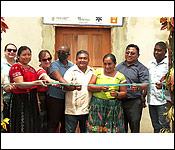
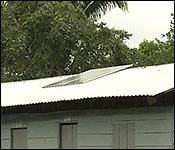
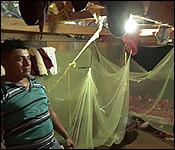
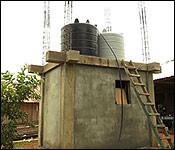
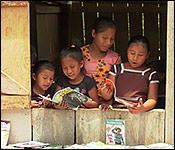
And now, we'll take you south - likely more south than you've ever been before - to Machakil Ha, a small village on the remote southwestern edge of Belize. On Friday, our news team hit the road at 5am to meet a convoy of government officials and UN partners as they travelled to the village for the inauguration of their new solar powered energy system.
We've been following the story of the three solar engineers for a while, and we showed you how they lit up Graham Creek. And last week, a ceremony was held in Machakil Ha, another village that didn't have access to basic necessities such as light and water.
But it wasn't just for their new electricity system - the residents also celebrated a new road and a new water system.
Courtney Menzies was there on Friday and spoke to the villagers about these life-changing improvements to their village. Here is that story:
Courtney Menzies:
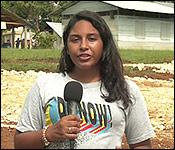
Belize's favorite solar engineers are at it again - earlier this year, they helped to inaugurate the solar powered electricity system in Graham Creek and now they're here in Machakil Ha, one of the most remote - and long neglected - villages in the country.
And while the villagers have been enjoying clean, renewable electricity for some months now, we made the 5 and a half hour long trip to find out just how their lives have been changed.
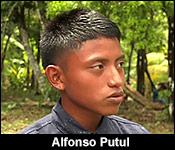
Alfonso Putul, Third Form Student
"The electricity is really helpful to me because I have light at home now to do my homework and it helps me because less gas or things we use to do our homework with because now things are really expensive and it's really helping me for my education."
Courtney Menzies:
"Since December, how has the students' performance improved?"
Arnold Putul, Second Alcalde/Teacher
"Children always present, most of the time they reach home early this time."
Courtney Menzies:
"And with the light, how has that been helping them too?"
Arnold Putul, Second Alcalde/Teacher
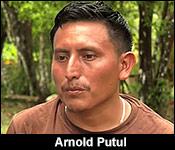
"It helps them to do their work, if there is assignments, projects, and there's light."
Courtney Menzies:
"Talk us about school, how it's been since you have electricity now."
Dominik & Dahlia Bol, Students
"Good, nothing gone wrong with he school, it's good."

Courtney Menzies:
"How does it feel that you can read and do your homework under light?"
Dominik & Dahlia Bol, Students
"Good because then I get to stay up late and do it too."
Reporter:
"Talk to us about electronic devices, any of that at home as yet?"
Dominik & Dahlia Bol, Students
"We have like three phones, one is for my mom, one is for my dad, and then we have one that is very old."
Alfonso Putul, Third Form Student
"My life has changed, I hope other people's lives change too because it is getting access to work harder and make more opportunities for our parents and for other children."
So while electricity is something many of us take for granted, these residents couldn't be happier to finally be able to turn on a light switch in their homes - no more dangerous kerosene candles and gas lamps to tinker with in their thatch and wooden homes.
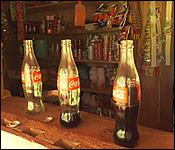
But it's not just the light - it's being able to charge their phones or even just getting a cold beverage from one of the village's two tiny shops.
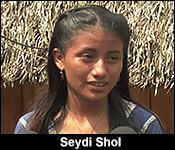
Seydi Shol, Student/Shopkeeper
"The solar is doing great, it's helping a lot with the shop. It provides us the light, the bulbs, and it also provides the freezer, the freezer is working well. We normally freeze water or coke there."
Courtney Menzies:
"So before this, you couldn't sell cold drink or frozen meat?"
No, we can't because we didn't have the electricity for it.
Courtney Menzies:
"So now, you've started to provide a new service to the village, basically?"
Seydi Shol, Student/Shopkeeper
"Yes."
Reporter:
"So what has been the reaction from people when they come and they could open a cold coke?"
Seydi Shol, Student/Shopkeeper
"Well, they feel more comfortable with their drink, they like the cold drink now, worse when the sun is very hot."
And of course, the villagers were grateful to the three engineers who were the key to this project coming to life - Miriam and Cristina Choc, and Florentina Choco. For Miriam, she says the best part is knowing that the children will have the opportunities that she herself didn't while growing up.
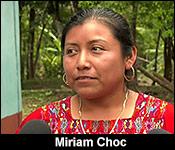
Miriam Choc, Solar Engineer
"I feel very happy but emotional at the same time because the village has light now and the kids can study and our work is done here but we're still moving forward to other communities."
"They will have the opportunity, like now, they received the laptop and before we didn't have that, the same thing with me, I didn't have the opportunity to use like internet, it's very difficult when I grew up and that is why I see it is important for my community and I went to India."
"I did not go to high school, I really wanted to go, but I did not have the opportunity."
Courtney Menzies:
"So how does it make you feel that these children might have that opportunity now?"
Miriam Choc, Solar Engineer
"I feel very proud of them because they have that access to technology and they can go to high school and we know the road is fixed now and it will be easy for them."
"If there's something that comes in learning or going somewhere, they need to put themselves in and it's very important, especially for us the women, we now to empower ourselves."
And so far, they've inspired at least one young woman:
Seydi Shol, Student/Shopkeeper
"The plan to expand is to improve my education and bring back the help to my community and help my parents with the electricity, with more electricity."
Reporter:
"What are you studying to become?"
Seydi Shol, Student/Shopkeeper
"I'm in the science department, I want to be an engineer."
Courtney Menzies:
"Like these ladies here?"
Seydi Shol, Student/Shopkeeper
"Yes."
Courtney Menzies:
"So they've inspired you?"
Seydi Shol, Student/Shopkeeper
"Yes, I'm willing to be like those ladies who came here."
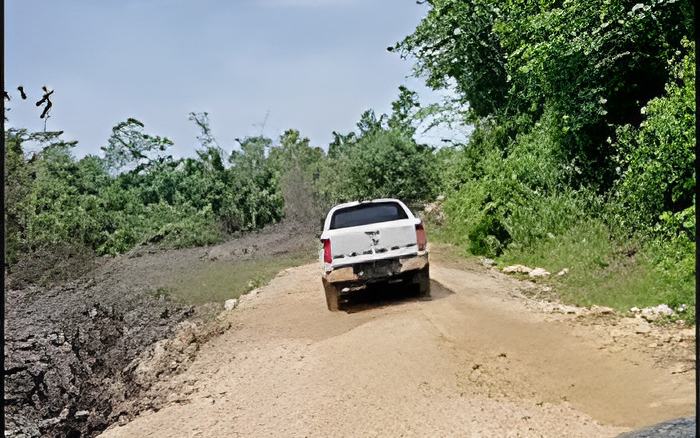
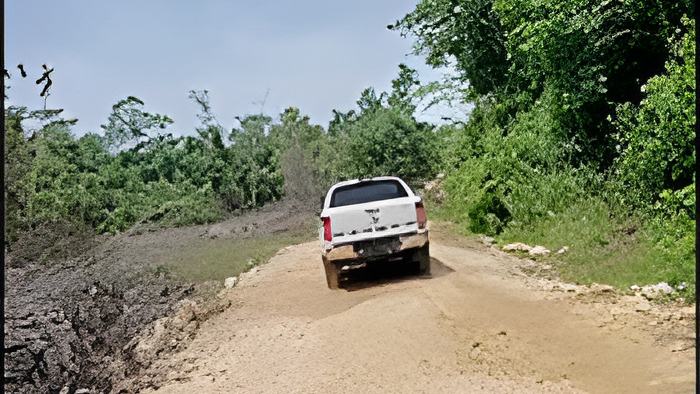
It's a big step for a small village, rich in culture, that had been forgotten for decades due to their location - at the southwestern corner of Toledo. But part of the reason they had been practically cut off from the rest of the country is because they had no road - until last year.
And this road has proved to be transformative for these residents - for the students who used to trek through miles of mud to get to school and also for their parents, some of whom now own their own vehicles.
Courtney Menzies:
"And are you excited that you guys have a road to go out the village now?"
Dominik & Dahlia Bol, Students
"Yes, we have bikes like bicycles but we don't have the chains for it, my front wheel is burst so we don't go on it, we go on it but we have to push with our legs."
"But it's hard to push with our legs."
Dominik & Dahlia Bol, Students
"Maybe then I can, maybe by that time I shall - when I go to high school in Corazon - maybe I shall already learn to drive my father's motorbike and so I'll just drive to school."
Alfonso Putul, Third Form Student
"I was actually proud of seeing those workers that build the road to this beautiful village because since we had a really tough time to communicate with others or go and visit other places but now it's actually easier and faster to go, less dirty clothes and less use of soap for parents and the village is really a nice place to visit."
"Before, it took me like an hour to walk because we have to try our best to reach early and we have to wake up 5 o'clock in the morning and start walking to make our journey and well, today, for me now it's easier because I reach earlier to catch my bus and it's faster, easier."
Arnold Putul, Second Alcalde/Teacher
"People are getting their own little transportation, motorbike, vehicles, so far Machakil Ha has gotten some vehicles."
"It's good, it's good, it feels good, reach on time, reach early, and you know, even my family is happy when they see me on time or early and not being late."
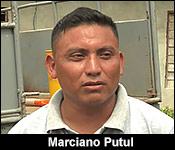
Marciano Putul, Shopkeeper/Vehicle Owner
"It makes my life a lot easier because before I had to leave it out there and I was always worrying about it you know because I have nobody to mind it but now that I have it in my yard it's much easier and I bring my stuff in, like I just drive out, drive in back."
Courtney Menzies:
"When they had just fixed the road, and you drove in the first time, what was that feeling like?"
Marciano Putul, Shopkeeper/Vehicle Owner
"Well, it feels a lot [more] relaxed because then I don't have to stretch my feet to walk all the way in so it's a lot easier right now."
"Like from here we don't have a regular bus run so whatever people got to do out there in town and if they really need to go, they come to me and ask for a charter and that's how they do their business."
And while the residents were no doubt overwhelmed by the all the changes they've witnessed in the past year, Friday was a gift that kept on giving: the school received laptops and books, and the village saw the inauguration of a new water system.
Alfonso Putul, Third Form Student
"We're really excited that this party is based on our water systems and solar boards. It is getting easier for our parents to go, like taking water, heavy water, on their bodies and they're straining themselves but now we are getting much easier to do those things, less force to do those stuff, and easier to work together."
Arnold Putul, Second Alcalde/Teacher
"With these laptops we can help do the recordings or for school information to be recorded easily and more efficient and with the laptops children can also come and make good use of it and have access to it with the supervision of a teacher."
Courtney Menzies:
"Are you happy that all of this happened and that you're getting a laptop, you're getting new books?"
Dominik & Dahlia Bol, Students
"I am very happy."
Courtney Menzies:
"And how do you feel?"
Dominik & Dahlia Bol, Students

"Happy."
But even with all of that, there is still a great need in the village, and one student says there's something he hopes to see in the near future:
Alfonso Putul, Third Form Student
"There's actually one more thing, only our transportation to school. We want that now because you know gas today, price is rising up and it's really expensive for us because it cost a lot of money to go to school, we need our bikes and then now we want our transportation, we want to see our own bus reaching our own village and we'll be excited for that."
And according to Miriam Choc, there are six other villages that have reached out to them to get their own solar powered system, including Lucky Strike in the Belize District, Fireburn in Corozal, and Sunday Wood, Na Lu'um Ka, Mabil Ha, and San Lucas in the Toledo District.