
This morning, representatives of the government, technocrats in the education system, and representatives of financial institutions engaged in some real talk about the severe inequality for Belizean students. That's their inability to access funding to pursue secondary and tertiary education, which is a bedeviling problem that has affected Belizean scholars for decades.
It's a topic which this station explored a few weeks ago, when Jules Vasquez, the host of Uncut, invited some of Belize's most pre-eminent scientists. They explained that the price of education is astronomically high, that they had to struggle with massive debt from student loans, and that the labor market in Belize cannot compensate them for the massive investment they made to pursue the upper echelons of education.
Well, the discussion on education inequality and the resulting brain drain continued today when a group of youths presented two separate policy papers they came up with after studying the topic at length.
These 20 young Belizeans spent four months completing a course on Public Policy development through the support of the International Republican Institute and the Caribbean Youth Fellowship Program.
Here's a snippet of their presentations on the inability of Belizean students to truly access secondary and tertiary education that is affordable:
Michael Fritz, Presenter
"Secondary education is not per say, accessible equitably and we've assessed that through documentation and research from the mixed survey in 2015 as well as the last Census in addition to other regional and national researches done; so that's the baseline. We've identified three barriers here which includes economic, whether it be because of poverty, whether it be because of other economic restraints. We look at social and developmental services, support for these, which includes having children or young people being supported within the school system. So, getting in the school system is one thing, but making sure that they have a cohesive and supportive environment to go through that secondary institution is important."

Janelle Caliz-Roches, Presenter
"Predominantly, students access tertiary education by the way of scholarships made available by the Government of Belize, the Government of Taiwan, the Government of Cuba, Commonwealth scholarships, Chevening scholarships from the UK, or student loans offered by DFC or other local lending institutions such as the domestic banks and the credit unions; which requires a co-signer and collateral which many youth may lack. Additionally, loans are coupled by non-preferential interest rates and debt servicing which requires students to have either a part-time or full-time job, or debt servicing by their parents or guardians. The extensive loan requirement influences the number of students who can access tertiary education in Belize."

Amilin Mendez, Presenter
"The areas that we looked at was the credit hours. How can we standardize credit hours for Associate's Degree? Currently it is 72 credit hours while regionally and internationally it is 60 credit hours. As it pertains to a Bachelor's program, locally it's 150-160 credit hours and internationally and regionally it's 120 credit hours. This is substantial in terms of cost. If we could standardize it and reduce the number of credit hours, it would really make a difference for the students who want to access tertiary education. We believe that this is a low-lying fruit and something that is very tangible. The other area that we looked at is a flat rate for the subsistence from the Government of Belize to the tertiary educations. Instead of providing a flat rate subvention, it should be done per capita for students who enroll in the tertiary education. This would ensure that financing is directed to assist the student and it would be way more productive in terms of the management of these institutions. A third solution that we discussed is partial Government guarantee. If there is a partial Government guarantee through Development Financing or a Captu Financing, this would be quite feasible wear by students will no longer need to source collateral. Let's be real, how many Belizeans who want to access tertiary education have a piece of land to put up as a collateral?"
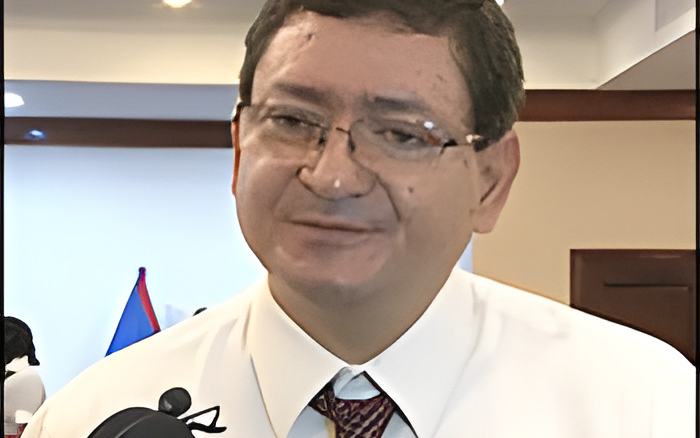
As you saw, the topic was the focus of a robust debate today, and several of the institutions that engage in student loan programs gave feedback on these presentations. Here's what the General Manager of the Development Finance Corporation and to say about how student loans become a major financial burden for Belizean scholars who want to escape the clutches of poverty through education:

Natalie Ewing Goff, General Manager, DFC
"Mrs. Villanueva spoke about living expenses, with our loans, you can get and access living expenses. It is just that what we find when you put it all together, the fees and living expenses, the load is a lot. When we look at the payment of these loans, what these students are going to earn after the graduate leaves a lot to be desired. One of the things we are seeing at DFC is our brain-drain, a lot of our students especially those who go abroad to study do not come back home. I have an example at home and we speak to him but what will a mechanical engineer make here versus what he will make in Canada and if you have a loan to pay, I think there are countries who have a policy. A consultant told me 'you educate them, we will take them, because we need to build our system'. So, we need to address that, we need to have incentives for these students to want to stay and if possible, maybe in the schools when they are very young. I remember going away and I just wanted to come back home to serve my country and I've served my country for 40 years. It has been such a joy for me, so there has to be something there in the educational system, at home, parents - your children to come back; the private sector and the government sector, let us reward these students."

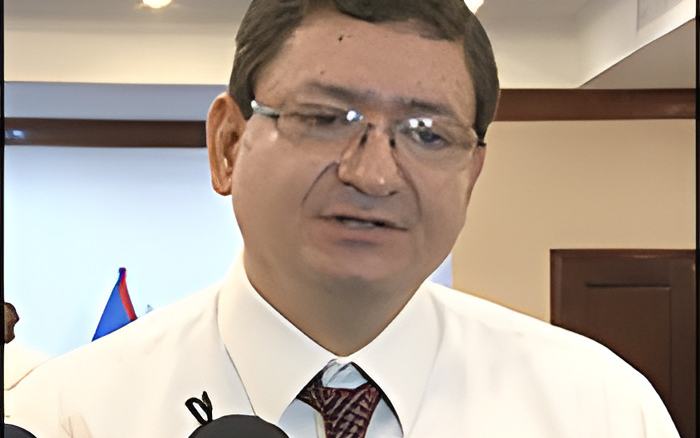
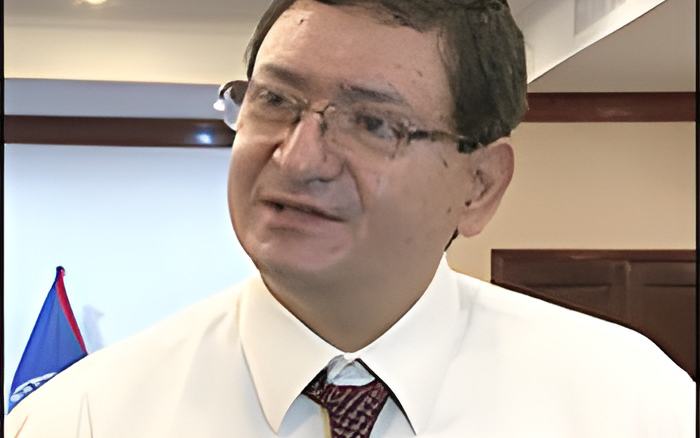
D. Louis Zabaneh, Minister of State/Education
"At that level we are at about 25% enrollment when the region is more like around 50% enrollment. So, we are far behind and in fact that is one of the bottle necks. So, one of the things we need to do is to ensure that the sources that the DFC or National Bank have, are very low interest rates, that's the start. Because if they are borrowing at high interest rates and they add their administrative fees, when you pass it on, it becomes onerous on students. They had some good ideas, when a student is now complete with their degree and they are in the workplace and have a job already, then an incentive would be to reduce the interest rate at that point because the risk has gone down."