
How many people in your family, or your workplace know how to drive? Now, how many of them are women?
Indeed, there's no running away from it: There is a huge disparity between male and female drivers, with men dominating the wheel and the wheels. And even the women who do have driver's licenses, typically can only drive automatic vehicles.
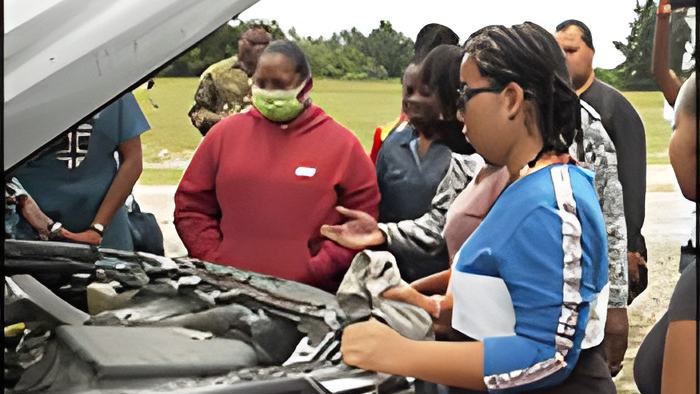
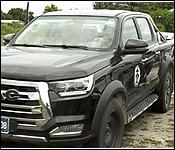
It's an imbalance that the YWCA and the Belize Defense Force is hoping to even out with their Driving Training Program. They're starting with sixteen women and the goal is to open doors for them, both for their independence as well as giving them more job opportunities.
Today, Courtney Menzies attended the opening ceremony at Price Barracks where the trainees will be practicing. Here's that story.
For many over the age of 17, driving is second nature - it comes as easy as walking. But for those who can't drive, it's a daunting task.
And sixteen women are taking a leap to further their independence by taking on that challenge. They're participating in driving training that is a collaboration between the Ministry of Defense and YWCA, with help from UNICEF and the Ministry of Transport.
And one 21-year-old says she's tired of biking or busing it, and is ready to get behind the wheel.
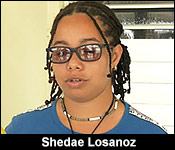
Shedae Losanoz, Participant
"Personally, I've always wanted to know how to drive. There are people in my family who know how to drive but it's really only my uncles, my mom can't drive, my grandmother never learned how to drive, so I mean I guess I wanted to be a trendsetter, I wanted to be the first woman to know how to drive in my family."
Courtney Menzies:
"Do you feel like learning to drive will also give you a sense of maybe more freedom or independence?"
Shedae Losanoz, Participant
"Definitely. I mean, once you have that skill, you can basically do whatever you want, you can pick up and go, maybe you want to just run errands, when I get older and have kids I'll be able to drop my kids to school, it definitely gives freedom to not have to depend on someone else but yourself."
Courtney Menzies:
"How difficult is it right now not being able to drive?"
Shedae Losanoz, Participant
"I mean, at the moment I only have my bike to ride around or have to depend on the bus system and that's not exactly the best. Definitely in a car, you get to have more shelter, more freedom, go when you want, come back when you want."
Courtney Menzies:
"Are you in any way scared or nervous?"
Shedae Losanoz, Participant
"Definitely, I was worried I would completely wreck the car or something but it's been easier than I anticipated, I really was kind of overthinking it but as soon as Mr Palacio, one of instructors, eased us into it, took us step by step, he was right there along the way so it's been pretty good."
And the Minister of Transport added that it can also open doors to more employment opportunities for these women - especially in a male dominated field.

Rodwell Ferguson, Minister of Transport
"We are a country of mostly men in the workforce, especially when it comes to driving and when I heard the initiative, I said, okay, let's go for it. We will take them as how they want to go and they can further apply to drive the big trailer trucks, the buses, whatever it might be that they want to take on as a woman. I believe in equality so I think what a man can do, a woman can also do, so I really applaud UNICEF and Ms Diane for doing this for these women."
"We can find employment for them within the government service, that won't be an issue once they meet they criteria."
And he says he'll also be waiving that $60 license fee to make it easier for these women to get on the road.
But first, they'll have to pass the training - which shouldn't be too hard since the Brigadier General says some of the women already have an idea of how to drive. He explained today how they were able to partner with YWCA.
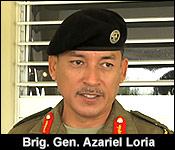
Brigadier General Azariel Loria, Commander, BDF
"We told them we could provide the training for the women but we needed some of our vehicle repaired, to which the YWCA said they could approach the UNICEF, Mrs Parker, to which she has graciously assisted in purchasing the spare parts for the repairs of those vehicles and hence the reason it has all been made possible here today at the ceremony."
"Some of them know a bit about the vehicle but like how I mentioned this morning at the ceremony, driving a vehicle encompasses mostly practical lessons they have to do a bit of theory, perhaps a couple days and after that they will transition into driving and to my surprise, they are already driving, but the idea is for them to know the vehicle, know the engine, what to check, the oils, the lubricants, etc., and know that the vehicle is in good working condition, checking the insurance, the licenses, that they are up to date, and again to drive, to gain experience in their judgement skills while behind the steering wheel."
The training will last for three weeks.
The classes are from Monday to Friday, 8am to 4pm.