
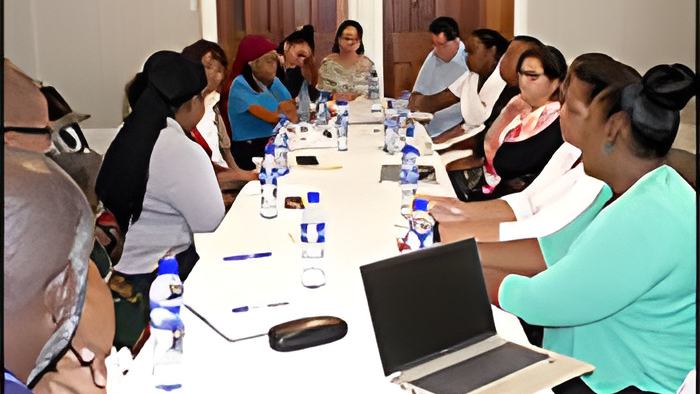
And in education news, the city's GEMS schools - Gwen Lizarraga, Excelsior, Maud Williams, and Sadie Vernon - met today with the Minister of State and the BNTU to give their feedback on the Competency Based Education Program. These schools have been given priority by the ministry since oftentimes it is the children with scarce financial resources who attend - and their education could be the difference between being a productive citizen and falling into the clutches of crime.
And this program ensures that they are not just memorizing what the teachers write on the board, but that they can also learn and implement valuable life skills. The program also involves a meal and school supplies to take the burden off their shoulders. Today, we spoke to two of the principals to get their feedback.
Dawn Watters, Principal, Excelsior High School

"From my school the competency-based curriculum has really helped us a lot. For us it has increased enrolment, because we had a low enrolment last year. We have about 70 students last year. This year had 126. The project includes uniform, feeding program and so that has assisted our students to remain focused when they are at school and had also assisted us with attendance, because they are reporting more regularly to school."
Reporter
"A lot of times these schools are the last barrier to prevent children from going on the streets and getting involved in criminal activities. So how important are these types of programs?"
Dawn Watters, Principal, Excelsior High School
"It gives them a positive outlet, because many of them they are suffering from socio-economic conditions and so many of the barriers to getting into a high school, for enrolment in a high school has been removed, because of the projects, so it now gives them access to attend high school and while they are there, they'll be able to become competent and learn skills attitudes and all these things that are necessary for them to gain employment. So it really gives them a future."
"What we do, we do a lot of practical so that students can apply. First, we use to do a lot of test and a little bit of practical or demonstration of those skills. So the curriculum has totally shift to more practical, so students can apply whatever they have learnt to solve real life situations."
Reporter
"In terms of attendance and students' performance, how has that been impacted by this program?"

Deborah Domingo, Principal, Maud Williams High School
"Well, it has been impacted because we are also a part of the education upliftment project that the government of Belize has been providing a school meal and assistance with uniforms. So it has been very positive in terms of attendance, but the issue of attendance and drop out is a little bit more than providing a meal and having uniforms. There are societal context that may impact where a student is coming to school or not. But for those who were struggling because the economic situation in the community or at the family level wasn't where it should be. It has been very positive and they have been coming to school more frequently. We are not where want to be, and so as an institution that's one of the things we are planning for next year."
And we also asked the Minister of State and the outgoing BNTU president how they felt about the discussion.
Dr. Louis Zabaneh, Minister of State, Ministry of Education

"It's always invigorating for us, because we ask our principals and our teachers to tell us exactly what they are experiencing, because without that, we won't be able to really make the right interventions. So the particular GEM schools as you know have their own experiences with the socio-economic dynamic of the communities that they serve, so in a nutshell what they have shared with us is that unlike many of the other schools, they have some other issues that need to be address before we can embark in fully moving forward with the curriculum framework. These include for example that many of the students that they have are at a low level of reading competency. Its a big issue for them. So we have to have those interventions first to make sure that those things are addressed and then they can move into the other areas for the competency-based education."
Elena Smith, Outgoing President, BNTU
"For the most part we've heard positive feedback in terms of teachers and schools embracing the new change. With change come some resistance and we understand that, but also it means that there has to be more support given to schools, to our teachers and our students, because we know that this is going to be costly venture and teachers have been taking out of pockets for a very long time and this is going to be worst, in terms of what would be expected,
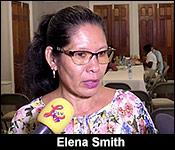
so it has to be that the ministry then will do its part to ensure that resources are provided as much as possible that teachers don't have to be speeding more out of pocket and then putting their families at a disadvantage, because of wanting to go give to the job that they love to do so much."