
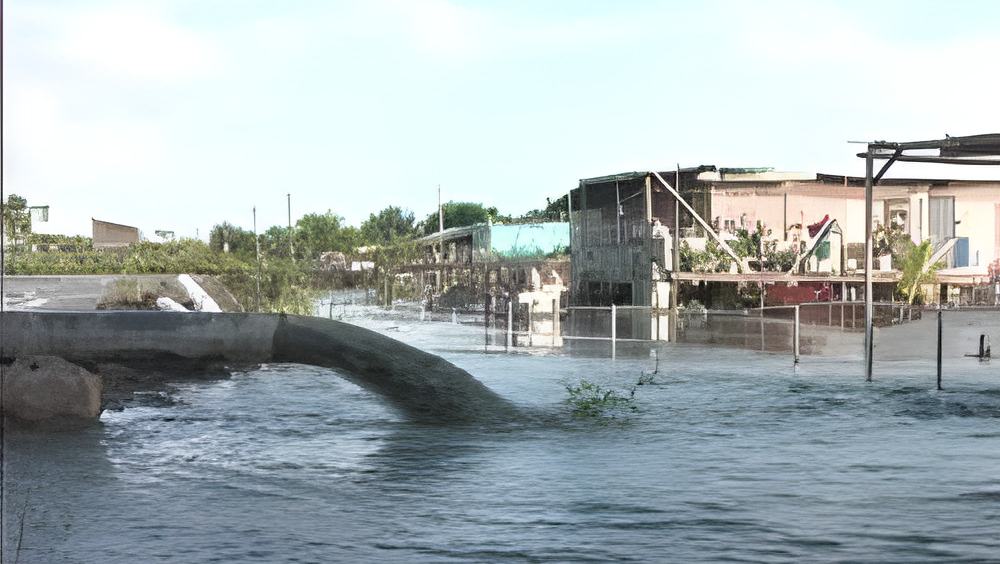
We first took you inside Belama Phase 4 back in July of last year. At the time we highlighted the problems of the growing squatter community which lacks in basic infrastructure and utility connections. Tonight we'll take you back to phase four where development is coming, even if it is through a hole in the air. It's a massive reclamation effort of the entire area engineered and orchestrated by controversial contractor Bill Lindo. Alfonso Noble walked across London bridges and waded through the silt, mud, water, and tall promises to get to the bottom of it.
Bill Lindo, Developer
"On a production basis, about 250 cubic yards per hour is being moved so for the day I would say about 2000 cubic yards."
2000 cubic yards of sand, silt and mud that is being removed from the mouth of the Belize River by this dredge and is pumped directly to Belama Phase 4. That's where developer Bill Lindo is creating in the area of 200 lots filled with 30 inches of material.
Bill Lindo,
"What we are doing is dredging the mouth of the Belize River to open a channel for two purposes. One is for boats to come in and two for the heavy rain. When the rains come down heavy, because it is shallow, it is only about three feet, it backs up and then it goes into the Haulover Creek which goes into Belize City and backs up especially sometimes in the Belama area, the low area like the phase three that is low, it backs up in there. And at the same time what we are doing is instead of throwing away the material, we're piping it and sending it across the road and creating Belama Phase 4 so that people can have access to lands."
On Monday the constant flow of material began and shoreline supervisor Belson Blair says water spewing from this pipe has become a ever-present reality for residents:
Belson Blair,
"We work from six to six in the day and we bring up about, in four days we have brought up about 14 to 15 inches of material already. We have another fifteen inches more to get to the level of the land. It is difficult work. I have to make sure everything operates with the workers and that they are doing the right thing. We have to move the lines and everything so it is a difficult work and it is dirty work also."
Dirty work and Lindo says it's worth it. He has a $2.3 million contract to create a channel at the mouth of the river as well as fill the lots. He says that by the end of March there will 200 lots available but before that, material has to be pumped in
Bill Lindo,
"Dredging is removing from the bottom of the sea a river but then we transport it with water, we use water as a means to transport the solids. So effectively you have about anywhere between seventy to eighty percent water going along with the materials. So whenever it goes in, you will have water with the material but then we drain the water to come out and the rest we left to nature and because it is sand, it won't take more than a month to dry. But then to move it, because you have a lot of water coming, and you don't want the material to come out because it is in suspension, it floats around. We build a dyke around the area so we have three of them back there, one small one and two very large ones. Right now we're using five thousand, nine hundred feet of pipe and as we speak, we're joining more pipe because we will add another thousand. So we will be up to nearly seven thousand feet by next week with pipe, that we'll be using more than a mile of pipe. The dredging is more efficient because it moves more per hour. The two thousand cubic yards per day is equivalent to about 145 truckloads per day. So it is very difficult to get 145 trucks per day in one area but the dredge can do that in one day. The dredge is more efficient but not for small areas, for big areas because preparation is very expensive and it takes a lot of time and the equipment is expensive."
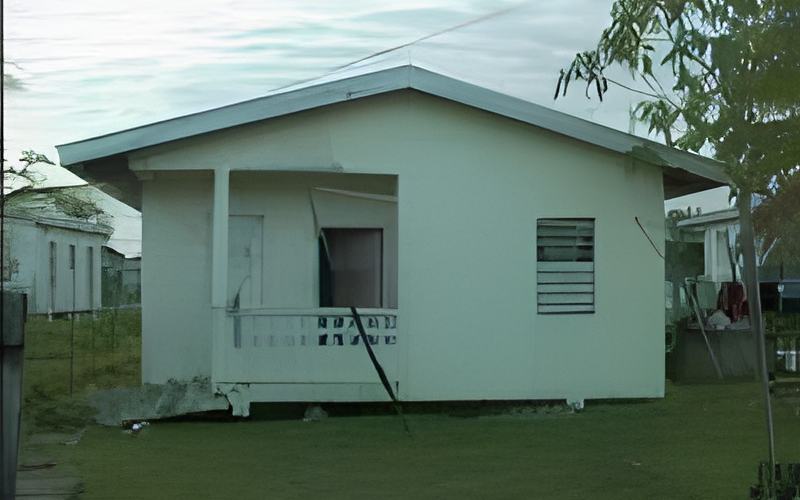
And there is no doubt of how efficient the piping of material is. And to prove it, the residents in the area are already preparing for the floods. Its something like a Noah's Ark with bush sticks be in planted in the ground and an elevated hard time highway of intricately interconnected London bridges. Osvaldo Zetina says his yard was once green and now it's becoming flooded.
Osvaldo Zetina, Area Resident
"Before we never used to have water here, only more down but since they started filling from that side coming down, all the water is coming this side so what we had to do is as you can see we built a little bridge to come out. Everybody has to do the same thing. Some of them work harder because they have to go nearly a half mile down with their bridge. As for me I just had to do this short one so I could come out of my house. Everybody in the neighborhood are building bridges so that we can prepare later on for the water and the mud and whatever is coming by, maybe crocodile too."
Alfonso Noble,
You're preparing like Noah's Ark.
Osvaldo Zetina,
"Exactly, yes. If they do it the proper way it will be a good thing because back here will be higher than Belama 3 I would say because even if you go to Belama 3, when you care coming out from here and it rains, the main street is always floods so hopefully they do it the right way. If they fill here and they fill the street, it will be a good thing in a way. But in a way, it is kind of bad because we are taking a licking. If you don't have the source, imagine they have some people who are trying to build their bridge but they don't have the materials like for instance the pallet. At some places you have to buy those pallets for like $3 for one. People who can't buy it, they have to find pieces of board from construction sites, they go and they get it, stuff like that."
Bernaldo Duran is another resident, in fact the first to be affected and the first who's had to raise his bridge.
Bernaldo Duran, Area Resident
"We just live with it and whatever the workers have to do, we cooperate with them. We build the bridge, put our stuff together, and they notify you before they start anyway so what happened is that if you lose anything, that is our responsibility because they notified us a month or two months because they started to work. We can't say they just came and do the thing right so, they notified us. We were in worse than this so at least we appreciate how it looks, at least so far. When this dries up, it will be more convenience for our children and then if you notice the street, the man said he would fix the street but the rain came down on him so he couldn't do anything about that. "
And while there is no complaining, only coping with the rush of fill material, one thing is unclear, that is if these residents will get to keep their stake in Belama Phase 4.
Bernaldo Duran,
"I am not sure if this is my lot yet because we are just squatting on this place. The whole place is filling up eventually."
Osvaldo Zetina,
"I won't just give this up because before I worked hard to clean this piece of land so I can't just abandon it then because this is my first, where I started from scratch, so I can't just give this up."
He may not give it up and maybe he won't have to and while only time will tell one thing is clear this development will inevitably have an impact on residents already living here and those who are to come.
Lindo says the entire project will come to an end by March of this year. He adds that the reclaimed areas will take some 2 months to completely dry allowing residents to eventually discontinue the use of the London Bridges.