
Redd+: it's short for Reducing Emissions from Deforestation and Forest Degradation, and it's a project under the United Nations Frame Work Convention on Climate Change. REDD+ oversees a reward system in which countries with high carbon emissions reward countries with large forests to maintain and enhance their forest growth. The project is mandated to promote forest protection through conservation, sustainable management of forests, and increase carbon stocks.
Belize signed on in 2016, and since 2017, the Government of Belize has been participating in the program
This morning, the Ministry of Sustainable Development, Climate Change & Disaster Risk Management hosted a virtual ceremony called the "Phase I Project Closure & REDD+ Strategy Launch". The Ministry wanted to update Belizeans on what is being done at the national and community level to protect the country's rain forests under this project.
7News attended the ceremony, and here's what a few of the speakers to say during the 2 and a half hour event:
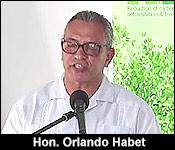
Hon. Orlando Habet - Minister of Sustainable Development, Climate Change & Disaster Risk Management
"It is undeniable that climate change poses many threats to sustainable socio-economic development, not only in Belize but the whole world, driven by the increasing amount of greenhouse gases emitted into the Earth's atmosphere due to human-caused activities, including [the] burning of fossil fuels, deforestation, forest degradation, and many others. At the heart of this are forests, one of the most important solutions to combatting the negative effects of climate change. These important resources continue to be a part of our natural capital, which we continue to be proud of."
"The benefits provided by the forests are tremendous. Apart from providing habitat for most of the world's terrestrial biodiversity, supporting the livelihoods of billions of people, and driving sustainable growth, forests also regulate ecosystems and play a vital part in the carbon cycle. Forests also absorb carbon dioxide from the atmosphere, and stores tremendous amounts of carbon in biomass and soils. Research has shown that it can provide more than one-third of the total carbon dioxide reductions required to keep global warming below 1.5 degrees centigrade through to 2030."
"To address the issue of deforestation and degradation, REDD+ was instituted. The mechanism was developed back in 2005, when REDD, which stands for Reducing Emissions from Deforestation in Developing countries, was first introduced to the world as a UNFCCC initiative to guide activities in the forest sector."
"REDD+ makes rainforests worth more alive than dead, overcoming the financial incentives to destroy and degrade them for timber, agriculture, livestock grazing, and other drivers."
"REDD+ is seen as the only mechanism that is proven to slow deforestation on a global scale."
"Given the current fiscal situation in Belize, I see REDD+ as key to providing sustained environmental and socio-economic benefits."
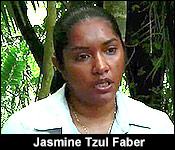
Jasmine Tzul Faber - Project Officer, REDD+ Belize
"We have been going out into the communities doing outreach, and I go in and I sit. It's amazing to hear that, you know - when you first start, you never think about how we will impact. We just do what we think we need to do, but today, we're hearing these communities approaching us, asking us if we can assist them in replenishing because they're not seeing their waters anymore. Their creeks are drying up, and they have realized that they need the trees in order for that cycle t continue, for water to be restored into their environment. They are finally seeing the connection between tearing down all the forest, and just having the rotation of crops. So, their eyes are opening."
Kaia Mis - 10-year-old
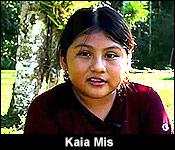
"When the creeks are out, that's less water. When it's too dry, there's less rain for their plants, and just for them as well. You cook with water. You clean yourself with water. We need water, we also consume it, and without water, the crops die, so what are we gonna eat? And the animals go farther into the forest to find more water, so what do we eat?"
Redd+ Funders have been working with the Government, the National Climate Change Office, the Forestry Department, and the Protected Areas Conservation Trust to implement Phase 1 of the project. The REDD+ project is divided into three phases. Phase one, the Readiness Phase, will officially end in December.