Last month Belize officially launched its "Nationally Determined Contribution 3.0" - a commitment to moving towards a sustainable and climate-resilient future. Some of the key outcomes aim to target 75% renewable energy in electricity generation by 2030, and build resilience in key sectors and setting targets for land use, agriculture, energy, waste, and coastal adaptation. The Minister further explained what this means for Belize and his ministry.
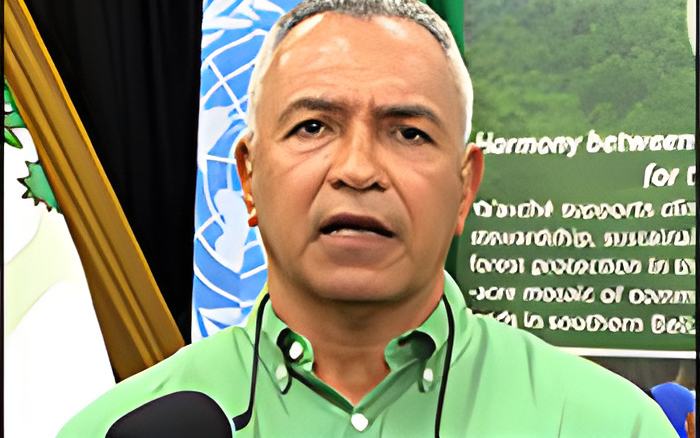
Orlando Habet, Minister of Sustainable Dev
"That is very important for Belize because it is our commitment to climate action. Every time we have an NDC, which is every five years, the global community asks for more ambitious NDC's which means to say that we have to conserve or we have to work on climate action, that is more than what we did in the previous one. This one is a little bit more than the 2021 NDC, but the implementation is always the challenge. So I was telling my team that whilst there was a gap for NDC 2.0, there might be a larger gap for NDC 3.0 But, I think with the collaboration of the various sectors, the different ministries, especially energy, which is one of the biggest emitters, and transport, which is the next biggest emitter. We have to see how we can, do the work for mitigation on that side. But also we have to look at, so the adaptation side, which is very important for us, we are seeing what's happening with sargassum affecting not the entire region, but it is affecting Belize. We believe that when the sargassum comes to the shore and you try to harvest it from there, it is already too late. We have to do it before it reaches us, because then it's already affecting the fish. Those fisher folks who have their small, craft vessels. It messes up the propellers. And so, when it goes to the shore, it also starts to rot. And then you get the smell because of the gases that are produced. So we have to do a concerted effort to work on those things."