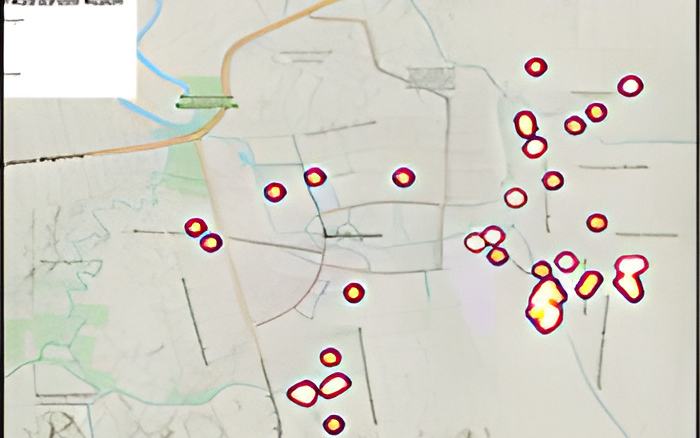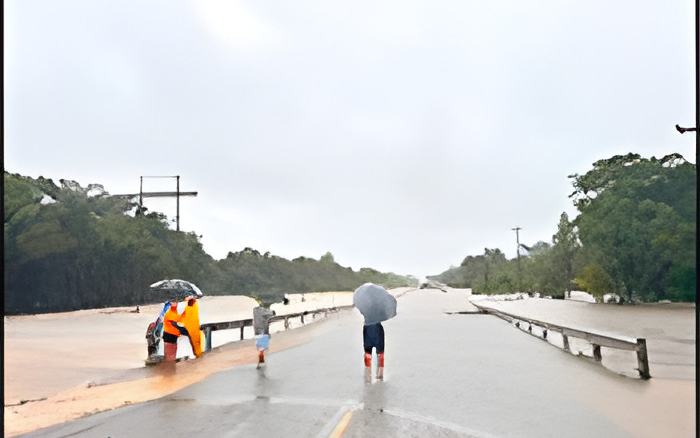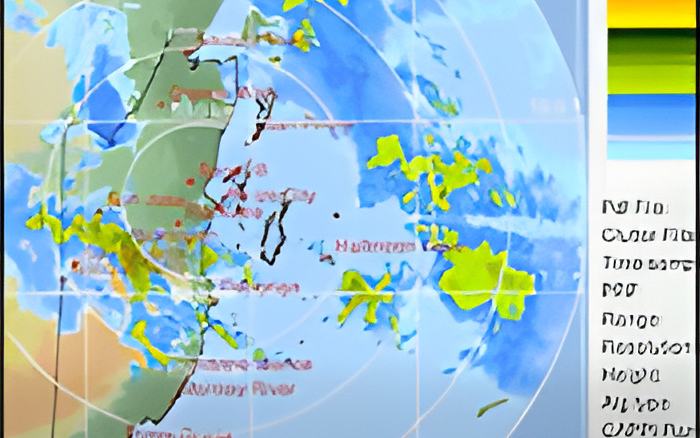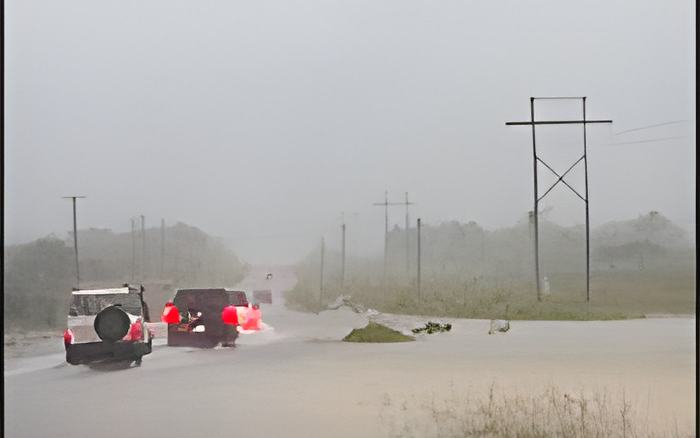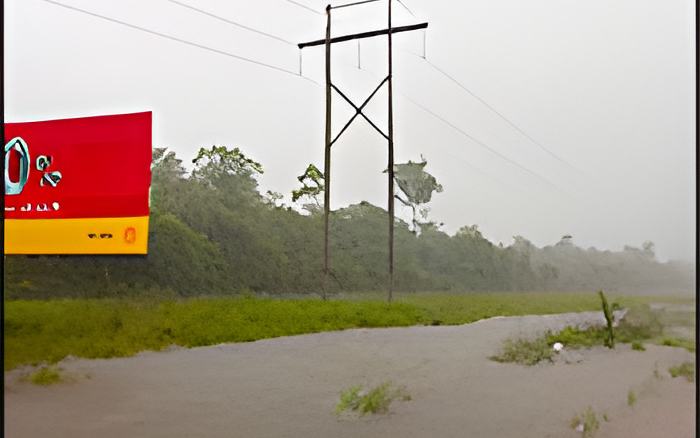

They were in the headlines tonight discussing the unpredictability of extreme rain events.
And hopefully some new equipment they received today will help in forecasting such events.
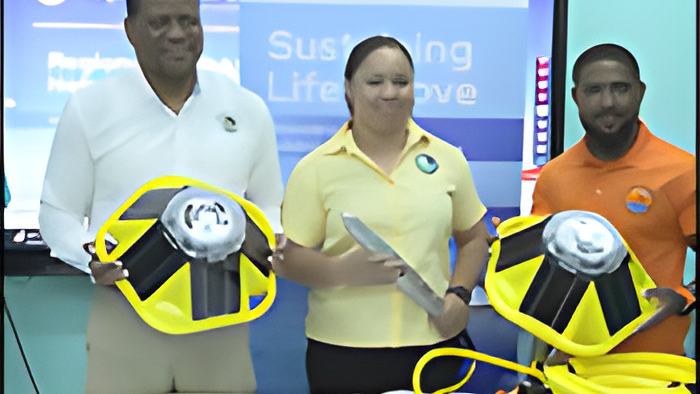
The National Meteorological Service today received a donation of three SOFAR marine monitoring stations from the Caribbean Institute for Meteorology and Hydrology.
These will be utilized at English Caye, Glover's Reef, and Southern Turneffe Atoll and will aid in early warning services. The Chief Meteorologist explained more.
Ronald Gordon, Chief Meteorologist, National Meteorological Service
"We are today receiving a donation of 3 marine monitoring stations through the Caribbean Institute for Meteorology and Hydrology under the RCCAME. This project is funded through the Caribbean Development Bank with financing from the European Union. This project will assist us to enhance our monitoring capabilities with the marine environment. Many persons know that we have a vast network of weather stations on the main land and we do have a few offshore in the cayes and these stations are currently only monitoring atmospheric variables, pressure, your air temperature, and wind and that type of thing. We know that we have a gap in terms of monitoring oceanic variables and these stations will assist us to do so. So it certainly is a very important initiative to enhance our capacity in providing more early warning to the public, building resilience especially along coastal communities as many as we know most of our residents reside along the coast so it's important that we're able to build the capacity to provide those early warnings."

Courtney Forde, Mission Lead, Caribbean Institute for Meteorology and Hydrology
"As Mr Gordon mentioned, Belize has received 3 buoys, two carry a conventional mooring so just an anchor, your anchor line, and the buoy itself. One is a what we would call, has a smart mooring so this one has temperature sensors along a data cable as opposed to just the temperature at the surface you get the temperature profile throughout the water column so it has one sensor at the top, one in the middle of the water column and one close to the bottom so you get that range of temperatures throughout the water column. Apart from that, each of them measure barometric pressure, you get waves, they all measure waves and then you get wind speed which is derived from the waves."