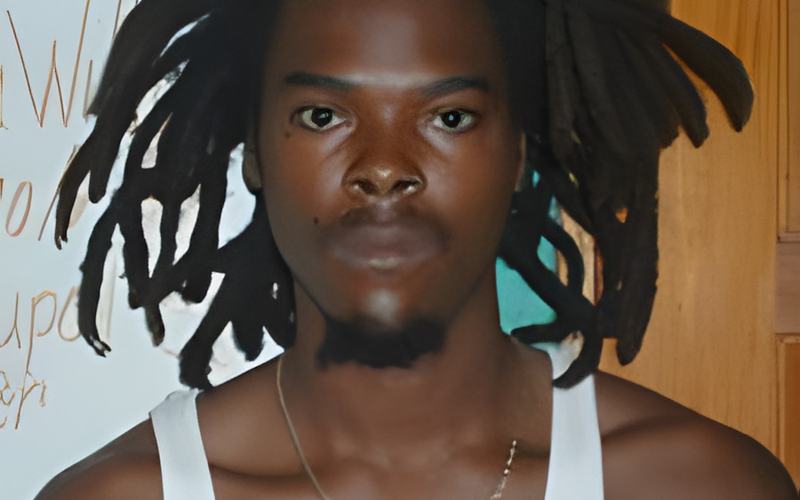

Most viewers will recall the story of Steven Yearwood the 21-year-old shooting victim who was paralyzed when he was shot. If that does not jog your memory maybe the painful bedsores that the young man had developed as a result of his condition will. Steven Yearwood's story aired almost two months ago and on the request of numerous viewers, we today visited with the young man to see how he is doing. What we can say is that his recovery is remarkable - but while it is remarkable, there are still images that might make some queasy - so we warn you, viewer discretion is advised.
Alfonso Noble Reporting,
On September 13th. Steven Yearwood told us his story: how gun violence had completely destroyed his life. He didn't only tell us, he showed us his painful reality. A gunshot paralyzed him from the waist down and his confinement to bed produced these large bedsores that were literally eating his flesh right to the very bone.
Since his appearance he received help from numerous donors from little old ladies to large organizations.
But the most outstanding was an offer from an unnamed businessman who gave him a $250,000 line of credit at Universal medical center and told him, "don't worry about the cost, just get better:".
One week after he came to national attention, on September 20th Steven was admitted and Dr. Lisa Johnson has been his attending physician.
Dr. Lisa Johnson,
"He had developed pressure sores. The state we found him in to be was nutritionally deficient. He was severely anemic and he, despite the fact that there was no damage to the use of upper limbs, he was not using his arms. He was basically lying in bed doing nothing. The ulcer over the buttocks was quite large. I would say that that one was approximately ten inches in diameter and it was quite deep, extending down to the bone, and the ulcer on the left hip was quite deep extending down to the bone."
To begin treatment, Johnson says they first had to improve on his nutrition.
Dr. Lisa Johnson,
"We started to give nutrition, building blocks of protein, building blocks of fat, building blocks of sugar, in addition to which he was given high doses of vitamins, intravenously, and a lot of food was placed in front of him. So that was the first job. The next job was to transfuse him. His hemoglobin was seven when he came in and the normal man walking around should have a hemoglobin of at least thirteen to fourteen."
After a month at the hospital, Yearwood received his first operation.
Dr. Lisa Johnson,
"We took him into the operating theatre, after about a month and attempted to close both sides. The left one was very deep and that one wasn't very successful. We got it to come a little closer together but we didn't get it to the heel completely. We got the right side to close. One the right side was closed, healed, then it was another three to four weeks before we decided to skin graft the ulcer on the buttocks which, at that time, had started to shrink. So what we closed was really, it still looks impressive where it is but it was smaller than when he first came to us so he, the body had actually started to do the work of shrinking the wound. So this is about two weeks ago we took him into the operating theatre and at that time we took skin from the right thigh, the back of the right thigh, and we sutured that onto the ulcer on the back and also we covered the one on the left hip and the smaller ones on the left ankle because the one on the right had healed up basically."
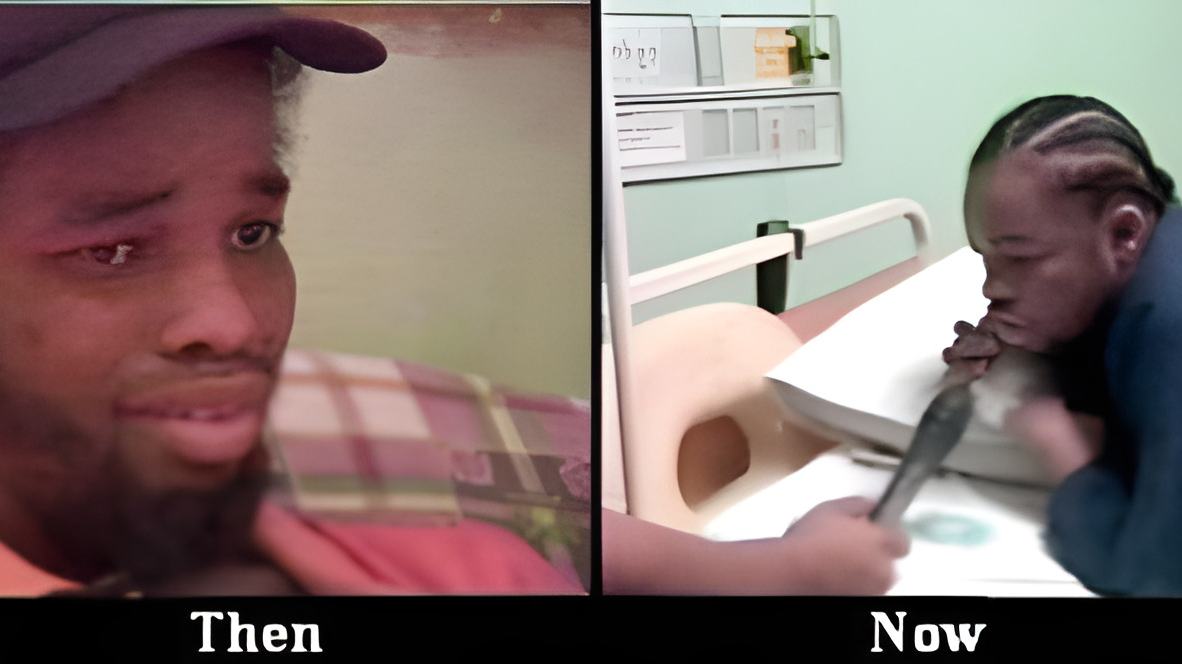
Today we found Steven still at the hospital but this time it was not the shell of a man we had found back in September. Steven Yearwood was invigorated; his wounds are healing. The one on his right side is just about completely healed, those on his ankles are well on their way to complete recovery and the one that had been an ulcer of pain looked like this. After a skin graph the large bedsore was covered up and the healing is now underway. But while his physical condition is improving his mental state still needs work. Johnson says that because he continues to be depressed about his paralysis, the hospital staff has been trying to get him to do the things which he had become dependent on others to do for him.
Dr. Lisa Johnson,
"We started to insist and demand that he start to do things for himself, that he started to lift himself out of the bed, off the bed, that he learn to use the wheelchair, and there were some very courageous people who have suffered from the same fate who came in and showed him that it is possible to live your life and to do things for yourself. He needs to get himself into the frame of mind he can help himself, that is essential. He is getting there. It is a fight. It is not the easiest thing for a young person or any person to lose the use of their limbs."
That has been a particular and most difficult challenge for those attending to Steven but they have been able to get him to begin believing and wanting to move on.
Steven Yearwood,.
"I just have to live with the fact that I am crippled. I just have to live with the fact that I am crippled and help myself to do something because I am not dead, I am still alive, and I want to live. I feel real good, you could see I look a lot better, stronger, I can get into wheelchair, I can get up, and help my self in all kinds of way. I just thank God. I thank to the hospital, to Universal, KHMH, and I thank all the people who helped me and who are still helping me and praying for me and I will pray back for all of them and I will show them that I will help myself. I will get better from here and I will find something to do; maybe art, or get in the wheel chair race, or just fishing which I like.
Not because they took away your foot you should feel bad, you can still learn a lot of things. They have people who can't even move their hand, nothing, they can just move their mouth, they have to feed them. Those people can do art, I watched it on Discovery Channel. They have people who have two hands and no feet and they dress themselves, bathe themselves, feed themselves, and do so many things. When I watched that I said that I must could do it and I am doing it right now. I can bathe myself, I can get out of my chair and I can get it, I can eat by myself, I can even go and get what I want because I know how to roll the wheel chair real good."
Sharing in Steven's pain and recovery is his father steven yearwood senior. When he spoke today he could only say one thing.
Steven Yearwood Sr., Father
"I thank everyone because this is a great deed that has been done. Last time I had to cry, I couldn't even stand up. We haven't given up hope that he will walk. That we won't give up. I said 20 years time, before that, my son will walk. I believe that. The doctors have told us not to give up. Everybody tells us not to give up so we think if we get help again from the people and from the world, we can take our son and maybe someone can help him again to another stage. But thanks right now for the things that have happened for him because we didn't think our son would have lived. Even if it is not with money, anything they can help us with, if they know a way how we can help our son, we would appreciate it. We appreciate everyone who has helped him. We thank Dr. Lizarraga because they had to fight because my son was hurt hurt and sometimes they have problems with him and the nurses here but everybody tolerates it, everybody loves him; it is real real love he gets."
Real love indeed, love of family, love of doctors and love of a community that has extended its support and assistance to a young man fallen from the scourge of violence.
Yearwood says that he is not giving up hope on walking though doctors are skeptical that he ever will.