
It kills more people annually than aids, malaria, and tuberculosis combined. 7 million people die every year from it and 11 new cases are reported annually. We are talking about cancer - it is what awareness activists say is the real killer. But the problem is that no one knows how many Belizeans have cancer and how many of those people die from it. It is critical information which health care planners and providers need to know and now they've set up a system to capture that critical information.
Dr. Peter Allen, Vice-President - Cancer Society
"Worldwide cancer is a much much larger killer of people than the communicable diseases."
Cancer's a killer but no one really knows just how deadly it has been in Belize.
Dr. Peter Allen,
"We are finding about 36 or 37 new cases of cancer a year. The who estimates that in countries similar to ours - we should be seeing closer to 143 per hundred thousand so we would expect to be finding 400 cases a year and the implication is that we are simply missing some of the cases. What tends to happen is that we find the cases when they are quite advanced when the cancer is already pass the early stages and is extremely difficult to treat and often, even if it can be treated - the cost for the family involved is simply catastrophic."
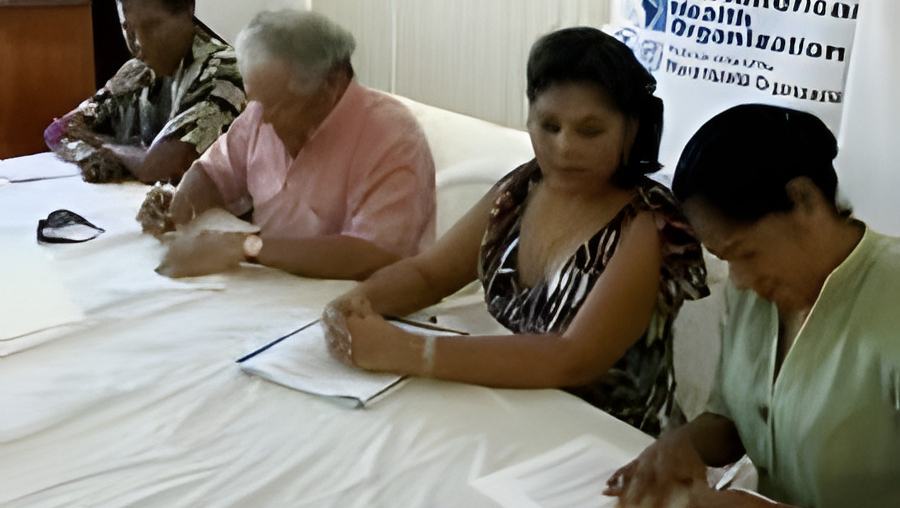
Catastrophic - and in some cases deadly. That's why today Health Minister Joe Coye, PAHO Country Representative Dr. Beverly Barnett, Dr. Beatriz Thompson from the Medical and Dental Association, and President of the Cancer Society Dr. Alba Mendez Sosa signed on to the "invincible alliance against cancer." It is a cancer patient database. The way it will work is that if you have been diagnosed with cancer - your doctor will fill out this form and forward it to the Ministry of Health. Dra. Alba Mendez Sosa says information from the registry will be invaluable.
Dra. Alba Mendez Sosa, President - Cancer Society
"Helps us in the future to locate the number of cancer, the frequency of the cancer, the age, the gender, and the region of course where this type of problem occurs for us to put more emphasis on the programs of screening, early treatment, and or course follow-up. The most important part is that our programs are based on the number of cases that we have but if we really don't have this information, we can't take measures to reduce because we won't get the knowledge about the number of cases that we have."
Deborah Alvarado and Eleanor Sanchez will be two of the first names in the registry. They are both cancer survivors but spoke to me off camera because they say there is a stigma associated with cancer.
Keith Swift,
What do you think about the whole cancer registry? Do you think it's a good idea and if so why?
Deborah Alvarado, Cancer Survivor
"It's a good idea because even with the school children today we want to find out how much people, especially in different ethnic groups."
The registry will be evaluated in June of 2008.