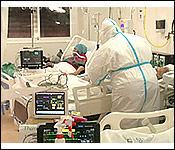
And the daily risks that nurses face - which you heard Spencer speak about - are vivid and palpable in the KHMH COVID unit.
At the start of the pandemic, it started out as an 8 bed unit - tonight there are 47 persons hospitalised - and 10 in the ICU.
It is a scary place, where death is a daily reality - and in the first of a 3 part series - Cherisse Halsall tells us how the process starts for a COVID patient:
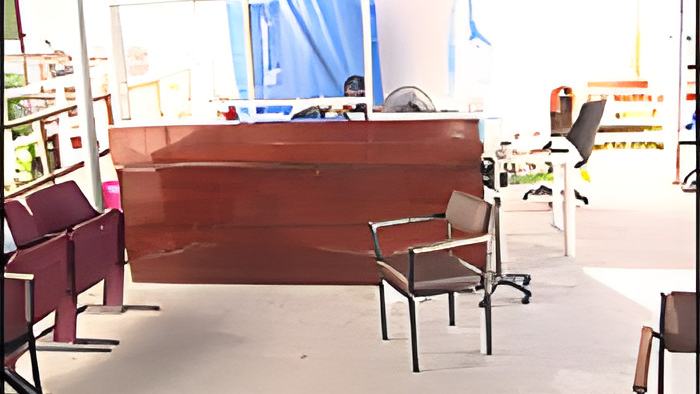
This is where your journey as a person hospitalized with COVID would begin. It's the KHMH's COVID triage tent, the place where potential COVID patients say goodbye to their loved ones and embark on the worst of what is a very lonely disease.
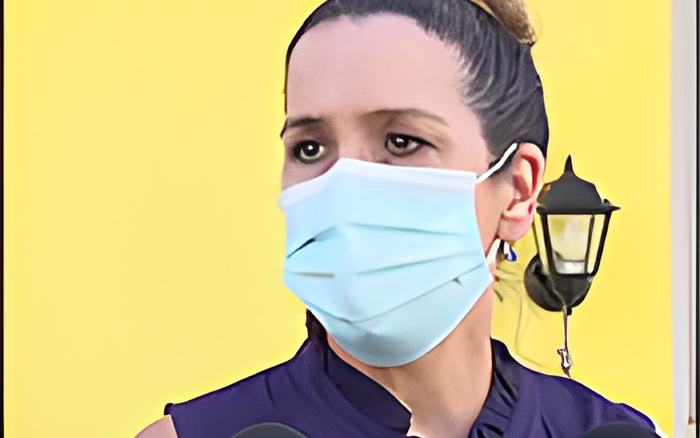
And if Covid is your descent into the underworld this woman is your Virgil. She's the Unit Manager of PUI or "Patients under investigation." And last week when she gave me a tour of the entire COVID unit she explained why this little-understood process is so essential.
Casilda Bowman, Unit Manager, Covid Patient Under Investigation Unit
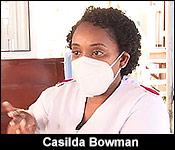
"At this point we have to classify our COVID positive patients, our patients under investigation, and our patients who are not demonstrating any COVID symptoms but are actually having some different sort of complications occurring."
"And so when we are now at our COVID and our patient under the investigation system, we then need to now classify them based on how or how urgent it is for you to go upstairs. And so that's the most important part and bear in mind that, that has to be taken place when you have a variety of patients coming in, and so our triage nurse is usually very trained and skilled in picking up these patients and getting them sorted to their correct disposition as soon as possible."
And it's that speed that Casilda had to master. She says that was complicated because it involved a lot of moving parts.
Casilda Bowman, Unit Manager, Covid Patient Under Investigation Unit
"If we equip our nurses with the necessary skills that they need to perform their jobs the jobs become easier, bear in mind that we have a high influx of new people so training was one of our first priorities so training them to classify patients, getting them in quicker, the second step was when we activated our roll out to phase three when we were able to have more beds and I think at that point in time we were still at phase one of two where we didn't have the capacity that we have now."
But while the Unit slowly gained more capacity, it was outpaced by demand - as the COVID numbers swell every day - making it so that you will get a bed - but you may have t wait for it.
One reason is because cross-contamination is a real concern. Casilda Bowan told us that cleaning, not to mention waiting the requisite airing out period between patients, is essential to her fight against the disease.
Casilda Bowman, Unit Manager, Covid Patient Under Investigation Unit
"And remember this is not a one person act, it is a whole team approach. I have to get my specialists involved, I have to get my medical officers involved. I have to get my nurses involved, and to the extent I have to get my domestics involved because as a team we have to work together so that everything flows properly so if the room is not cleaned in time then I have nowhere to put the patients, so this is why I'm telling you that we have to communicate very efficiently and effectively with our team so that we can have a smoother transition into the UNIT."
And if you get a positive COVID result and find your-self headed for these hospital halls, here's Casilda's advice to make that transition smoother.
Casilda Bowman, Unit Manager, Covid Patient Under Investigation Unit
"Patients are really coming in really late and so this is when they are well into their progression of their disease, that they're at the point where they are not able to breath or have been having difficulty breathing for some days and then that really, when you don't do it in a timely fashion it makes our job a little bit harder, for us to do. And so what I would say is if you are exhibiting any symptoms that are you know you have that little bit of shortness of breath, most people have fatigue that have COVID so they won't be able to walk a distance without being tired, that's not shortness of breath. Shortnes, you will feel that chest tightening and you will feel it a little bit more difficult for you to take in a breath and bring out the air and so at that point in time you don't want to wait and suffer at home when you could come here and get some help and you know get some intervention."
The message is clear, know the symptoms and respond quickly.
Casilda Bowman, Unit Manager, Covid Patient Under Investigation Unit
"We ask that you don't wait, just come and it's also important that you can call Karl Heusner, you can call Karl Heusner and ask them to put you through to the PUI which is the patient under investigation unit or our COVID unit and ask to speak to a physician telling them that you have symptoms and they will tell you what to do."
And that's the process for entry but things get much more intense inside the COVID ward. That's where the KHMH houses those suffering from the worst COVID symptoms, we'll take you inside tomorrow night.
Casilda Bowman's interview was filmed last week Thursday and afterward, she told us that she hoped they'd be able to contain the ward to the space it occupied at the time but beds were already scarce. On Friday night she notified us that there were no more beds and that the KHMH had, once again, been compelled to extend its COVID unit.