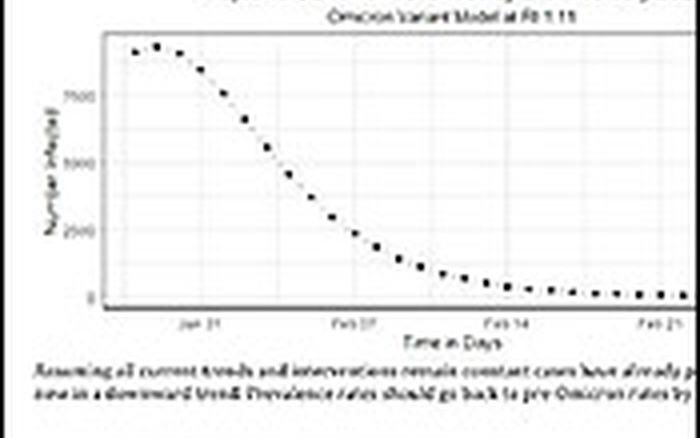

And now that we are - hopefully! - closer to the end of the Omicron wave, the ministry has had time to observe this variant. One of the biggest questions was, why was it so transmissible? Daily COVID cases shot up to new records and active cases neared 10,000. Well Dr Manzanero explained that this was for numerous reasons but one of the biggest issues was that it could have been transmitted even by talking.
Dr. Russell Manzanero, Medical Epidemiologist, MOH
"When you are talking about the way how Omicron is, Omicron in itself, well the original strain for example, it is a corona virus, so it has these spikes that surround the virus itself, because of those spikes it is able to latch on to the specific cells in your body and in the past we see that was basically in the respiratory and circulatory systems that it is able to latch on because of the spike proteins. In Omicron it kinds changes and the way how it has, it has additional spike proteins and it is changing so much now that it is easier now to latch on because of these different changes it has made in its surface. Thats the reason why it is so transmissible, because now it can spread and it can latch on even faster."
"What research has shown that it is not particularly located in the lungs, so in the past when you are talking about it's in the lungs and you are coughing and everything then it is transmissible. But at this point what the science and the research is that Omicron basically lodges itself in the upper respiratory parts of your body, so in the nasal and the mouth and so even with talking and sneezing it is more transmissible and that's the reason why Omicron is like that. Perhaps you can explain as well why the severity of cases is less, because now it is not going to that level in the lungs and it's not causing that severe respiratory distress that we saw in the beginning and now it is at that point we can say that these are the symptoms. I'm not saying that it is not possible, because we have individuals who are ending up in the ICU and are still dying. So we need to be very cautious."