
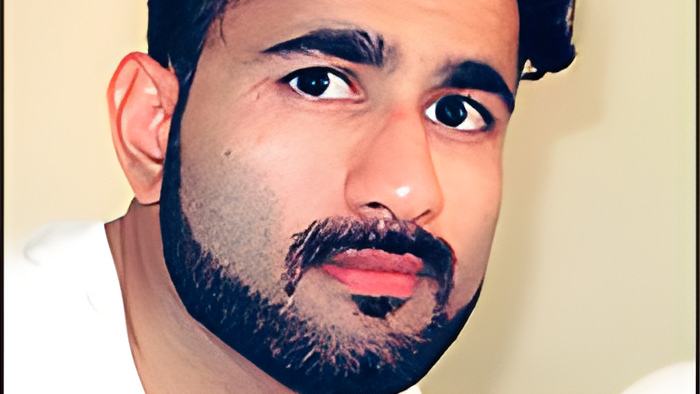
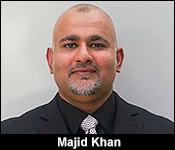
Tonight, 42 year old Pakistani Majid Khan is having his first night of freedom in 20 years, and he's doing it somewhere in Belize - in a home and on a property paid for by the US government.
The convicted terrorist is a free man - flown in from the US base in Guantanamo, Cuba straight to Belize - where it is expected he will spend the rest of his life.
The news that he was re-settling in Belize came as a shock to Belizeans when it was announced at a press conference this morning; it is a first - and for many, not an encouraging one.
But, the government says it is a necessary humanitarian gesture, they say he has renounced terrorism, served his time for his crime, and want to turn a new leaf in a new country.
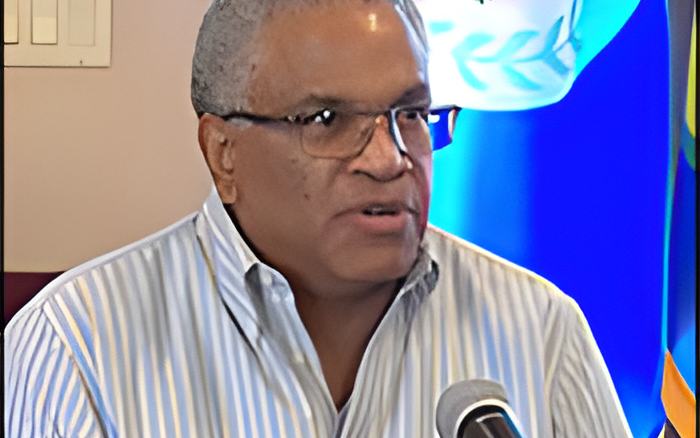
It's a seductive story line - but many difficult questions arise in the public mind. Minister of Foreign Affairs Eamon Courtenay who headed the deliberation process along with senior US diplomats held a press conference at the Laing building this morning to try and dispel public misgivings about this unprecedented deal. Jules Vasquez was there:
When Majid Khan landed in Belize on a US military jet this morning, it was his first taste of freedom in two decades.
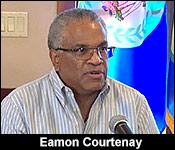
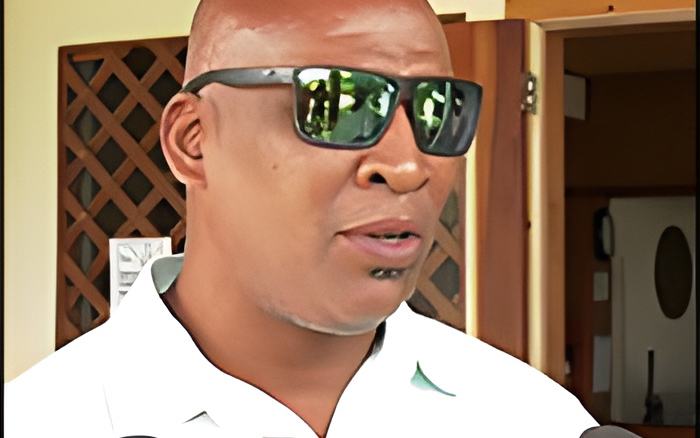
Eamon Courtenay, Minister of Foreign Affairs
"Try to imagine for a moment being incarcerated for 20 years. Solitary confinement for years on end. No contact with the outside world. He had no phone. Today when he arrived at the airport, there was 7 or 8 of us greeting him, he was totally discombobulated saying there are so many people here, there is flowers, there is a room. Wow, I'm drinking out of a ceramic cup. What I'm trying to say to you is that this man for Belizean purposes is seeing freedom for the first time in 20 years."
"He does not have a long beard; he does not wear Arab dress; he speaks with an American accent. He talks a hell of a lot and he immediately started to talk about his dreams and aspirations. He had done once. It was suggested to him that Belize was possible. He had access to the internet for limited time and did a tremendous amount of research about Belize and able to tell us immediately oh I know about Cayo District, about Corozal, oh I want to do the Mayan temples. So he had done his work and you realize immediately that this is a person who had turned over a leaf and knew where he wanted to go where it was possible.
"He gives off absolutely no vibes of negativity of radicalism or anything like that. As I said he is very religious and he kept emphasizing how important it is for him to practice his faith in Belize and I would say he was fairly normal. I just met him in the VIP room and he called me brother."
Khan was a prisoner of the United States anti-terrorism program from 2003:
Eamon Courtenay, Minister of Foreign Affairs
"Mr Khan was involved in certain terrorist activities between 2002 and 2003. He was captured in March 2003 in Pakistan and has been in custody since then. Khan was subjected to the most horrific torture including waterboarding, forced animas, starvation, sleep deprivation, beatings, sexual assaults, cruelling interrogations and mental torture."
"The government of Belize considers Mr. Khan resettlement as a humanitarian act. Though Khan may have contributed to acts of terrorism, he was brutally abused and tortured. He has repudiated his radicalism, cooporated with the US authorities in the fight against terrorism and has served his time."
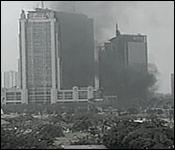
But in 2012 he pleaded guilty to conspiracy to terrorism - for delivering 50 thousand dollars in cash, a portion of the funds used to blow up this hotel in Jakarta, Indonesia. He was sentenced to 10 years in prison and his term ended in March of last year. Since then, the US has been trying to find a country to resettle him in:
Eamon Courtenay, Minister of Foreign Affairs
"The United States government formally requested the government of Belize to consider resettling Mr. Khan in Belize as a humanitarian act. After extended negotiations with the US government and careful analysis the cabinet of Belize approved Mr. Khan resettlement in Belize at the of the United States government."
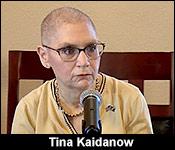
Tina Kaidanow, Principal Deputy Assistant Secretary, Bureau of Political-Military Affairs
"And I am really grateful to the people of Belize which has this amazing history of open-ness which allows to do something that is really quite important and quite remarkable and that is to offer someone a second chance at life."
Eamon Courtenay, Minister of Foreign Affairs
"Mr. Khan is not in Belize as a detainee; he has served his sentence and is a free man. Mr khan is not a terrorist, he has fully recanted, accepted responsibility for his action, and asked Allah for forgiveness. And he has been de-radicalized."
"Mr Khan will therefore be free to travel throughout the country to study, to work to start a business and to make the most of the rest of his life. The government of Belize has determined that Mr khan does not, does not, I repeat does not pose a threat to the security of Belizeans."
Tina Kaidanow,
"Belize is thankfully a country where we have a million Americans come here as tourists. We have Americans who retire here, we have Americans who lives here, we have a wide variety. I don't think logically it makes any sense obviously for us to send someone somewhere where we had any concerns of this person would be a problem or threat."
Government relied on assessments made by US security officials but a team of four also traveled to Guantanamo Cuba to interview him
Eamon Courtenay, Minister of Foreign Affairs
"We had the police who went with us to Guantanamo Bay to interview him and to question him and to get their own assessment of him. We had the national security advisor who also visited and did his own analysis. I should point out that a tremendous amount of paper work has been provided to us which had to be analysed by the security forces. We also were accompanied by Dr Fernando Cuellar who did the medical assessment and to certify that he is not unwell."
That screening came after the government ruled out two other Guantanamo prisoners that the US also wanted to settle in Belize:
Tina Kaidanow,
"As soon as we brought this to the government they did not say yes right away. They thought about it very carefully, they investigated it, they went and visited him as the foreign minister said and I think the fact that they did all of that really speaks to the seriousness that they gave this whole idea."
Eamon Courtenay, Minister of Foreign Affairs
"What he was involved in helped us to come to a positive decision that the threat risk is relatively low."
And while he is now a free man in Belize, he will have reporting requirements:
Eamon Courtenay, Minister of Foreign Affairs
"We have put in place a very comprehensive monitoring and reporting scheme to ensure that Mr. Khan is where he is supposed to be. That we are able to pick up anything that is untoward."
"It is not going to be intrusive. He will live his life and he knows what he has to do and he is comfortable with that I should say. When we interviewed him he said I know I'll have to report and I will have to be monitored and I understand that, so..."
And, if things go awry...
Eamon Courtenay, Minister of Foreign Affairs
"If an issue arises, there are in place laws, treaties that we will use to address the sit-in, if it arises and we are fairly confident that it won't."
According to the New York Times, which had a reporter in Belize for today's press conference, "Belize is the nearest nation to Guantánamo that has received a prisoner. Obama-era envoys arranged settlements in Bermuda, El Salvador and Uruguay. But most have been in Europe and the Middle East, and a few in Africa."