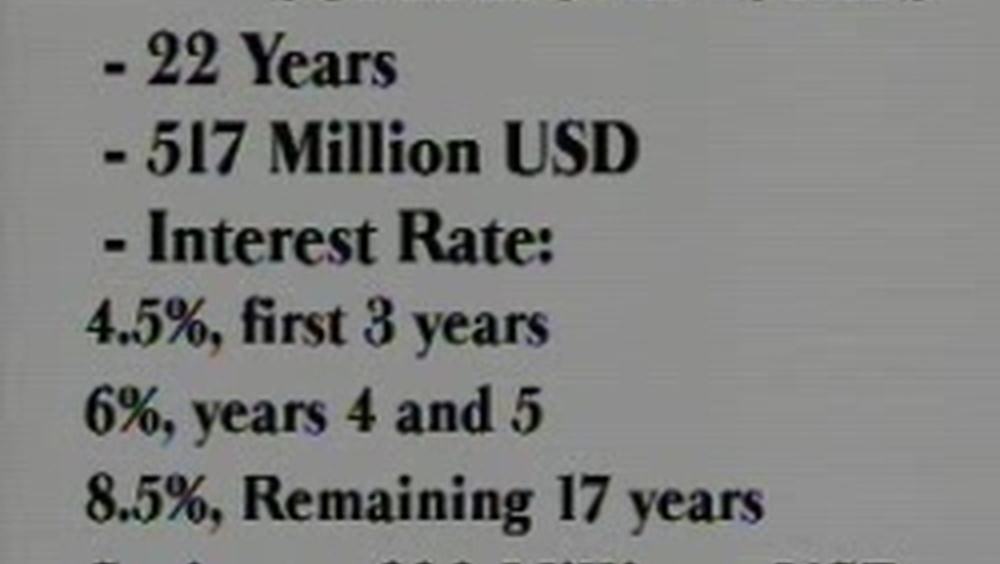
No notice has been given, but government will hold an emergency House meeting on Friday to launch what we're calling a 'superbond,' one single set of new bonds, valued at US$517 million with a term of 22 years. Government sent a press release to the global financial markets today announcing that the new bond will be offered In exchange for all existing bonds. We stress "offered" because that's all it is right now, a proposal. It's left to be seen in the global community of creditors will accept it. They might not because the new bond offers far less favorable terms than the ones they originally bought. But government has admitted it can't pay those original terms or anything close to it.
- The new bonds give the country a 12 year holiday on principal payments.
- Also, interest rates for the first three years will be 4.25%, increasing to 6% for two years after that, and then finally leveling out at 8.5% for the remaining 17 years.
- That's in comparison to an effective rate of between 13 and 14% on some
of the existing bonds.
- So all told, the proposal, with much lower interest rates represents savings of over US$600 million for the Government of Belize, and, you can just guess - equivalent losses for creditors.
So, the question now is, will they accept it? Government, and its advisors, Houilihan, Lokey and Cleary Gottleib seem confident that they will. After four months of consultation with international creditors, they believe they've gotten commitments from more than half of them, agreeing to these terms. With that, government hopes to budge the rest, those more reluctant bondholders including the Zurich Insurance Group and Bear Stearns.
Development Minister Mark Espat, government's point man on debt restructuring is quoted on the release[Read the full release] saying that the proposed interest payments are, "at the outer edge of being affordable for the country." It's a good line, and government has to hope the creditors buy it. With House approval slated for Friday, the exchange offer could be officially launched by early next week. It should remain open for 4 to 6 weeks.
It is imperative that it succeed for government; if it does it will greatly relieve mounting debt pressures, and if it doesn't it will almost certainly force a default, which would be a political catastrophe.