
Could a mini-crisis of governance be taking shape this evening? And might it bear some possibility of a return of the G-7? Those are the questions arising after piecing together information from multiple senior government sources, and this is the story.
First, there was a meeting of the Public Finance Committee this afternoon at 3:00 pm in Belmopan. The Prime Minister is the committee chair - but he is on an official visit to Taiwan, so the meeting was chaired by acting Prime Minister Johnny Briceno.
Reports are that it had the attendance of Ministers Briceno, Joe Coye, Godfrey Smith, Ralph Fonseca, Francis Fonseca, and Eamon Courtenay. Ministers Mark Espat and Cordel Hyde who are members of the Public Finance Committee did not attend.
Our sources say the meeting was to discuss the government guarantee to the Belize Bank for Universal's debt and plan a strategy to move forward, including the possibility of getting the $33 million figure somehow discounted.
But reports to 7NEWS say that there is a new development which could move things in another direction. It seems that the government guarantee that everyone's been talking and arguing about, may have been made somewhat moot. That's because our information is that now there is a new document, again, signed by the Prime Minister and this one, we are told, very recently.
It's called a deed of settlement. A deed of settlement is the next step after a guarantee is called upon; it converts an indirect liability, such as a guarantee to a direct one, or a liability. Something like the difference between saying, "you might end up owing me," and "you do owe me." It means that now, the guarantee has been activated and this is believed to be a strategy, possibly designed by the bank, to deflect any legal challenges to the guarantee.
And this is where the seeds of a possible crisis of governance begin to take root. We are told that the feeling of at least three ministers who attended today's Public Finance Committee meeting, namely Briceno, Courtenay and Coye, all former G-7 members, is that any guarantee, or for that matter any deed of settlement, has to be taken to the House for approval.
And that's where the Godwin Hulse scenario comes in. As Hulse told us last night, he'd be very surprised at the politician who would stand in the House and vote in favor of a $33 million guarantee.
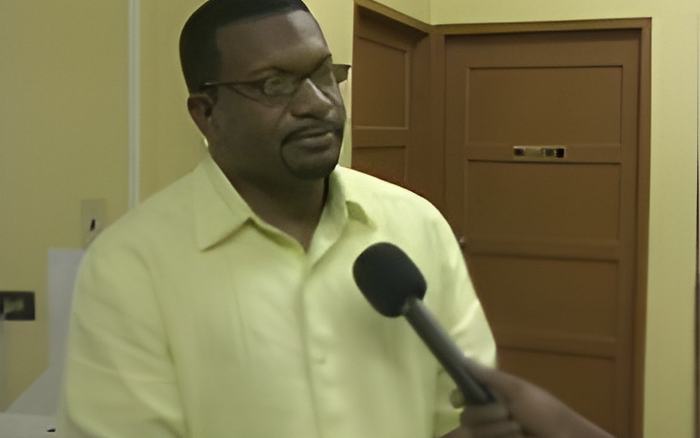
Senator Godwin Hulse,
"Who on earth would give anybody, especially a government, a blank check - an open ended guarantee that whatever amount you say we are bound to accept.
I will conclude Jules it had to be under duress. I cannot say anything else but it had to be under duress and I would like to see if any member of the Cabinet when they review this, if they have not already, would support it. And I would say if the Prime Minister issued a guarantee and his colleagues don't support it, he must have lost their confidence.
And I want to see any Representative standing up and saying, 'my fellow area that I represent, my colleagues in that area that I represent, I vote to pay $33 million or whatever sum it is to the Belize Bank in favor of Universal and I so do and I'll be coming back to you for a vote so you can send me back to Belmopan.' I dare anybody in that House to stand up and say that statement."
The Leader of the Opposition has already indicated that if any guarantee or similar document goes to the House, he would ask for a division, which forces each member to individually stand and declare a "yea" or "nay".
Add to those three opposing ministers Mark Espat who criticized the guarantee last night, and his colleague Cordel Hyde, you have 5, all G7'ers, who would likely vote against it - four are in the House and one in the Senate. Add those in the House to the opposition's eight, and it would be 12 of 29 opposed.
Of course, some still say that the Prime Minister would be wiser than to take such an explosive and divisive matter to the House, knowing that if he did, he could face a terminal situation. So it's forseeable that he could try to sidestep the House of Representatives. Critics, a fair number of them from inside his own government, would argue that such a move is illegal. But all opposed would then have to take their challenge to the courts, which is the favoured arena for Belize Bank
owner Michael Ashcroft.
But even if the Prime Minister does sidestep the House, then singly, and in time, the Ministers and Representatives would be called upon by the press or in other public fora to state if they support paying the $33 million to the Belize Bank.
If only some of them came down against it, it would again amount to at least a limited declaration of no confidence, but this one in the court of public opinion, not in the National Assembly - damning but not necessarily terminal for the Prime Minister.
Of course, the bar on ministerial denunciation of the guarantee has been set quite high by Development Minister Mark Espat. Yesterday he said that, quote: "I would not support a UHS/GOB guarantee to the Belize Bank...there should be a full legal review of its enforceability, and a thorough audit of exactly what constitutes the $33 million...UHS and the Belize Bank should not be allowed to so easily transfer their liabilities to the government and people of Belize."
Espat of course, had more on the line than most. He's the one who sold Belize's debt restructuring package to international creditors and now we know that missing from that package was this material non disclosure of $33 million - just about 1.4% of the GDP.
So that's where it stands tonight. And while all this brews, the Prime Minister as we noted is in Taiwan. He will be there until May 6th - making it a total of 12 days out of the country.