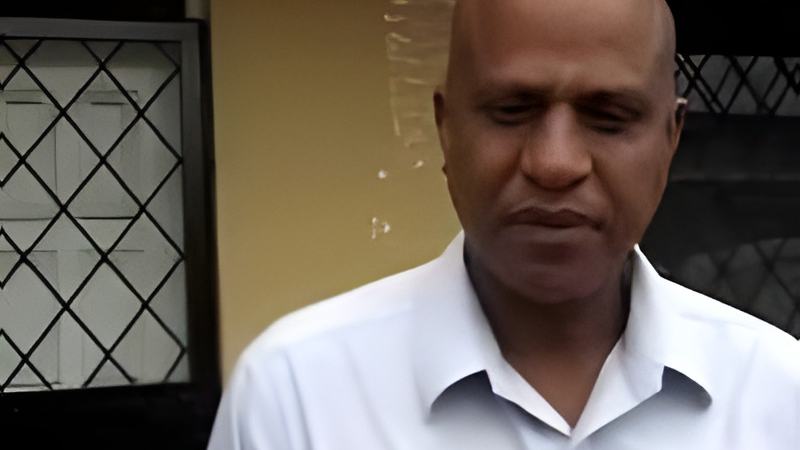
And while that Jamaican special prosecutor is a possibility, another is a certainty. Government has made arrangements to bring Harold Crooks, a former Jamaican Superintendent to work as a special advisor to the Police Department. It’s just one move being made to contain a crime problem that has spiraled out of control in Belize City since the general election in February.
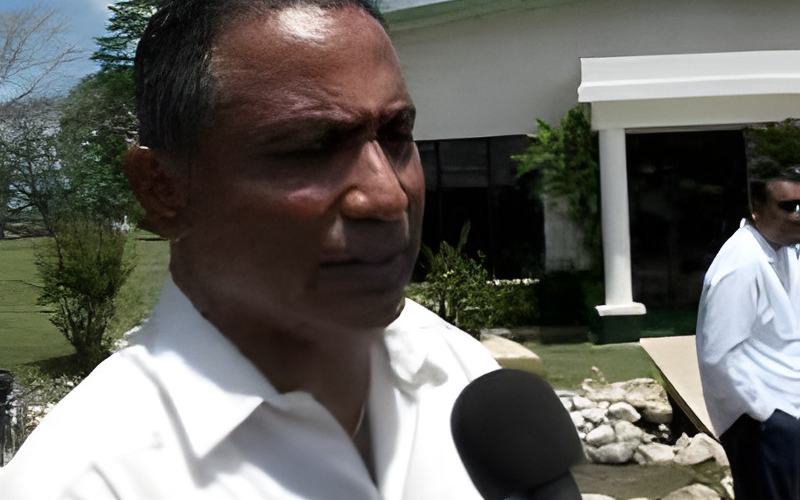
The other response will come from the legislature. At the first business session of the National Assembly on the 25th April, the Prime Minister will introduce constitutional amendments for preventive detention and wire-tapping. Speaking with the press today, barrow said that it is a radical departure from conventional approaches, but in times like these, it may be what’s called for.
Dean Barrow,
“I want to say to them look, I am proposing that we also change the constitution in order to allow for this kind of preventive detention to take place. I need first of all to have Cabinet on board. I imagine that it will not be a problem given what we are seeing. This is an assault on our society and I think radical departures are called for.
Even though these measures are extreme, because they involve constitutional changes, they will have to be this 90 day cooling off, waiting period if you will, and I hope that the debate will be comprehensive and that we can get some sort of a sense from the public whether they are in agreement with these extreme measures.
The preventive detention is the core of what I am proposing, also a new strengthening the current legislation which I am advised already provides for telephone intercept to take place with the cooperation of the telecommunication providers. Again please, I will try to make absolutely sure that if people support and we do these things, there will be safeguards so that if for example, we move ahead with an expanded law in terms of telephone intercept that we don’t have the police listening to Jules Vasquez or Adele or Ann-Marie – that the tools of trying to intercept telephone calls will only be employed against the known criminal players.”
Jules Vasquez,
But aren’t you concerned sir about the abrogation of citizens rights, first of all with arbitrary detention of people who are mostly young, black, and male?
Dean Barrow,
“Of course I am concerned and that is why I am saying that I accept completely that this is a radical departure, that there will have to be a tremendous discussion process before we would proceed with the implementation.
I am proceeding with eyes wide open, recognizing that there is potentially a significant downside to what I will be proposing. With respect to telephone intercept, the law is already there. It is just a matter of perhaps making it a little more effective. But I recognize that in doing that there is going to be perhaps a legitimate view that we are going down a slippery slope. That’s why I am saying that if it emerges, and again the question of how we determine this is going to be important, but if it emerges that people are saying: ‘look man, find other ways, as a society we don’t want to go down that road,’ then I will back off.”
Barrow stressed that because they are constitutional amendments – there will be a 90 day interval between first reading and implementation – and he hopes there will be community debate that will factor into whether they are passed into law.