The Belize Peace Movement, the citizen group which was attempting to block the November 11th General Elections, has failed to convince the Supreme Court to grant them an injunction against the government and the Elections and Boundaries Commission. Acting Chief Justice Michelle Arana has ruled that the elections are already in motion and that she has no jurisdiction to intervene and prevent them from happening.
3 weeks ago, the Peace Movement and their Chairman, Bobby Lopez, announced to the nation that they were going to push for the injunction. That's after the Prime Minister announced that the the National Assembly would be dissolved.
As has been widely reported, the Peace Movement says that past government administrations of both the PUP and the ruling UDP have failed to do their duty under the constitution, which mandates that all 31 electoral divisions country-wide should be as equal in size as possible. They were trying to convince the Supreme Court to order the government to conduct a redistricting exercise before the general elections are held.
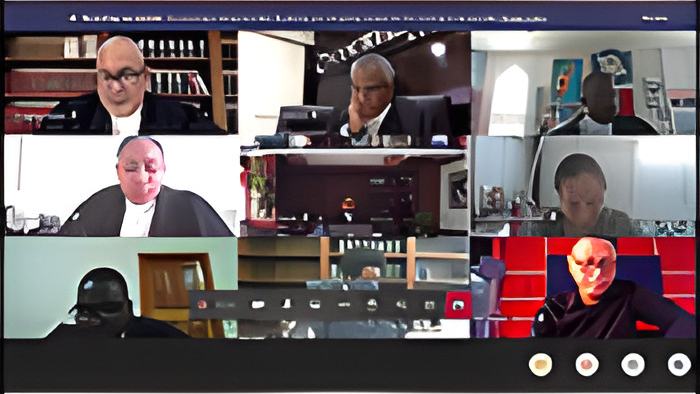
This morning, Chief Justice Arana presided over a teleconference hearing where she heard arguments from their attorney Arthur Saldivar on why she should grant them the injunction. Saldivar explained focused on an affidavit sworn by one of the claimants, Paul Morgan. Morgan explained that in his opinion, our constitutional democracy was being undermined by this disproportionate size in the divisions.
Assistant Solicitor General Samantha Matute-Tucker, the attorney representing the Government and the Elections and Boundaries Commission, presented arguments against the injunction. She submitted that the Supreme Court does not have jurisdiction to intervene in the matter. She also reminded the court that the National Assembly is already dissolved and that the decision-making arm of government would not be able to conduct the redistricting at this time. She also pointed out to the Chief Justice that the Government has already spent half-a-million dollars to prepare for this election.
Her arguments were supported and significantly bolstered by Eamon Courtenay, the attorney representing PUP's John Briceno and Henry Charles Usher, who were allowed to join the case as interested parties.
The legal back-and-forth lasted for almost 4 hours, and after deliberation, the Chief Justice agreed with the Assistant Sol. Gen. and the PUP litigants.
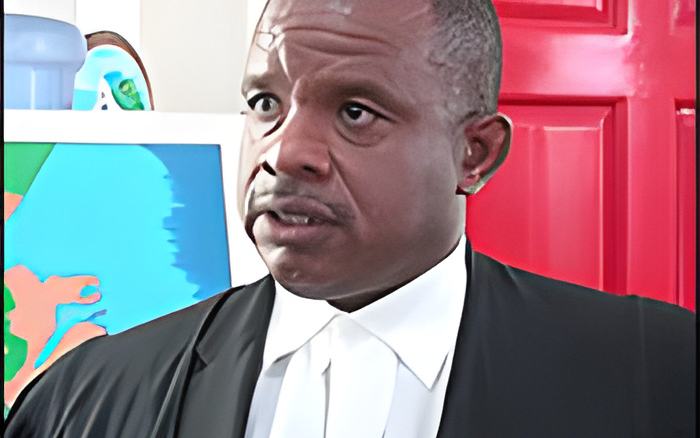
Shortly after the hearing, Eamon Courtenay granted the press a teleconference interview to discuss his arguments to the Chief Justice.:
Eamon Courtenay, SC - Attorney for PUP Litigants
"You all heard the submissions that we made, and the primary submission is that once the election process starts, and it started when the Prime Minister advised the Governor-General to dissolve the National Assembly. Having dissolved the National Assembly to set a date for the election, once that process has started, then the constitution provides that if anybody is dissatisfied with the outcome of the election, they must go by way of election petition to seek to set aside the election result. The claimants in this case know the law. They are well aware of when elections were due. They filed a claim from last year, and they sat down and waited until parliament was dissolved, and then said, well we now want an injunction to restrain the holding of the elections. That was entirely misconceived in law, and in fact, I believe it was just grandstanding and attempting to have their 15 minutes of fame."
"I pointed out to the judge that Counsel for Mr. Ashcroft and Counsel for the claimants made submissions to the court for nearly an hour, and the first point was whether or not the court had jurisdiction. That was raised by us and raised by the Assistant Solicitor General. They argued that the court had jurisdiction, but cited no cases, in answer to the many, many cases that we cited from the CCJ, from the Privy Council, from the Court of Appeal in the Eastern Caribbean, from Guyana, from Dominica, from Trinidad and Tobago. We cited legions of cases that say once elections have started, the courts don't interfere. We then cited cases to demonstrated that even if the court were to say that you have jurisdiction, then what is it that they're asking for? They're asking for this court to say that no elections should be held until there has been re-divisioning. Well, re-divisioning is carried out by Parliament. Parliament has been dissolved. So, to hold the whole nation hostage until re-divisioning takes place practically makes no sense. In fact, in one of the cases, the Privy Council said that that was absurd."
"The cases have consistently said - and this is throughout the Caribbean, in India as well, in Canada as well - that the constitutions of these countries set out a process in which any question relating to the validity of an election, [the] validity of a person being returned as a candidate, [the] validity of whether a person should vacate, it sets out a particular procedure. And it sets out a special jurisdiction of the court, separate from the ordinary, civil jurisdiction of the court. All the cases without exception - all of them say that that process can only be triggered after a general election. The courts have all said that it is up to parliament to make an amendment to allow for challenges to come before an election is held. Until that is done, this is the absolute way in which all of these are going to be resolved."