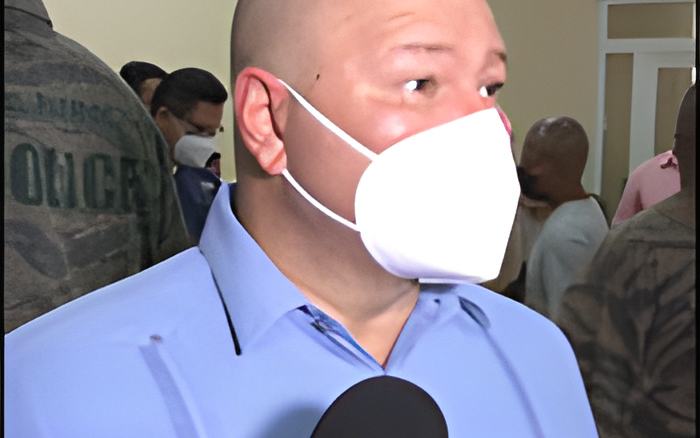
So, while the Supreme Court once again confirmed that Maya Customary Land Rights exist and should be protected, the Maya of Southern Belize and the Government are still before the Caribbean Court of Justice. Even though it's been 6 years since the 2015 consent order of the CCJ, the two sides still can't agree on how the principles of Maya customary land rights should be translated from the court judgment, into an actual system that is recognized at the Lands Department.
This morning, the claimants, and representatives of the Briceno Government attended a virtual compliance hearing so that the court could get the latest updates on the implementation process.
During that 2-hour session, the judges of the CCJ asked for input from the human rights expert who is acting as the Dispute Resolution Authority between the government and the Maya. Here's what she had to say about her observations as the mediator between the two sides:
Professor Rosa Celorio - Dispute Resolution Authority "I just want to highlight a number of concerns, and I think the letter related to Indian Creek kind of represents a lot of what I've been seeing recently. Despite the issuance of the reports, the reality is that we still continue seeing third-party incursions in the Maya villages, and the grant the granting of permits and authorizations. Sometimes this is 'legal' and sometimes this is illegal. So, it's important to keep this in mind. We keep on seeing a repetition of the same problems. When I received, for example, the more recent complaints related to San Pedro Colombia Village, related to I got a second complaint, for example, for the Laguna Village. Even though we have a reported issue last year, it seems as there was, again a repetition of patterns. I'm very concerned about the non-expedited nature of the action. I commend the Government for the effort that it has taken so far, but I do think that some of these matters need much more expedited timeframes, be more concrete. I think the fact that I'm still receiving complaints denotes that a lot of the structural issues are still there. So, I really am calling [on] the government to act faster. They have the capacity to do this because I have seen it. I think they are engaging in efforts, and I think that they wanna do this. But, I think there's a need to act faster - not what we're seeing - and I think, also, there's a need to act more concretely to see timeframes also, when it comes to compliance with the recommendations, and to respond to some of the concerns that were just voiced by the Maya representation as well. It's difficult as a human rights expert to make guarantees, right. But, I do try to stay positive in the sense that we have a very strong, CC consent order. We have very strong justices that are monitoring the situation. We have a government that has taken steps. It's not as if the government hasn't done anything to comply. And, we have Maya people that have committed to this, who have worked so long for the right to be respected. I would say that the situation, the conditions, are a little bit better than other situations that I've seen. It's not perfect, but at least with some steps, we could see some improvement here."
And while the Dispute Resolution Authority thinks that a lot of progress has been made, there is one major element of the implementation that's still outstanding. That's the establishment of a protocol that the government will use to conduct Free Prior Informed Consultation with Maya on the future use of their customary lands. Today, the judges of the CCJ reminded the litigants, and especially the government, that this compliance process is now in its 6th year:

Hon. Justice Jacob Wit - CCJ Judge "The point is that we need an FPIC Protocol. It's only then that you can make a start with full compliance of the consent order, after such a long time, because we are now - what is it - 6 years further. So, it is time, and you are very close. Everybody seems to say that, and we also think that. So, it is now or never, so to speak. You have to get done, and so, there needs to be a timeline, so that we can focus on that, and everybody can focus on that. So now, the question is, what is a reasonable timeline? You were speaking about months; we think it could be done within days or weeks."
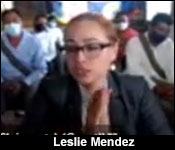
Leslie Mendez - Attorney for Mayan Claimants "I think that we should be well into our understanding of what contents the FPIC protocol. So, I think 2 weeks to really get to resolve this one point is quite reasonable."
Hon. Dolores Balderamos-Garcia - Minister of Indigenous Peoples Affairs "I was requesting, Your Honours, for the end of July because we are receiving representations to Cabinet by the 6th, and we just may need a little more time after that, and that is why I'm requesting the end of July."
Hon. Justice Jacob Wit "As you know, the court will be on recess as of the 1st of August, so, we would want to get some results some days before. So, I think the best we can do is to get your result on the 26th of July. So, then, we'll have a few days to look at it, and see if other things need to be done before the court goes on a recess."
In tomorrow's news, we'll have more from today's extended press conference with the MLA and TAA on today's compliance hearing.