Last night, we showed you part one of our story exploring the workarounds to investigating beneficial ownership of private companies, which the Ministers of Finance have proposed. In the face of controversy, they were attempting to convince the press that the increase in company privacy, which they recently legislated, wasn't as bad as senior journalists were insisting it to be.
Well, in part three of a series on the transparency topic, our Daniel Ortiz intensely questioned the logic and the merits of their suggestions. Here's that final wrap-up:
Chris Coye, Minister of State, Ministry of Finance
"Any person or entity that looks to conduct business or enter into any contract with the government should fully and absolutely disclose directors, shareholders, and ultimate beneficial owners."
The idea these Cabinet Ministers are proposing is very attractive to any proponent of increased transparency. It's probably why they dangled it as a carrot in front of an insistent press.
File: December 12, 2022
John Briceno, Prime Minister
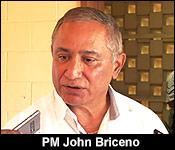
"If a private citizen wants to own a private company, that is their business, as long as they are not dealing with any government contract."
"We have to know who are the members of the board, who the shareholders are, and who are the ultimate beneficiaries; that is what should be your concern."
But how is this new "policy" and eventual "law change" any different or more legal than the Anti-Money Laundering requirements, which the European Court of Justice disagreed with three weeks ago?
Chris Coye
"Governments can't compel the disclosure of beneficial ownership information on the basis of that right of privacy."
"So, you have to have a balancing of those rights and those interests, less you will end up having that law challenged for being unconstitutional. Where do you end up, then?"
This proposed requirement of disclosure from government contractors may end up at the same catch-22, where any push for transparency can be challenged on the constitutionally guaranteed right of privacy.
The European Court of Justice did say, quote, "the principle of transparency... cannot be considered, as such, an objective of general interest capable of justifying the interference with the fundamental rights guaranteed... which results from the general public's access to information on beneficial ownership." End quote.
So, this requirement being contemplated by Cabinet may be stillborn, and if it isn't and its constitutionality isn't challenged, then the next problem comes in. The government will know, who the actual government contractors are, but the press and the public won't.
Chris Coye, Minister of State, Ministry of Finance
"That disclosure is made to the government. And if there is an investigation, a journalist wants to investigate that contract or anything associated with that contract, the Freedom of Information Act could be utilized to access that information."
Daniel Ortiz
"FOIA requests aren't perfect."
Janelle Chanona - NGO Senator/ VP, Oceana Belize
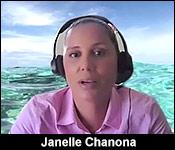
"We got the responses out of the Department, but it wasn't fully completed. And, the one sort of relevant and key document that we needed to know exactly what the status was of the causeways was the one that happened to - for whatever reason - not included in response to the community."
Let's assume that government can deploy this disclosure requirement for contractors. One then hopes that Mr. Briceno isn't signing a cheque that his government won't allow the media and transparency-minded civilians to cash. The Briceno family-owned company, Smart/Speednet, is contracted as a telecommunications service provider for several government ministries. So, since the principals of Smart/Speednet are already government contractors, that would oblige them to disclose company details under this new policy.
Both the former and current Prime Ministers are well aware of the significance of a company's total shareholdings percentage.
Dean Barrow - Former Prime Minister
"[It] does not look good for the government that he heads to be diverting business from BTL and is, in fact, taking the business to a company that's owned, or partially owned by his family."
Alindy Marisol Amaya - News Director, KREM News
"You're making our job increasingly harder."
John Briceno, Prime Minister
"No, no, no That's -."
Alindy Marisol Amaya
"-compared to what we had before."
John Briceno, Prime Minister
"But, but, but-..."
Alindy Marisol Amaya
"So, you've taken away all our rights under this system."
John Briceno, Prime Minister
"I don't agree with that."
Alindy Marisol Amaya
"Why do we have to go to the FOIA?"
John Briceno, Prime Minister
"Let me explain to you. Let me explain."
Alindy Marisol Amaya
"Why do we have to go to court to get information that was free in the past? We could've walked into the registry and looked at the change in managers, change in directors, the amount of shareholding that a shareholder has, all of that information we had access to, and it's what we are asking for, now under this regime change."
John Briceno, Prime Minister
"Did you have access to who are the beneficial owners of 60% of Brads Gaming Company? No, you don't."
Alindy Marisol Amaya
"Because that one is an IBC, but I'm talking about local companies."
John Briceno, Prime Minister
"That's my point."