
As we told you earlier in the newscast - the regulation to start selling butane by the pound will not come into effect until next week. It's been put off by a few days because there aren't any certifiable scales in the country.
And though some of butane importers have lamented the re-introduction of scales as old technology - far removed from their high-tech flow gauges, tonight we'll show you that weight is absolutely the most reliable and most fair measurement for liquid petroleum gas.
How do we know? Well, the visiting German expert said that's what they use in Germany and today we visited Fabrigas which sells industrial gasses to see how they buy and sell gas. We found that they do it the way we wish the butane companies would - here's the story:…
Jules Vasquez Reporting
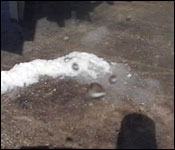
It's certainly the only place that you can go to in Belize where you can see something like fallen snow…and while that is a wonder of science, not nature which we'll explain later, the things we saw the most of at
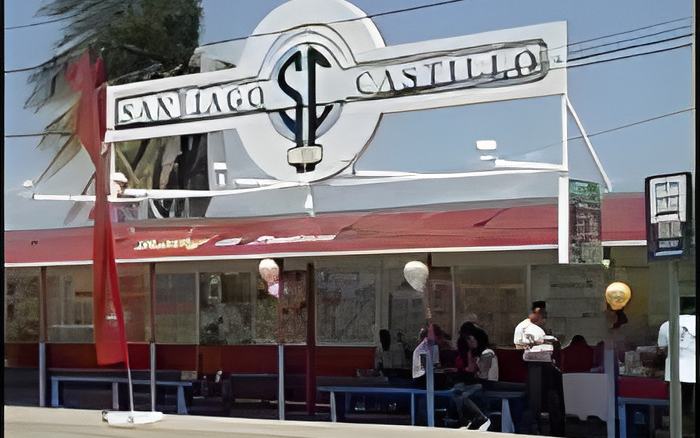
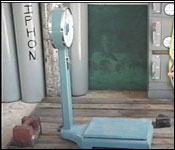
Safety signs everywhere and a whole bunch of scales are the two things we saw the most of at Fabrigas's compound on the western Highway.
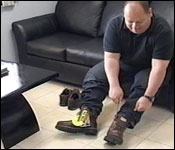
And that's because safety is a policy priority for them - so much so I had to put on a steel toe boot to tour the facility and the bosses even do interviews in hard hats - and the other thing, those plentiful scales…they say that dealing in gas - they know that the only way not to get cheated is to buy by weight.
Justin Sabido, New Business Dev. Fabrigas
"Well Jules the only what that we could actually measure what we put in and what we take out of the tanks is to weigh it."
Jules Vasquez
"When you all import your gasses, you all I imagine the trucks have some type of fluid meter. But you don't buy by gallons or unit."
Justin Sabido, New Business Dev. Fabrigas

"We order our gasses in pounds."
Jules Vasquez
"When one is purchasing gas, a rule of thumb is that it should always be measured by pounds."
Justin Sabido, New Business Dev. Fabrigas
"Yes, by pounds."
Jules Vasquez
"If you don't weigh it?"
Justin Sabido, New Business Dev. Fabrigas
"If you don't weigh it then you could be off."
Jules Vasquez
"If you don't weigh it, you don't get what you are paying for, there is no certainty."
Justin Sabido, New Business Dev. Fabrigas
"It is quite likely that you will not bet what you are paying for."
And that's not the opinion of some fly by night operator or newcomer - Fabrigas is a serious, long-standing company which operates to North American safety standards:
Glenford Baptist, Sales Manager
"We have to look at the type of products that we are handling. By nature they are very dangerous. So our first job is to ensure that we are able to handle those products properly, that's the first job."
And it's a full time job - safety covers every aspect of operations - even in a society where safety standards are not highly regarded:
Glenford Baptist, Sales Manager
"The first attitude is 'why I have to do this?' and it takes a bit for you to explain to the customer but eventually you are able to get thru to the customer and they can see the value of that safety."
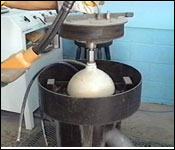
Part of that process is the testing is recertifying the tanks. That's done in this huge device called a water jacket in what's called a hydrostatic test
Justin Sabido, New Business Dev. Fabrigas
"2,015 is the psi - the working pressure of the cylinder - it's a very high pressure and things can go wrong. We need to verify that that cylinder can handle the pressure; can withstand the pressure and not just for one fill but for 5 years so we are measuring basically the thickness and the elasticity and the walls of the cylinder."
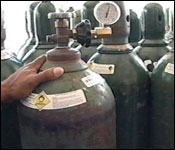
These tanks are certified and stamped to be sound for five years to carry high pressure gasses such as oxygen, acetylene, helium, argon, hydrogen, nitrogen but he says your rusty butane tank needs it too:
Justin Sabido, New Business Dev. Fabrigas
"They are pressurize vessels, all pressurize vessels are subject to rupturing, explosions. if you have a corrosion, pitting - wall thickness is reduce."
Glenford Baptist, Sales Manager
"The first obligation we have as an industrial gas provider is to ensure that that product is safe. That should be the same attitude that the players in the LPG industry take as well, as you rightly said earlier - all pressurize vessels are potential bombs. We as service providers must ensure that we are operating safely and its clear to be seen that the LPG industry is void of those standards."
But they don't deal in butane or liquid petroleum gas - in fact, the ad-hoc way that industry is run, they couldn't. That is clearly illustrated with these industrial tanks in this shed area where everything is sorted to class, rigorously tested and reviewed and filled according to maximum safety specifications -and to maximum pressure making sure the consumer benefits:
Justin Sabido, New Business Dev. Fabrigas
"So we are trying to achieve 2,015 psi. To achieve 2,015 psi we pump it up to about 2300 psi, so when it cools down we achieve the pressure that we need."
Jules Vasquez
"Why is it important to go so much over? The difference in 2,015 and 2300 is 185 psi."
Justin Sabido, New Business Dev. Fabrigas
"If we don't pump over Jules, we short the customer. When the cylinder cools down, the cylinder will be under pressure. Remember that when the customer comes he has all rights to ask the person that's serving him on the plant to put the pressure on to the valve and check the pressure and verify the contents. We are not in the business of shorting customers. You pay for what you get and in most cases - 90% of the cases the customer ends up with 5-10% more product because of the same cooling down process. It is cheaper to give the customer a little more product and have them satisfied than to short them and have them disgruntled."
They hope to also bring that ethic to scuba diving industry where the highly pressurized tanks have a pressure per square inch about ten to twenty times more than your butane tank - so it has to be sound - and they use these, high precision gauges and probes that test the structural integrity of the tanks.
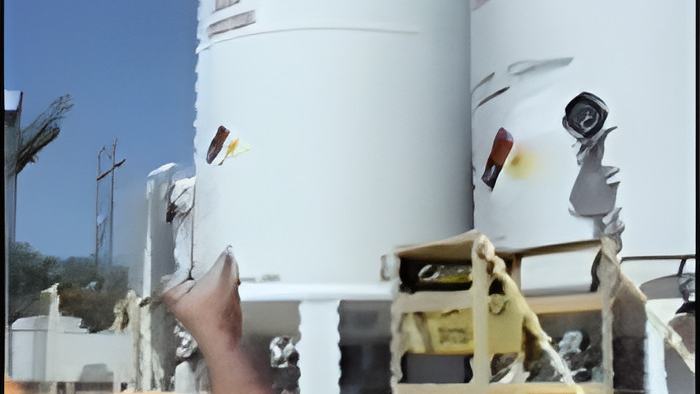
But the coolest area of their plant is the array of cryogenic tanks, carbon dioxide, nitrogen and oxygen - cryogenic means temperatures below minus 200 degrees Fahrenheit - which brings us back to the start, the snow-like formations on the gills of these condensers
Justin Sabido, New Business Dev. Fabrigas
"When we actually get this liquid through the lines that do not have any insulation, the humidity in the air which is invisible actually freezes."
And while that is water based ice - there's also dry ice meaning there's no water in it
Justin Sabido, New Business Dev. Fabrigas
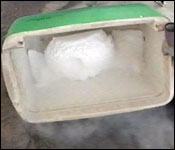
"Dry ice is compressed carbon dioxide. Carbon dioxide is the only gas that can exist in 3 states; solid, liquid and gas. When we release carbon dioxide at a high pressure into a container it compresses. There is compression, pressurization and compression and the dry ice is form."
So it's not really ice, which is frozen water, but it's very very cold, burns your hand after a while
Justin Sabido, New Business Dev. Fabrigas
"With the dry ice it's not water it is actually very cold carbon dioxide which is minus 100 degrees Fahrenheit. So it's not water, what it actually does - when it is expose to heat it vaporizes - it goes from a solid straight to a gas."
And while that smoked off into nothing, the lessons we learned about safety and standards in handling gas, liquid gas stayed with us, lending credence to Baptist's boast:
Glenford Baptist, Sales Manager
"We cannot afford for an incident to occur and then react to it. Those in the butane industry I believe can learn a lot from Fabrigas and certainly we are prepared to share with that industry in order to build their standards."
The gasses sold by Fabrigas are used chiefly by hospitals, and medical facilities as well as welders, banana, citrus and aquaculture…