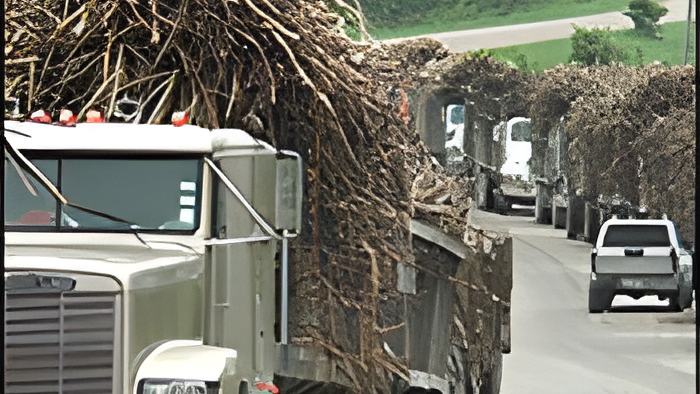
Yesterday, the last day of the 4-day Holiday weekend, police and members of the Briceno Administration were on high alert for possible protests which cane farmers in the north were reportedly considering.
The late start to the 2020-2021 sugar crop season is enough to cause concern, but there were almost 3,000 farmers incensed over possible revenue losses they would have to bear due to the production estimates prepared by the Sugar Industries Control Board and the Sugar Cane Production Committee.
As viewers are aware, this industry has had a series of struggles over the last few years due to climate change. They had to weather a massive drought, which impacted the total output of the cane fields. Before that, stakeholders were impacted by flood damage. And, then there is the consistently low price for sugar on the world market since the major sugar-producing nations have a massive surplus of sugar that they are trying to sell.
But, the production estimates from the SICB for the industry was the culprit that made the farmers consider protests. As we understand it, the Sugar Board and the SCPC were attempting to implement a quota delivery structure that would penalize the farmers who were most impacted by the 2019 drought. Insiders tell us that the way that the SCPC calculates what quota of cane each farmer and each association is allowed to deliver is based on the previous year's performance. Because the drought caused many farmers to under-produce and suffer major losses, significant portions of their sugar cane quota were being taken away.
Today, the Minister of Agriculture granted the press a teleconference interview on the topic. Here's how he explained the application of the sugar science which would have deprived the farmers of their fair quota:

Hon. Jose Mai - Minister of Agriculture, Food Security, Enterprise
"Every year, before the crop starts, there is a production estimate. That production estimate tells me as a cane farmer how much cane I'll be able to deliver in this 2021-2022 year. That always brings some controversy. How do you determine how much sugar cane Camy will deliver this year as a cane farmer? Historically and traditionally, it is what Camy delivered last year, plus if she plants new cane fields."
"The problem this year is that a drought affecting the cane harvested last year. So, that is where the problem began. We'll blame climate change for this one. We had a drought. The mill received 32% less cane than the year before. So from 1.98 million tonnes, the mill received 895 thousand tonnes."
"The farmers, it's assumed that if the mill received 32% less sugar, that means that there was an average of 30-32% drop in the fields. So, in October before elections, the SCPC met and they came up with a production estimate. They said, okay since the mill received 30% last year, let us give each cane farmer out there 30% on what they delivered, and that should bring it back to what it is. That is where it went wrong because while the average out there was 30%, there were farmers who lost more than 30%. Some did not deliver anything at all. Some delivered less than 10%. Some delivered 30%. Some delivered 40%. Some delivered all the way up to 100%."
"299 farmers delivered 0%. 10 farmers delivered less than 10%. 299 farmers delivered between 10 and 29%. 829 farmers delivered between 30% and 49%. 1326 farmers delivered between 50 and 69%. 1548 farmers delivered between 70% and 99%. 692 farmers delivered 100%. So, you can see the disparity in the deliveries. So, to say that we'll give each farmer 30% on what they delivered then became a problem."
"With this formula, there were 2,700 farmers were being affected. Those who delivered 70% and above, who got 30% and above, and who got 30% would benefit from that. And those who got 100% deliveries would get 30% more."
"There is no way that, as the new minister elected, I could have accepted that we start the crop with this agreement. It is unfair I believe. The quotas would be unevenly distributed, and it would have been unfair."
"This formula was seeking to penalize those who delivered the least and compensate those who delivered the most. In other words, who the drought affected the most was being penalized, and who the drought affected the least was being compensated."
Later on, he provided details of a compromise that he and his technical team had to implement to arrive at a more fair quota regime for the farmers. Here's that part of our extended interview:
Hon. Jose Mai - Minister of Agriculture, Food Security, Enterprise
"I sought guidance from my colleagues, from the Prime Minister, from the legal minds, and we came up with a compromise in the middle. We said instead of giving 30% across the board, let us give 60% to those who didn't deliver anything. Let us give 60% to those who delivered less than 10%. Let us give 55% to those who delivered between 10 and 29%. Let us give 55% to those who delivered between 30% and 49%. Let us give 50% to those who delivered between 50% and 69%. Let us give 25% - down with the percentage now - to those who delivered between 70% and 99%. I suspect that this is the area where ASR is. So, instead of giving themselves 30%, we gave them 25, a 5% cut. And those who delivered 100% or more, instead of you getting 30%, we gave them 20%. So they went down a little."
"Unfortunately again, ASR did not show up to the meeting on Sunday, but the motion was tabled. We got a quorum, and it was accepted. Yesterday now, there was the Sugar Cane Production Committee meeting, a sub-committee functioning below the SICB, which is their responsibility, to make a production estimate. They met; surprisingly and interestingly, some of the same people who sit on the Sugar Board sit on the sub-committee, and they, fortunately, accepted the proposal, that we can go along with it. It was a relief brought to my ministry. It was relief brought to those who were working over the holidays to come up with a compromise that would benefit everybody: the industry, the farmers, benefit ASR."
"The farmers are not overly joyed, I'll say to you, but they are pleased that some compromise was arrived at. They are now feeling comfortable that they will be able to deliver more of the sugar cane that they were not being allowed under the first formula."
Reporter
"It seems as though there's still going to be a lot of undercutting of those who were affected the most by the drought, sir, even with this compromise."
Hon. Jose Mai
"Yes, I agree with you, and again, we're looking at the numbers carefully. But, one thing I will tell you that is positive, Mr. Ortiz, it's that I suspect that in all of this, wisdom will have to prevail. It's a new government, a new minister of agriculture, a new team of technical people, and we will monitor the production and deliveries closely."
Yesterday, the Northern Caucus of the PUP sent out a press release declaring their support for cane farmers.
Their press release says, quote, "The PUP Representatives agreed that all decisions affecting the Sugar Cane Industry should be made only in the best interest of all stakeholders in this important industry. The PUP Representatives of the Orange Walk and Corozal Districts will remain vigilant to ensure that our farmers are at no time disadvantaged based on decisions made by any one institution in the industry."