
And while Belize is out of the regional top 10 for murder rates, the old northern highway is number one for vegetable production in the Belize District.
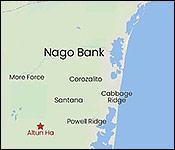
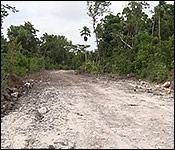
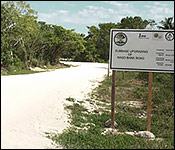
And, tucked right in there is Nago Bank, a small farming village outside Maskall where, for decades, the residents needed plywood and tractors to get in and out of their village. That's because there was no real road, just rocks and mud. And since their produce goes straight to the Belize City markets, they had to find creative ways to ensure that it arrived there in usable condition.
But that nightmare is in the past, because today, the Nago Road was finally opened. It's a collaboration between the Ministries of Economic Development and Infrastructure, under the Rural Resilience Project, and it's the type of development the villagers were desperate for.
Now the residents of the area known as Belize District's "vegetable basket" can finally drive in and out of their village without worrying about their car breaking down. Courtney Menzies visited them today and has this story.
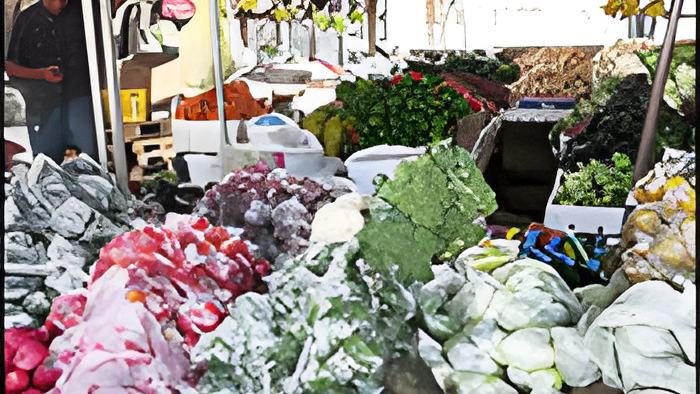
If you went to the Michael Finnegan market today, chances are, the vegetables you bought came from northern Belize District - and particularly from Nago Bank.
It's a village located off the Old Northern Highway, and though it helps to supply 70% of Belize City's produce - including tomatoes, watermelons, sweet peppers, and cantaloupes - before today, they didn't even have a road. Their vehicles often broke down, leaving their produce to spoil, and during the rainy season, they couldn't even think of coming out of the village.
But, through the Resilient Rural Belize Project, the villagers now have a 3.5 mile road for them to get in and out of the village with ease, which has taken a large weight off their shoulders.

Ruben Pineda, Farmer
"Before, the cars got damaged faster and stuff and to come in was very hard so for example we had different types of products that because of the road, we couldn't take them out because we traffic one time out and cars spoil and we couldn't come back out so a lot of product just stayed and spoiled so now we are very happy because this road now comes up and everything become easier to traffic out and even the trucks that deliver the product come way out to this building to pick up all the vegetables so everything comes closer and easier."
"We can say before the road was just a mess, now we can say we have a good and 100% road because now we don't even need trucks that have 4x4, now we just could travel faster and we just thankful because in our imagination, we never imagined we would have a road like this so but now this have arrived now and we're just thankful."
And this road was built to handle both the dry and the rainy seasons:
Irvin Thimbriel, Senior Executive Engineer, MIDH

"When you speak climate resilience, you're speaking about more money, because what is there has to be enhanced so the vertical alignment has to be higher to be able to be serviceable to the public when we have any kind of weather events. If you came here initially when we came to do the opening of the project, you'd have been very surprised to what you see here now. It was basically a park with stones, probably more like a mule pass, so these poor people were under pressure and problems and as you can see the project was done, and as you mentioned, climate resilience, it's the vertical alignments and the culverts that are in there were able to allow these people to have this road for the majority of days in the year. In extreme circumstances, they will not be able to use that road."
And according to the CEO in the Ministry of Economic Development, this is just the start for this village. He says that with this road, not only will it help to ensure food security, but it can also help the villagers break into the tourism market.
Osmond Martinez, CEO, Ministry of Economic Development
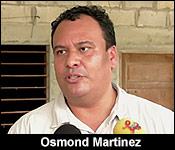
"It will increase economic activity because now you will have big trucks that can come all the way here to pick up products and take them all the way to the different markets in Belize but the third point is a very interesting point, and it's one that just started to become part of a discussion yesterday and that is that not too far from here, from Bomba, there is a small little port that you can actually take products to San Pedro and it's only four miles away which means that if we will start to look at it and develop that port either to be a cargo port or cargo and tourists it would be a three fold benefit for Belize."
But while the villagers will have to wait for that opportunity, for now, they're just glad that they can get their produce to the market in quality condition.
Alex Pineda, President, Farmers of Nago Bank
"We feel very content and we appreciate all of the work that has been done on this highway. The weather that we had was weird because sometimes we were in dry weather other times in wet and then there were times when the vehicles could get ruined and cause suffering for each of us. But as agronomists, we have always been here and we thank god for the accomplishment that we've achieved in these projects and the government that has supported us. We are happy

and contented, the whole group and at the same time giving mainly teachings as well as a cooperative, the small Agronomists to other organizations. We have to start to work together because that is how we achieve all of the movements that are happening. You can see and anyone will begin to hear that this type of cooperative perhaps has a lengthy process but at the same time we achieve. I feel proud to be in this place because I was an immigrant from Salvador to here and I've seen that within the cooperative the government has supported us a lot and it's something very special that you can't achieve in just any country. This is something important that makes us realize that we come from other countries to Belize and begin to reflect on the fact that we need to be grateful to the Belizean government and give them thanks, many thanks for this because I want to tell you that it's not every country that would allow you entrance and access to all this. We didn't have land, we didn't have a home, we didn't have an office, then we didn't have a road, we didn't have anything. We've come from nothing but at the same time, we've seen the achievement that together we work well."
And they're hoping that soon, they'll be able to send more of their produce to the western and northern markets as well.
The total cost of the road was 1.7 million dollars, and took six months to complete due to bad weather conditions.