
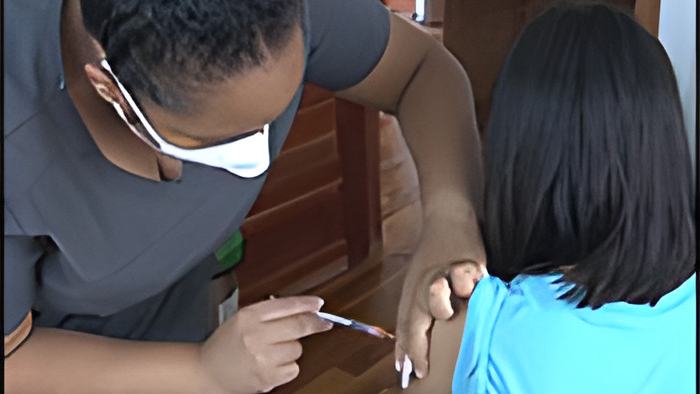
2022 saw Belize get a major upgrade to its vaccine storage and cold chain facilities.
It's a major upgrade that came courtesy of The Government of Japan and UNICEF who partnered to improve national vaccination rates, which saw a marked decrease in the wake of COVID-19.
Those efforts were supported by a grant intended as a quote: "One Last Mile Support" and investment in Belize's primary healthcare system and in providing capacity building for over 400+ community health workers, epidemiologists, nurses and laboratory staff whose roles make up the vaccine cold chain.
To document that we're launching a series to report on a donation that continues to support the most foundational elements of our country's preventional health care strategy. And to do that I spent weeks tracing the cold chain from government facilities to needles in arms at the most rural of community health centers. Here now is a look at that extensive system and what it takes to maintain it.
This news feature is a collaboration between 7 News, UNICEF, the people of Japan, and The Ministry of Health.
Covid-19 put a tremendous strain on Belize's health system, stretching human resources and effectively splitting Belize's Health care services in two: those offering limited services to non-Covid-19 patients and those tasked with covering respiratory clinics and isolation wards.
And as the pandemic winds down one notable negative side-effect that has persisted is reduced access to regular vaccines for the youngest among us.
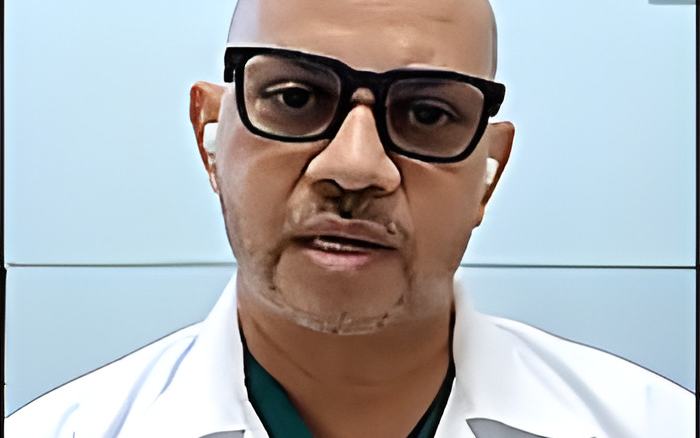
We heard more about this problem and it's possible solution from the Technical Advisor in Maternal and Child Health, Dr. Natalia Beer
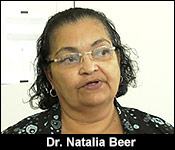
Dr. Natalia Beer, Technical Advisor in Maternal and Child Health
"We are seeing a decrease in the uptake of the vaccine, the regular but um, it's an effect of the COVID-19 where people feared to come to the health facilities, but we are reaching out to the communities, inviting them back to the facilities and ensuring to them that because of the numbers that are low it is safe now to come back again and receive the vaccines at the facility."
And to support those efforts, a new partnership between the Ministry of Health, UNICEF, and the people & government of Japan is seeking to strengthen primary healthcare through technical support and capacity building of healthcare workers:
Dr. Natalia Beer
"We have a unit that we recently established with one medical officer per hospital dedicated full time to follow through with the processes to look at the gaps and address those gaps with the local teams to improve the quality of services."
"Routine auto monitoring of the services that they are providing through clinical audit and training of the staff, improving the, updating the guidelines that we work with. And activities related to quality improvement."
"Well yes, we do focus on skills development. We are starting off with maternal and neonatal care services but eventually we will expand to other technical areas."
And that capacity building follows UNICEF's "Reimagine Agenda" which seeks to strengthen Belize's health systems to make them more efficient, resilient, and future proofed against the next possible pandemic.
That's why UNICEF, through the support of the government of Japan is mobilizing resources to support national health goals.
But that all starts with the message that when delivered properly Vaccines work and Vaccines save lives. And while she's overseeing the development of skills in maternal, neonatal, and other services, Dr. Beer is also working hand in hand with UNICEF for the maintenance of Belize's vaccine cold chain.
Dr. Natalia Beer
"We are grateful to the government of Japan, the people of Japan and UNICEF for their support. We definitely have one goal in common which is to improve the access and the quality of services to the population and we invite everyone you know to come and receive the services that the ministry of health and wellness is offering preventive and curative services."
For UNICEF and the government of Japan, it's the last leg of this region's essential journey to rebuild health systems and to recover from the pandemic.
And at the end of 2022 in addition to 10 IceLine freezers, 10 Main Powered Vaccine refrigerators and 30 remote temperature monitoring the Ministry also received a walk-in cooler. All these are set to be used to improve vaccine storage and management.