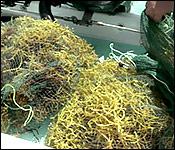
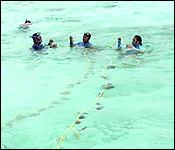
Tonight we take a closer look at the rapidly expanding industry of Seaweed farming. Belize Women's Seaweed Farmers Association is making the dream real by training persons to make a living through selling seaweed based products. Jomarie Lanza went into a waterworld when she visited a thriving Seaweed farm off the coast of the Stann Creek District last Friday. Here's her full story.
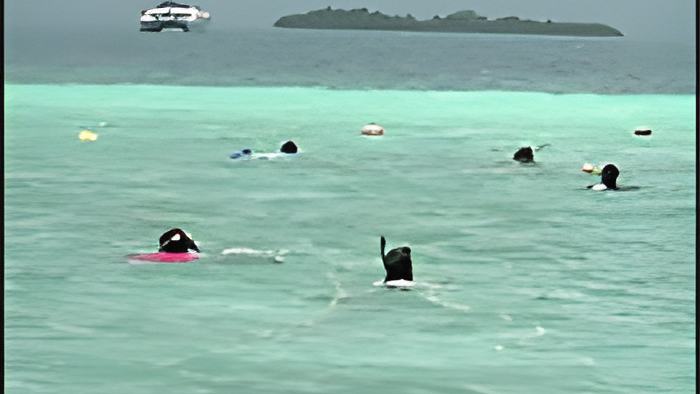
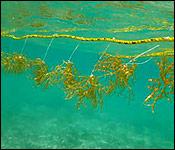
A few miles off the coast of Placencia, just a stone's throw away from Ray Caye lies a 50 by 50 ft structure in the water lined with ropes of Seaweed.
It's a bold attempt by a group of women trying to get Belize's seaweed industry off the ground, well, out of the sea, in this case.
It's a seaweed farm, established and cared for by the Belize Women's Seaweed Farmers Association.
Home grown and harvested for its many health benefits and heavily sought after by Belizean entrepreneurs who derive and sell products that harness the seaweed's potent properties, seaweed is a hot property right now. This was Friday at the investment summit.

Kareem Musa, Minister of New Growth Industries
"On the sweaweed mariculture. This is going to be a phenomenal industry."
Last week The Nature Conservancy partnered with the Belize Women's Seaweed Farmers to host a series of training sessions to educate their stakeholders on the process of seaweed farming.
Seleem Chan, TNC, Mariculture specialist
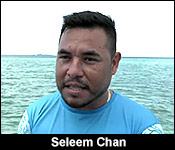
"So TNC's role in the training, we've provided a grant to the Belize Women's Seaweed Farmers Association to fund the association in providing the seaweed mariculture training to its members. As you know they are an association of women that is operating out of Placencia and they have been working to expand their membership and we saw the need to provide the training to their new members hence the reason for us to then provide the funding for the training that we are doing for the past 4 days."
"As the training, the name of it "Seaweed Mariculture training" the lessons learnt really is to develop a seaweed farm so looking at the work being done in establishing the industry on the first day how to identify a farm site how to do it in an ecologically friendly manner in an effort for us not to have an negative effect on the environment. We also taught them how to create a 50X50 submerged structure which is the forked cultivation design that's being promoted how to create that structure from the different sizes ropes the cultivation line that they are working with today and learning how to attach the seed onto the farm so that is important there are key knots that they need to learn and if they don't do it right eventually the seed can loosen from the Rafia and we don't want that to happen."
The association farms three types of seaweed, Ikooma, copper ficus and gracilaria with Ikooma being the most dominant species on the farm. The association hopes that by teaching its stakeholders how to set up their own farms they will be able to grow the industry and in turn develop legislation for seaweed farming.
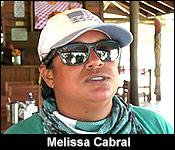
Melissa Cabral, Director, BWSFA
"The people that we trained today are going to now go into the world or waters and create their own farm. And right now in Belize we are building the industry the seaweed industry and we would like them to help us build regulations and rules for us to get permits to start having our own farms so in training them to do a good job and to do it the right way then maybe they would give us our permits."
"Just to create this association legally we had to get all our paper together and all our documents together but also we created it so people could not harvest from the wild. Because the stuff growing in the wild is very important to us it's like a habit for many marine life so by putting it on a cultivation line it's better if you just farm your own seaweed and harvest it than to go in the wild and take it from where it's putting back CO2 for the fish and for the different marine life so that is why and also for alternative livelihoods as you know to alleviate too much fishing and also it helps the water for sustainability."
Cabral stresses that growing your own seaweed is much better than harvesting from the wild where the plant serves as a habitat for small fish and other sea creatures. Reena Usher Ordonez who uses the plant to create hair and skincare products told us why she decided to partake in the training.
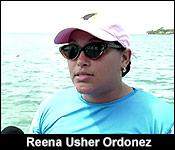
Reena Usher Ordonez, Owner of Southern Queen Products
"For me it was important to learn about the value of seaweed in another capacity because I use it for the nutritional and cosmetic value of it."
"The value of seaweed is important to the Mariculture industry and seeing the work that has to be put into farming sustainably is a lot. This was an intense training it gave me a different insight on what these people have to do to actually sustain the seaweed and you can see the difference with when people get seaweed from the wild which is not being put back and we want it for our generations to come. Sustainable seaweed farming is the way to go and my business selling seaweed products, seaweed based products. I want the mariculture industry to grow and in that my business will grow."
And these women who farm in the sea are the pioneers in a journey to diversified sources income and export offerings.
This is the first training they have hosted in collaboration with The Nature Conservancy.