
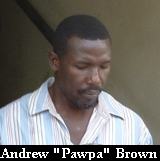
Yesterday Chief Magistrate Herbert Lord threw a wrench in the United States' extradite case against Andrew "Pawpa" Brown when he threw out key pieces of evidence. Now the United States government is claiming that Lord violated their constitutional rights when he did that. This morning attorney for the U.S. Solicitor General Elson Kaseke asked Chief Magistrate Lord for leave to go the Supreme Court to appeal the decision.
It's called a "stated case" and Kaseke wants the high court to decide if the constitutional rights of the U.S. government were violated when Lord threw out the incriminating tapes and transcripts of a phone call between "Pawpa" Brown and Manuel Luis Rena.
In court "Pawpa" Brown's lead attorney Dean Barrow said the constitution has no place in extradition cases and called Kaseke's desperation "disappointing." But Kaseke told us the constitution guarantees everyone a fair trial, even the United States government.
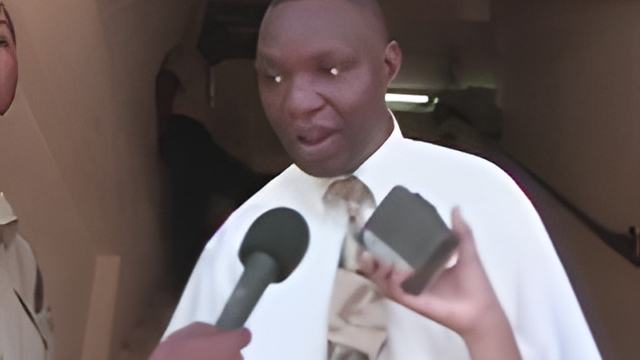
Elson Kaseke, Solicitor General
"I am seeking for the Supreme Court to answer the legal question as whether the constitutional rights of my client to a fair trial has been violated by the ruling of the Chief Magistrate in the voire doir."
Keith Swift,
Some people would say that this ridiculous because the U.S. is a foreign government and secondly how can excluding evidence deny them a fair trial.
Elson Kaseke,
"Because as a matter of fairness all the available evidence should be before the court. I am challenging the exclusion which the court enforced yesterday."
Dean Barrow, Attorney for Brown Brothers

"Really it is a tactic of desperation. It has no legal basis on which it can properly be made. He is seeking, as it where, to appeal prematurely. He must wait until the case is concluded, and he has lost, before he can appeal. You can't stop the case halfway and appeal every little ruling. All that must wait until the end and then when you make your challenge, everything that you think went wrong becomes part of that challenge. But you can't stop every time there is an unfavorable ruling and go to the Supreme Court so that will go nowhere."
Elson Kaseke,
"This is not a desperate move. As you heard hearsay evidence is admissible, the Chief Magistrate said so, so the original affidavit of Sheree Gordon is admissible."
Kalila Enriquez, KREM Radio
"Do you have a case?"
Elson Kaseke,
"Yes because the original affidavit of Sheree Gordon is admissible."
Keith Swift,
You wouldn't agree that your case is on life support and this is a last ditch effort to save it?
Elson Kaseke,
"I am not going on a fishing expedition. I have a tight case if you consider all the evidence, including the original affidavit of Sheree Gordon at the end of the case. He has said so in no ambiguous terms. What we are seeking to do is enforce the constitutional right available to my client. They have rights just as defendants have rights."
The arguments continued until late this evening after Kaseke told the court that a recent constitutional amendment guarantees the right of his client to go to the Supreme Court for the "stated case." Lord heard further arguments and will rule on Monday morning.
As an aside, while there have been countless adjournments, 7NEWS has learnt that yesterday there was no afternoon court session in order to allow Floyd Brown to give blood to his ailing father. Although he is present in court everyday, Floyd Brown's case is not being dealt with as yet.
Today when asked about bail for the Brown brothers, or at least for Floyd, Kaseke told the family he would oppose it on a matter of principle.