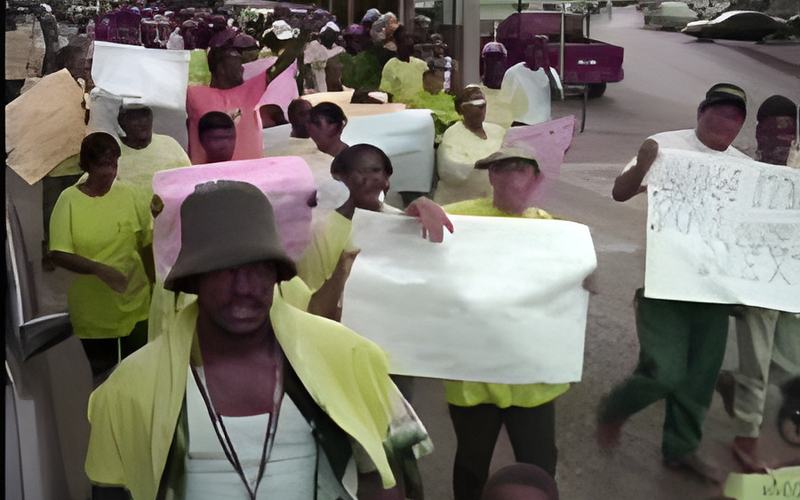
Tonight, Belize's justice system remains crippled as the impasse between the DPP's office and the Police Department stands. As we've reported, on Tuesday, as an act of protest, the DPP sent 400 files to the police station, saying that he would not review them until the Commissioner of Police apologizes to him for ignoring a directive. Those files were roughly sent back to the DPP's office but they sit there tonight, unattended, reportedly under the instruction that they are not to be reviewed.
It is an administrative crisis for the justice system, and it is also a crisis in public confidence in that system. And while it has become an ego and turf war, it started out with one case: the killing of Shawn Copius by Chayben Abou-Nehra. Tonight, we'll look into correspondence obtained by 7NEWS which shows why the DPP's office demanded that murder charges be brought and what has happened because the police refused to adhere to that point of view.
Jules Vasquez Reporting,
On July 24th. Chayben Abou-Nehra was charged for manslaughter, for killing this man, Shawn Copious, in front of Abou-Nehra's home on September 19 of 2005. Abou-Nehra was bailed and is to re-appear on the first of September. But according to the DPP's office, he should be behind bars, on remand for murder. That's the express directive contained in this letter, sent from the DPP's office to the CIB Office on July 13th, 2006.
Written by Senior Crown Counsel Cheryl Lynn Branker-Taitt, it directs CIB boss Chester Williams as follows: "you should proceed to arrest and
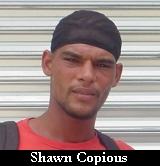
_charge Chayben Abou-Nehra for the offence of murder...." _Four letters from Branker-Taitt written between the 16th June and the 13th July explain why the charge should be murder. She points to: the locations of the two fatal bullet wounds in Copius's back and buttocks, inconsistent, she says, with someone who was in a threatening position, she points to the fact that six expended shells were all found on the street outside Abou-Nehra's property, when he claimed Copius was in his yard; and that Copious was shot from a distance of greater than 5 feet, at which distance she says a man with a knife would pose no serious threat.
She found that: "Copius was shot after he exited the yard...and Abou-Nehra fired two shots at a man who was more than 5 feet away from him and who was at the time leaving or had already left his premises." She concludes that it was an unjustified shooting, because, "these circumstances point to the conclusion that at the time of the firing of the fatal shots, there was no present danger." In that same letter, Branker-Taitt directed ASP Williams to get statements from Dr. Hugh Sanchez and force armorer Albert Ciego.
But by the thirteenth July, those additional statements were either not forthcoming
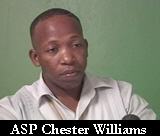
or lacking and Branker-Taitt wrote again to ASP Williams, "almost a month has gone and additional work has not yet been completed." She further accuses him of not even trying to get a statement from Dr. Hugh Sanchez. With that, Branker-Taitt gave her directive to bring murder charges forthwith.
But the police did not, they instead brought the manslaughter charges, which sent the DPP Kirk Anderson into a rage and forced a standoff with the Police Department. Meetings were held and letters sent, culminating in this one, on Monday August 14th. The DPP states to the Commissioner of Police: "you and the officer in charge of the CIB outrightly refused to comply with my office's directives that Mr. Abou-Nehra be charged for the offence of murder." The DPP then points to section 50 of the Constitution which makes him, "the pre-eminent legal authority in Belize, with respect to the charging and prosecution of any person." He then concludes that after the police told him they would charge for manslaughter and ignore his directive he was, "expecting written apologies both from yourself as well as from ASP Chester Williams."
The letter notes that none has been
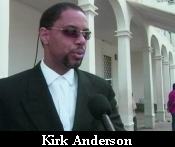
forthcoming and Anderson concludes: "I feel it necessary to insist that such apologies now be provided...since both yourself and officer Williams were...disrespectful to (my) office as regards our directive that Mr. Abou-Nehra be charged with murder." Anderson then states, "I will not have any more meetings with you, unless and until both such apologies have been proffered. And after all that Anderson declares: "since you appear to have decided that you will only comply with this office's advice/directives as and whenever such advice meets your liking...effective August 15, 2006, this office will no longer be accepting any files from police..additionally we are...now returning to your office all case files which are not yet under consideration."
Attached to that is this, a list of 403 cases that the DPP's office returned, which were there for review and instruction. They run the gamut, form arson to murder, to kidnapping to carnal knowledge, manslaughter, maim--all now left to the whim of lady justice.
We note that the DPP did consent to the manslaughter charge after discussions with Gian Ghandi, government's legal lynchpin. But he stresses that was only so that police would agree to take him before the court. But he notes in his letter, "when this office is ready to indict him, we expect then to indict him for the offence murder." And those aren't the only charges Anderson discusses in his letter. In closing he warns the Commissioner of Police that he may face, "criminal processes related to he obstruction of justice."