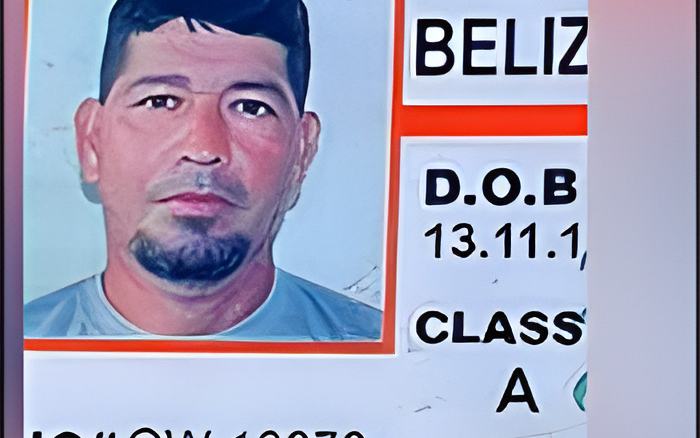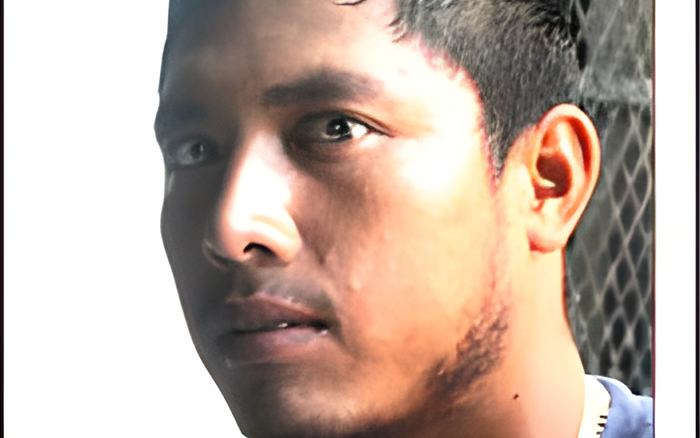


"Heatstroke" - that is the cause of death for 20-year-old Derrick Uh. His death certificate obtained by 7News from a family representative says he got that heat stroke as a consequence of "prolonged confinement in an enclosed space."
That death came hours after he was locked inside a prisoner van. But, for most of us, when we hear that term prisoner van, it's abstract - we don't know and will never know what it's like inside.
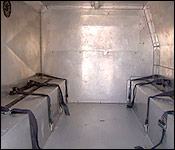
And that's why Cherisse Halsall went to Corozal today to go inside that van, and get a real feel for the untold agony, sweltering heat and horror that characterized Uh's final moments of torment in the dark and airless interior. Here's the story from Corozal:
STANDUP

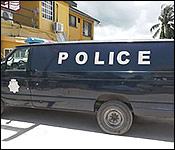
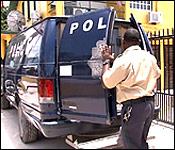
That's the sound that this Ford F-350 E series doors made when they slammed shut on 20-year-old Derrick Uh.
He was imprisoned here in what is effectively a (tin can) that became an oven by midday on a warm Saturday.
Well, it's midday now and as I sit here with every door and window shut. It's a claustrophobic worse nightmare and an eerie feeling considering that this vehicle was unwittingly weaponized to take the life of one family's brother and son.
And this morning when a much more remorseful Commissioner of police appeared on Sunup on 7 he gave us a frightful description of the absolute mental and physical horror that were Derrick Uh's final hours.
Chester Williams, Comissioner of Police
"The inside of those prisoner vans, the inside of those vans are properly sealed, where the prisoners are kept to where the driver is, there is metal there, it is sealed, and if you look at the van, the van has no window. Even when the air conditioner is working, if it not working properly, you can't stay in that van, you can't breathe, so imagine it parked with the engine off, with no circulation of air, and it was a hot day. Just imagine that. So the truth is, what the young man went through, is torture, it is torture."
Those words more than painful for Uh's family to hear because the pain and suffering inflicted upon Derrick would never have happened had the proper safeguards and protocols been carried out.
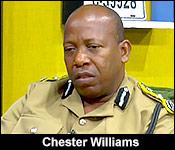
Chester Williams, Commissioner of Police
"There's an inspection list that is normally done so as a part of that inspection list, to check the back of the bloody vehicle to make sure that everything there is in order so again, on his part, there may still be a breach of departmental policy because what we're looking at is to see if there is any criminal responsibility and whether it is intentional, inadvertently, negligence, carelessness, those are still dealt with under criminal law because those are dealt with under criminal code. So we're looking at that and we're looking at any bread of our departmental policy."
It all comes back to the duty of care that the officers owed to the young man whose liberty they had taken. And that's because no matter the circumstances of the detention, once those doors close you can only hope and trust that they'll open again. For Derrick Uh, in those desperate hours of anguish and torment while he cooked inside that van, the doors never did open again.
Chester Williams, Comissioner of Police
"There may be three officers who may have to face the music. There are some who just did the detention and they handed the young man over to the diarist at the command centre at the Showgrounds. So once you did the detention, you hand it over to the diarists, that's not your responsibility anymore, it's now the responsibility of the diarist and the supervisor because there was a sergeant who was in charge at the command centre, so they were the ones who would have had the ultimate responsibility to tell the driver of the van, bwai, you're going to the station with the van? We a have prisoner at the back, make sure you take him out of the van when you get to the station. Apparently, there was little to no communication with those officers and the driver of the van who took the van to the station and there was where the breakdown took place and so I have been told that the driver may have had some knowledge but he is trying to justify that he was not told but if it is that we can ascertain that he did have knowledge then he will have face the music with the other two."
And this morning the commissioner made a point to say that unlike the famous cases of Laddie Gillett, and Allyson Major - who were killed by police - the department won't be contesting compensation.
Chester Williams, Commissioner of Police
"This is a situation where I am going to advise the AG ministry, don't even waste your time and fight this, because there is no justification for it. When the family members decide to take whatever legal action they may want to take, we just concede. What's the use of putting up a fight? These officers were outrightly wrong."