body,td,th { font-family: Arial; font-style: normal; font-weight: normal; }
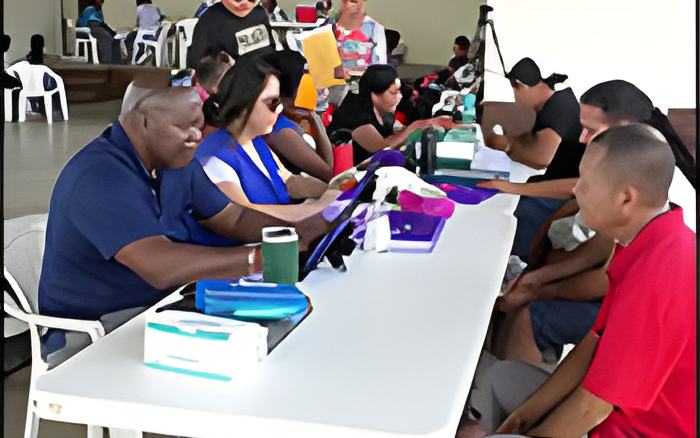
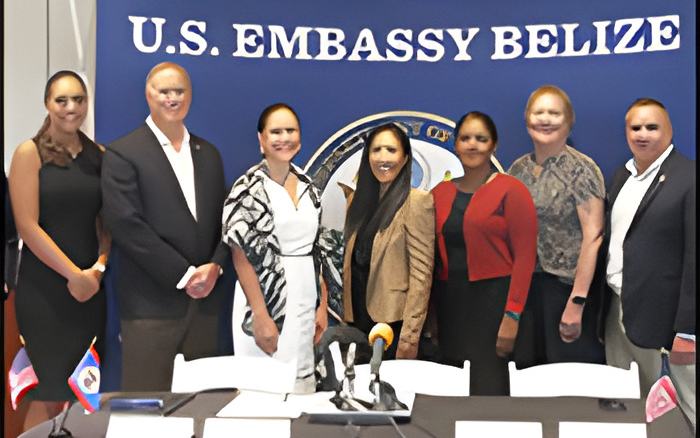
A US government delegation is currently visiting Belize, including representatives from the Vice President's Office, USAID, and the Department of Defense. They have met and had discussions with Belizean government officials about issues such as economic development, migration, and climate change. And today, they held an early morning brief press conference at the US Embassy.
During the conference, the media asked the deputy assistant secretary of defense for the western hemisphere, Daniel Erikson, how the US government is assisting with the drug interdiction, considering that Belize and its neighbors are point of transit for drugs heading north to the USA. He explained in general terms the steps that they've been taking.
Daniel Erikson, Deputy Assistant Sec. of Defense, Western Hemisphere

"The challenge of translation criminal organizations, it affects Belize, it affects the United States, of course it has a broader regional dynamic as well throughout Central America. There are several steps we are taking and can take, I reference previously the remarks, the other work that we're joint intelligence operations center which is really intended to provide much better awareness for Belize, these air tracks that you reference, so that our country's authorities can have a sense of what is coming in and going out of the country in terms of overflights. With respect to the border, you're absolutely right, border security is a key concern that you have essentially on the western side of Belize, a border where much of it's jungle, as you know, parts of it are impassable but there is I think an increasing challenge that's posed by trafficking in that area and so we have discussed with Belize the government's plans and strategies to address that and to see what more the Department of Defense can potentially do to support. Of course when you look at border security and the effort to ensure that rule of law is upheld with respect to transnational organized crime, a lot of that burden also falls on the domestic law enforcement agencies and not necessarily on the military. There are ways that we can work together on that and then looking forward, I think there are also some positive initiatives that are taking place in terms of regional collaboration in the Caribbean to try to counter the challenges posed by transnational organized crime."