
body,td,th { font-family: Arial; font-style: normal; font-weight: normal; }
There are thousands of enlisted police officers, and regular intakes with dozens of new officers - but for all the boots on the ground that police invest in - the department does very little to recruit mental health experts to assist these persons who deal with trauma based jobs.
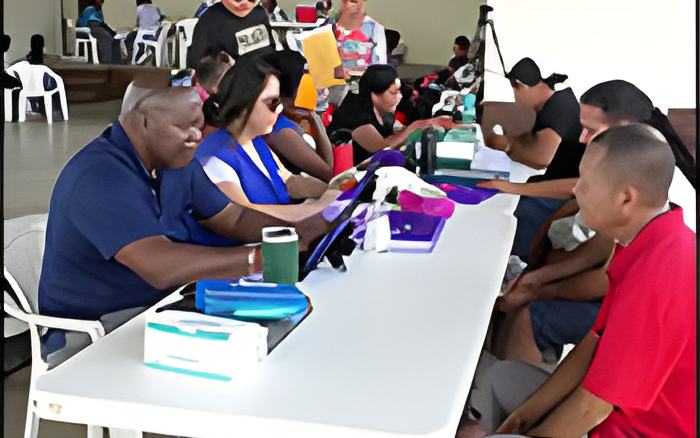
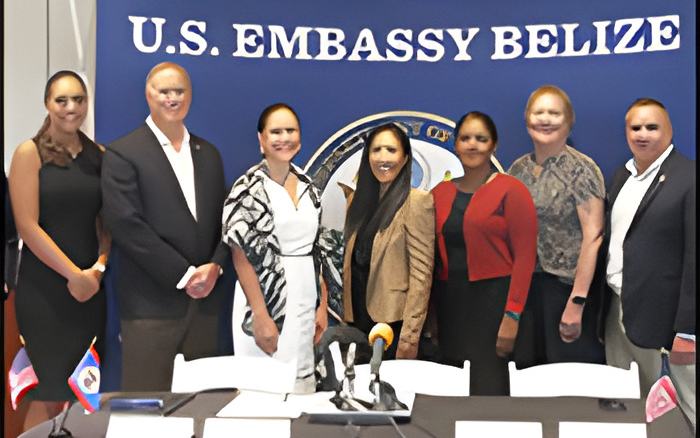
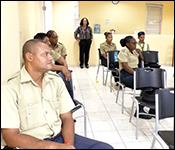
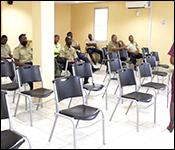
And that's why it's news that 18 police officers from different precincts in the city gathered at the Queen street police station this morning for a one on one mental health training with the Mental Health Coordinator from Central Region. This particular training was aimed towards educating officers on how to respond and approach situations where mentally ill persons are involved. Jomarie Lanza Reports
Historically, the police department has struggled with responding to situations where mentally ill persons are involved. That lack of knowledge, has previously resulted in lives lost, and trauma to those involved looking on in horror. The department is now making an attempt at training their officers on how to respond and defuse these situations where mentally ill persons may be involved.
Leon Leslie, Psychologist, Belize Police Department

"As Belizeans should know mental health is something that has been on the rise since covid before that it wasn't a priority for us. One of the first things I did when I came onboard I realized that hey police they are not trained in training school in depth on how to approach these citizens. So a training like this should give them somewhat an idea on how to approach them or at least to defuse them if need be request assistance from the ministry of health. They're learning all these resources that the ministry has a mobile clinic that can go out and assist them. But as we know the police are the first responders so it is them who will respond first. So their task is to assess the situation and of course protect their safety and ensure the safety of the citizens. In the past I know we had several stories about mentally challenged people sadly getting shot or hurt by the police officers so a training like this is to look at other alternatives that will help them along."
But are these trainings truly making an impact? Psychiatric nurse, Ingrid Bonilla says she sees a drastic difference in the way officers react to handling mentally challenged persons now than they did in previous years. She says that the humanity of a mentally ill persons is often overlooked in tense situations.
Ingrid Bonilla, Psychiatric nurse, Mental Health Coordinator

"So today the goal is for us to be able to educate police officers on what their role is as officers what our role is as mental healthcare providers and how they can identify individuals with a mental illness as well as how to respond in those situations that they may encounter."
Reporter:
"What is a misconception that maybe police officers or general public may have in terms of dealing with someone who may have a mental health condition?"
Ingrid Bonilla, Psychiatric nurse, Mental Health Coordinator
"The general consensus would be that they are treating someone out in the public differently from how they would treat the general public when it comes to an individual that they may identify as having a mental illness they are considered to be different not someone of value treating them as if though the goal is to protect themselves more as officers because that person is more dangerous and at the same time but times have evolved i've noticed in this training. Previous training has shown me that officers did not consider them as valuable as they do now, now they actually, in this training I have identified where officers see those with mental illness as someone that has rights so for me to see how it has evolved from those times to now it's a good thing."
The next training is expected to be held in Ladyville with officers stationed in that area, with 3 more training sessions planned for the Eastern Division.