
Earlier in the news, we showed you a few excerpts from the press conference which the UDP hosted today. They called it to respond to the PUP's Leader of Government Business in the Senate, Eamon Courtenay, who harshly criticized the land deal with the Washington-based Nature Conservancy.
That forum gave Opposition Leader Patrick Faber the opportunity to respond to another allegation which Courtenay raised in the Senate. You'll remember that on Wednesday, Courtenay disclosed that while the National Institute of Culture and History was under Faber's ministerial portfolio for culture, this statutory body rescued a private citizen from losing her home to foreclosure.
It came at a cost of just over 100 thousand dollars in public funds, and Courtenay implied that this arrangement was improper. Today, Faber told the press that NICH got major value for that expense and that they were seeking to look after a cultural icon. Here are the details he disclosed this morning:
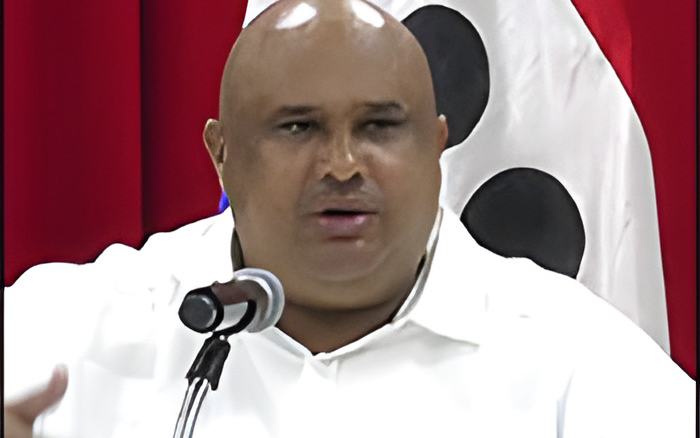
Hon. Patrick Faber - Leader of the Opposition
"Let me be clear to the Belizean population now that I make no apologies for the transaction that occurred."
"The only reason why, in fact, that I hesitate even now to speak of the matter is you don't want to put the private business of people out there."
"We found a situation where one of Belize's most recognized artists was in a predicament financially with her home. In fact, this individual, who I'm I will name, I don't think that I can hide that now."
"It is Artist Emeritus Myrna Manzanarez, who all Belizeans know to be the champion of the Kriol language, or one of the main champions of the Kriol language, a storyteller, a poet, and somebody who we've long recognized - so happens that Myrna is UDP, but that is neither here nor there. She is one of Belize's greatest talents. Myrna was in a situation financially with her home. All Belize now knows that the National Institute of Culture embarked on an initiative that we deem certain artists to be artists emeritus. I think that Lord Rhaburn is one of those artists. Myrna Manzanarez was also one of them."
"These individuals got a small monthly stipend to go along with that designation of being an artist emeritus. Once we found the situation with Miss Manzanarez, we thought that we should try to assist, and as far as I recall, the proposal that the board put forward, voted on, and passed saw that Myrna would not necessarily receive that little stipend."
"And that we would try to help her to secure a dwelling space because she lived in the house that was about to be foreclosed on by the Social Security Board. So, NICH contacted the Social Security Board and sought to find out how the transaction could be done. I want to make it clear that at no time did NICH intend to pay off the debt on behalf of Miss Myrna, and that she could continue owning the proper, so to speak. The transaction was such that NICH would own the property. I believe that the transaction concluded for about 110 thousand dollars for a property that is well over $200,000."
"This house, bought by NICH, would be owned by NICH, would be used later on, the board saw it, for some kind of cultural preservation. But, the board agreed that while Miss Manzanarez was living, that she could continue to live in the house. After that, it would become the property of the National - well it already is the property of the National Institute of Culture and History, but they would be so kind to the artist emeritus to have her live out the rest of her days in the home comfortably. What is wrong with that? NICH gets a very good deal, in that it secures a property that it would own forever."
"And Myrna would also be live comfortably. We know how much of a difficulty that it is for many of our artists out there. Many times we wait until they die and pass on, and then, we say all sorts of good things about them. Well, this was a situation where the government, through NICH, made every attempt to ensure that we didn't wait until Myrna was dead. We were there for her before."