
Right now, Belizean high schoolers and 6th form students are hard at work in their final preparations for the 2021 Caribbean Secondary Education Certificate Exams and the Caribbean Advance Proficiency Exams. The Caribbean educational authorities and the Caribbean Examinations Council, which administers these regional exams had previously organized them to take place in mid-June. But, there have been increasing concerns across the Caribbean that the candidates for this year's exams would not be ready because they've been out of classes for months due to the COVID-19 pandemic.
And then, there are countries with specific challenges, such as St Vincent and the Grenadines, which was recently devastated by that explosive volcanic activity several months ago.
The concerns about student preparedness were also heightened when UNICEF spoke up saying, quote, "As we are aware, the current pandemic context has further exacerbated the gaps in preparedness amongst the most disadvantaged students. This year, there is a higher risk of those students in vulnerable conditions never sitting the exams." End Quote.
The CXC listened to the views of those in the Caribbean who are worried about the level of preparedness of the region's students, and after consultation, they have adjusted the schedule for the exams, by pushing it back 2 weeks. In addition, they are trying to implement measures to mitigate against students who may be in disadvantageous positions due to the pandemic.
Today, in a region-wide press conference, the Chair of the CXC made the announcement, and 7News was tuned in. Here's what he had to say about the deliberations that went into making this change:
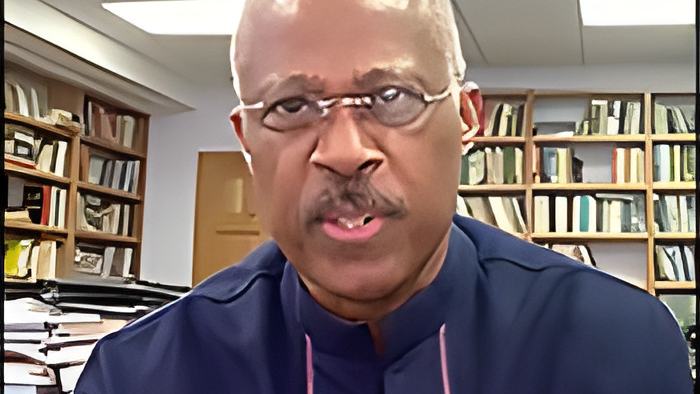
Sir Hilary Beckles - Chairman, CXC
"I wish to therefore express my gratitude to the Chairman of COHSOD, responsible, of course, for discussions about education and human resource development, this very important body of CARICOM, under the chairmanship of Dr. Jeffrey Lloyd, the Minister of Education in the Bahamas. He was called upon to host a special meeting to hear once again the issues across the region. He had received representation from the Caribbean Union of Teachers. And in his good judgment, he felt it was necessary for COHSOD to meet to hear the views of the Caribbean Union of Teachers so that CXC can also sit, listen and engage with them. So that, we can hear the responses of our education ministers and other government representatives, to hear all of them before we make our final decisions."
"The COHSOD meeting was an excellent meeting of Caribbean unity. Even though there are national differences, even though there are domestic differences across the region, what we heard at COHSOD was a commitment to flexibility, a commitment to compromise, so that we can emerge with a package, a strategy, and a methodology."
"We've heard from our teacher union. We've heard from students who continue to have challenges. We've heard from ministers reporting on these diversities across the region."
"The Council heard the views of COHSOD. The Council heard the views of the Ministers, the permanent secretaries, and all of the educational leaders of the region, and emerged with a consensus in terms of how CXC should proceed."
Dr. Wayne Wesley - Registrar/ CEO, Caribbean Examination Council
"After careful deliberation and consideration of all the pertinent issues, the Council, which is made up of the governments of the region, agreed that the revised strategy for the 2021 regional examinations shall be as follows, 1, to maintain the administration of all papers. CXC will administer the Caribbean Advanced Proficiency Examination (CAPE), the Caribbean Secondary Education Certificate (CSEC), and the Caribbean Certificate of Secondary Level Competence (CCSLC) examinations in their original format, that is, for CAPE and CSEC papers 1, 2, and 3 (1), school-based assessment, or paper 3 (2) for private candidates and for CCSLC papers 1 and 2. Secondly, Council approved the delay of the sitting of the regional examinations by a further 2 weeks. This will provide candidates with extra time to prepare for the examinations. Therefore, examinations will commence on Thursday, the 28th of June, 2021, with the release of results from the last week in September to the first week in October, as previously communicated. Thirdly, the option to defer, the deadline for candidates to register their intent to defer has been further extended to the 31st of May, 2021."
During today's press conference, the CXC head table was challenged on whether or not the change in schedule and the deferral deadlines go far enough to assist those students who have been most impacted by the pandemic and other country-specific challenges. Here's the back and forth on that from today's press conference:
Reporter
"How do you respond to those who might say that this plan is still a bit tone-deaf?"
Sir Hilary Beckles - Chairman, CXC
"Well, I would say, first of all, that this judgment would be a little unfair. Now, bear in mind, what we have done, we have brought our ministers of education. We've brought our permanent secretaries from the education departments, and we have sat in various places with all of our colleagues who know on the ground what the issues are. They all are aware that we must deliver these examinations. We have a project to deliver."
"They all are aware that we must not face this crisis with doubt, and neither must we have a meltdown, that the people of the Caribbean must show confidence and courage in the face of a crisis."
"To the extent that we are in dialog with those responsible for education in each jurisdiction, and they are bringing their knowledge to the table. It would be unreasonable to say that the Council is tone deft because the Council is made up of all of these stakeholders, and the stakeholders are not tone deaf. The Ministers and so on are out there on the frontlines. They know what the students are going through. We also heard from the teachers. We heard from the CUT, the Caribbean Union of Teachers, which made a splendid presentation."
"In the search for practicality and compromise, we never get a 100%. No one group of people gets a hundred percent."
And according to the CXC head table, the number of students who have applied for permission to sit the exams next year is only a small percentage of the total students who have signed up for this year's sitting. Here's how the Chairman of the Caribbean Examination Council explained why this is a clear indication that the region's students simply want to persevere and get the exams over with:
Dr. Wayne Wesley - Registrar/ CEO, Caribbean Examination Council
"In terms of deferrals, to date, for CSEC 13,655 students have indicated deferral, for CAPE, 1,090 students would have indicated the need to defer."
Sir Hilary Beckles - Chairman, CXC
"Any idea what percentage you are dealing with here?"
Dr. Wayne Wesley
"For CSEC this would be about 5% or less and for CAPE less than.1% because is at 1,090 or a possible one hundred plus thousand and the 13,000 from a possible five hundred plus thousand, so it's very small."
Sir Hilary Beckles - Chairman, CXC
"There doesn't seem to be an appetite in the region among our students for deferral. Of course a small percentage will give you some personal dimension, but they don't seem to be any general appetite for deferrals. Young people they want to get in with their lives, their parents wants to get on with their lives, the teachers and the government want to see them fulfil and move through, so doing all that as humanly possible to show sustainability of the process, the vast majority of young people have expressed a preference to get on with their lives despite the difficulties."
So, to reiterate the regional exams will now commence on June 28th.