
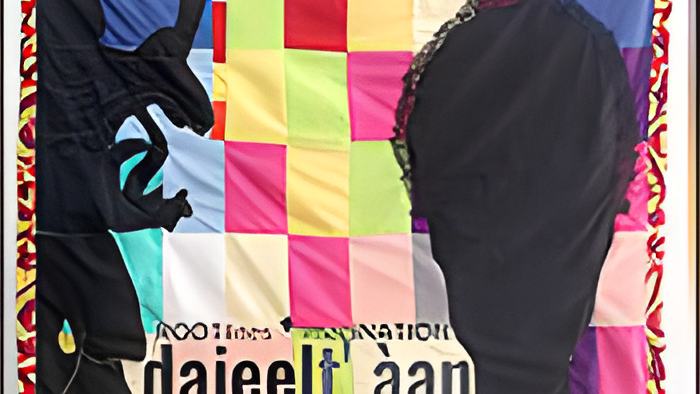
Educators from Saint John's College and artists from the Image Factory Art Foundation have collaborated on a new eco-system of learning. It is called Dajeel Taan, and it's a web-based hub that is meant to spark critical thinking about important concepts in Belizean History.
The creators of this new eco-system say that current studies on this country's pre-independence history still have colonial perspectives embedded. And so, they are hoping that students and the wider Belizean public will embrace this project. Dajeel Taan is home to a number of web space features, including 2 E-books. One of them is called ROOTLINES: Belize, and it provides a look at African and Maya Learning from a Belizean perspective. The other is imagiNATION: Belize, which the creators also call a de-colonization toolkit that explores Belizean resistance, resilience, and consciousness in our history.
This evening, we got a chance to discuss the project with one of the contributors who has been working on it for the past 8 years. Here's what he had to say on these resources, which can easily be integrated into the country's high school education system:
Delmer Tzib, History Teacher, SJC
"Dajeel Tan is basically to decolonize the education system by providing an ecosystem of learning. Basically its a web portal that we have, but also encompasses two eBooks at this point. We are planning on generating two other eBooks for third and fourth forms, a curriculum. What the 2 eBooks that we are launching today are about are basically one root lines which talks about the connections about Belize to the Maya and African civilization, not only as something of the past, but something about continuity. meaning making that connection to say the Maya are still alive in Belize today and that there are African continuities here in Belize as well and the aim of all of this basically to undo part of what the colonial project has done in our society. So in 1981 we basically gain political independence, but we did not gain independence of thinking as it relates to the mind. So what we call about decolonizing the mind, that's precisely what we are aiming to do with this history project and with this educational project as well."
"When you talk about history we have to be open to different perspectives and you have to also be able to critically assess that some of these things were not as perfect as we want to see them per say, because just like the presently, the past was not perfect. These eBooks along with the webpage are written in very basic language. So what we are aiming to do is to basically provide to a reader that is not necessarily so academic in nature, but that simply wants specific facts to go and research later on. So they just want the snippets of information and then say hey this interest me, so let me go research more about it. That's what we are aiming to do, to provoke thoughts and provoke thinking. In this case we also as I have stated, the e-readers are sort of what we considered the provocations, but we also have teachers guides that provide a lot more explanation to the concepts so that these eBooks can also be use within the high school system."
This new ecosystem of learning can be found on the web at www.dajeeltaan.org.