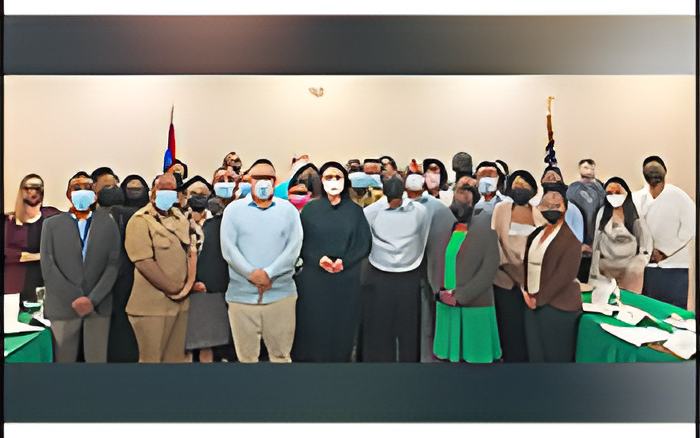

This morning, the Statistical Institute of Belize and the Belizean chapter of the International Organization for Migration (IOM) released the findings of an Analysis of Migration Data in Belize.
These two organizations tell us that such a study has been long overdue in Belize. That's because previously, there wasn't any comprehensive study of the patterns of international migration into the country, or of the characteristics and living conditions of Belize's migrant population.
So, this report is important, but… there is one major limitation on this snapshot of migration. The study was done on data that was collected by the SIB in their 2010 Population and Housing Census. That's 11 years ago! And, the authorities are well-aware that the trends identified from that data no longer reflect the country's current migration demographic.
But, they say that these revelations are still very important because they will provide a baseline for comparison to the data that will be collected in next year's Population and Housing Census.
Here are a few of the remarks which were shared at a joint press conference hosted by SIB and IOM Belize on the topic:
Diana CastilIo-Trejo - Acting Director-General, SIB
"Today, we are pleased to share with you the results of a recently completed study on migration and Belize's migrant population, funded by the United States Agency for International Development, through its integrated response to migration project, and carried out using data collected in the 2010 Population and Housing Census. This study is one that is long overdue, yet incredible timely, one that highlights what can be accomplished when partners, such as the SIB and the IOM collaborate, and resources are pooled in service of a common goal."
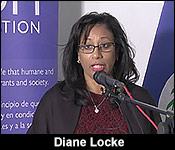
Diane Locke - Head of Office, IOM Belize
"The Integrated Response on Migration Project is one of IOM's projects currently being implemented in Belize as part of a regional project funded by the United States Agency for International Development, [which] we all know as USAID. This project aims to reduce the push factors of irregular migration within Central America and North America, and contributes to safe, orderly, and regular migration, through the reception and reintegration of returning residents, and integration of migrants from Central America. The project has 3 outcomes: 1, the mechanisms are enhanced to ensure the sustainability of post-arrival assistance and effective referral systems, sustainable integration and reintegration are facilitated at the individual community and structural level, and 3, national and local governments and key stakeholders adopt evidence-based policies on human mobility to reduce irregular migration, improve social services for vulnerable migrants, and facilitate community re-integration. The analysis of the data from the 2010 Census falls under outcome 3 and was carried out to consolidate and process data regarding human mobility, migrant population demographics, economic status - among other variables, and to support subsequent migration-related surveys."

Dr. Gilroy Middleton - CEO, Ministry of Foreign Affairs, Foreign Trade & Migration
"According to the World Migration Report 2020, prepared by the International Organization of Migration, it is established that as of 2020, 281 million people are living in a country other than their country of birth. The IOM report goes on to state that several countries in Latin America and the Caribbean have undergone considerable population change over the last decade. Of the countries in this region, Belize had the greatest percentage change with its population changing by some 24% from 2009 to 2019."
We turn now to the details which were revealed in the data that was collected back in 2010. Here's how the analyst attempted to demystify migration in Belize to identify the countries where most of the non-Belizean migrants came from:
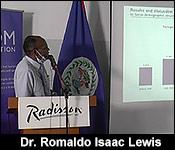
Dr. Romaldo Isaac Lewis - Analyst, Migration Study
"The information shows that 49,819 was the migrant population in 2010. Of that population base, we must see that 31.1% lived in the Cayo District, and 8.2% lived in the Corozal District. From the country of origin, we can say that 40.6% were from Guatemala, 15.2% are from El Salvador, and 15.1% are from Honduras. And that, we can see the distribution pattern that we're looking. There are 40.6% Guatemalans, 15.2% from El Salvador, and 15.1% are from Honduras. So that's the population distribution of the migrants. In regard to the district where they are located, Rural vs Urban populations, as we can see, 54.9% lived in the rural population. And we can say that Orange Walk, Stann Creek, and Toledo, populations are heavily concentrated in the general rural population. In the Stann Creek District, 83.2% of the foreign-born live in rural areas. The Belize District was the only district whereby we had 75.8% living in the rural areas. This would be specifically for the cayes. We have foreign-born by year the persons last came to Belize. Before 1990 - 6,413, 1980 to 1989 - 9,389, 1990 to 1999 - 12,668, 2000 to 2009 - we have 16,683, and then, in 2010, we just have 1,527."
As you just saw, this study was done using data voluntarily given by participants of the 2010 Census. Also, it identifies all the migrants from that time without making a distinction of whether or not they had proper legal status in Belize. So, as a result, very little is known about the migrants who had irregular immigration status in that year.
Here's what the members of the SIB and IOM Belize had to say about that lack of information on undocumented migrants when we brought it up during the question and answer section of the press conference:
Diana CastilIo-Trejo - Acting Director-General, SIB
"There has been very little information available, and I think that you can tell from the conservation right now surrounding migration matter that there's a need for this information. So, we did - as I said - a module on migration in September. We will have results to publish in February at our next press conference, but I think, just based on patterns that we have seen in the past, the migrant population - or rather the foreign-born population, because what we're counting here is everyone who was not born in Belize who was living in Belize at the time. It's a small distinction, but it's a distinction still. If we can go by past patterns, where between 12% - 15% of persons living in Belize were comprised of foreign-born persons, then at present, we have a population of over 430,000, then we are looking at an upper limit of about 64,000 persons, and a lower limit, a bit lower than that. But, that is our best estimate right now. We should have some better information in February, as we complete that report. And the hope is that, given the importance of migration statistics, and having this information available to make these decisions and to have these conversations, that we will be doing this type of data collection more frequently."
Reporter
"Is there any sort of data available on undocumented non-Belizean migrants?"
Diane Locke - Head of Office, IOM Belize
"SIB, in the way they collected data, does not focus on the status of a person whether they're regular or irregular. From an IOM perspective, we only have limited information based on our experience where we went out into the community in the early part of this year, as a part of a UN activity that we were doing, interacting with people in the community, particularly migrants, sharing information from. It's very clear that there is a group of persons. I don't want to say substantial. I don't want to say - it's definitely not small. And I don't want to hazard a guess as to how much it can be because as Miss Trejo says, they look at foreign-born persons. When you look at foreign-born persons, it's by place of birth so some of those people may have already acquired Belizean nationality and have been living amongst us for quite some time. So, that makes them here in regular status. There is definitely a community that is out there, and we encountered different variables in the community, different people in different standing. I think the minister's recent announcement captures a large portion of those persons, but there are still some others who, based on our interaction has been, may not quickly and readily identify onto some of those areas. We're sharing that information with the Ministry. We have shared some of it, and we are sharing more because the UN system had continued to do their mobile clinics."
The SIB and IOM representatives tell us that in February of next year, they will be releasing their findings on a module on migration which was conducted in September of this year.