
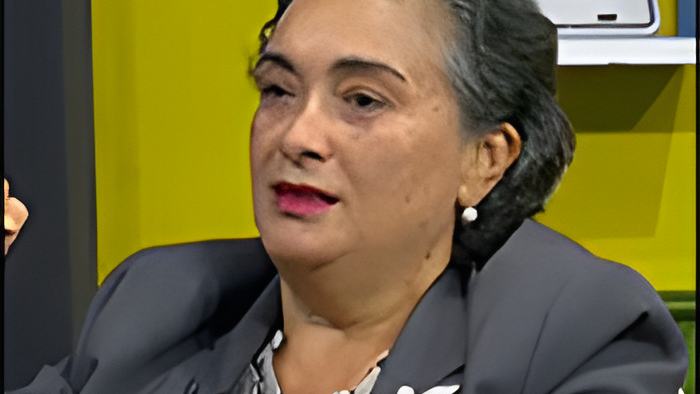
Justice Shoman also discussed the positive impact that the Supreme Court's new E-filing system has had on the workflows of the judges and their support staff.
As viewers will remember, APEX justice gave them a significant upgrade when they installed the Curia Court management system, which the Caribbean Court of Justice also uses.
Until that installation, Belize's judiciary was powered mainly by paper documents collected and stored in Bankers' Boxes. Apart from being more eco-friendly, the digitization of the filing system provides significant upgrades. Here's what Justice Shoman had to say about the Curia system:
Justice Lisa Shoman - Supreme Court Judge
"I don't know how much people know about this, but we transitioned almost just before COVID and then immediately after the lockdown into a digital filing system. So you no longer go to the register with your lots of paper. Mr. Penell writes down the price, stamps it, and then you will pay for it. What you now have to do is your lawyer upload it. They upload an undertaking to pay. They upload the documents, and then they pay the fees once they get the invoice. That's how it works. If you don't have a lawyer, you can go to the registry, and ask for help in uploading your documents onto the apex system So, then you're in case management, your files are uploaded, and you are registered. And actually what happens in practice, because we still manage paper files, complete with the little green treasury tags, which is - I don't know. Anyway, better not say. Yes, but all of that is still they still have to provide a paper copy. So, we still have a paper file. But in effect, we have a system where you can go into Apex and see everything that has been filed and read on your screen. Now, because judges are still working off laptops, and we're not at the point yet. What we really need is two big split screens so you can manage your work by looking at documents on the screens. And if you are not in court, you can have the hearing virtually. You're still in a court session, but you are not in the physical courtroom. That was one of the benefits that COVID had for the judicial system is that it forced us fully into virtual courtrooms. Okay, and so that was a huge impulse. But then, when you've got the thing where you're dealing with your hearings virtually, what is the next step? What is the next? The next step is to be able to handle everything online, your scheduling, your filing, people seeing the documents, and people attending court. Right now, we are back to a hybrid model, okay? At least in the civil courts."