
Today's encounter with CEO Kennedy Carrillo allowed the press to ask about resubmission of the proposed mega-development at the Port of Belize. It's called the Cargo Expansion and Construction of Cruise Terminal & Cruise Tourism Village by the Port's Management.
The project is proposed by the developer, Waterloo Investment Holdings Limited, and it is the third proposed development that could shape the cruise tourism industry in the Belize District.
You'll remember that after a full review of the project's Environmental and Social Impact Assessment, the National Environmental Appraisal Committee decided last year that they would not grant the developer the necessary environmental clearance. The NEAC concluded that, in their opinion, the first ESIA did not adequately address six concerns, so the project ran into an environmental red light.
Last week, the developers resubmitted their ESIA proposal, and it was published a week ago on the Department of Environment's website.The original document clocks in at a total of 455 pages, and it also comes with a hefty annex document that is also 470 pages long. Nextera Environmental and Engineering Consultants prepared it.
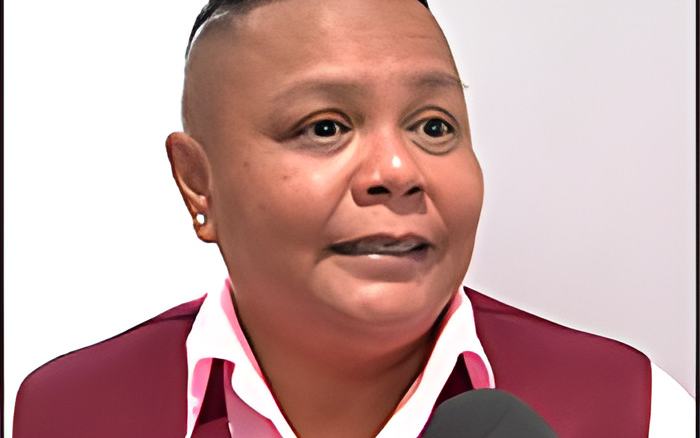
This morning, the topic of that resubmission came up during a conversation between the press and the CEO of the Ministry of the Blue Economy. Here's what she had to say about the return of the proposal to expand the Port's bulk cargo facilities, as well as a mega cruise port:
Kennedy Carrillo - CEO, Ministry of the Blue Economy

"We sit on the NEAC, right on the National Environmental Appraisal Committee, and we ensure that we have our Fisheries Department and our Coastal Zone represented on this body. We present our position, and if we're not in agreement, we do not approve. Remember, whatever happens within the marine protected areas, for example, it must carry the approval of the Fisheries Department."
Reporter
"Have you launched any disapproval of any of the developments taking place at this point?"
Kennedy Carrillo
"Well, the one that is happening right now, the meetings have not been called as yet. And our Fisheries Department, Coastal Zone, and our Blue Economy unit are meeting to discuss this because we know that they have re-submitted. And so now, we're looking at the report."
Reporter
"But is it our concern that there should be that many approvals in this in a similar, as the NGOs, the environmental NGOs have pointed out? And that's our concern for them."
Kennedy Carrillo
"Definitely, it's a concern for us as well."
Reporter
"Should we have more than what's already approved? Ones under construction. The other one hasn't started construction but is approved, and a third is seeking approval."
Kennedy Carrillo
"That's right, and so, as I said, our teams are meeting, and we are reviewing the new submission. But we are just one of the entities on the NEAC, and we are looking forward to seeing how this will go."
Here on this newscast, we have challenged Prime Minister John Briceno about his government's hands-off approach on which of the three mega cruise developments will come out on top in the race for control over the Belize District's cruise tourism future.
The PM famously said neither he nor his government cannot play favorites for legal reasons, and that quote, "At the end of the day, the market will decide which one will succeed." End quote.
Today, the CEO mentioned that the Ministry responsible for Ports is engaged in the process of crafting a ports policy that takes a close look at all of these proposed projects in a national context:
Kennedy Carrillo
"We know that the ministry has been working. The Ministry of Ports has been working on a policy. But as you can imagine, it is such an important, sometimes controversial topic that, even in their consultations, they have run into some challenges. And so I think - they're working on it. That's all I can tell you. I know for a fact that they're working on it. For us, with our policy for Blue Economy, it was also a process where we had to engage partners, and we had to answer some of the tough questions in terms of ports, in terms of reserves. We see what's happening with Angelfish. That is a reserve; that is a mangrove reserve. And we have people that want to do some development there. And these are challenges that, as a ministry, we have to always ensure that we have that balance because obviously, Blue Economy is not really an environmental ministry. It is an economy ministry. So, we have the responsibility to move the economy of this country through the use of our marine space. But we also have to ensure that we are preserving and conserving our capital or blue capital, which is why we have these reserves in place. And, we have to voice when we feel that it is going against the principles of the ministry."