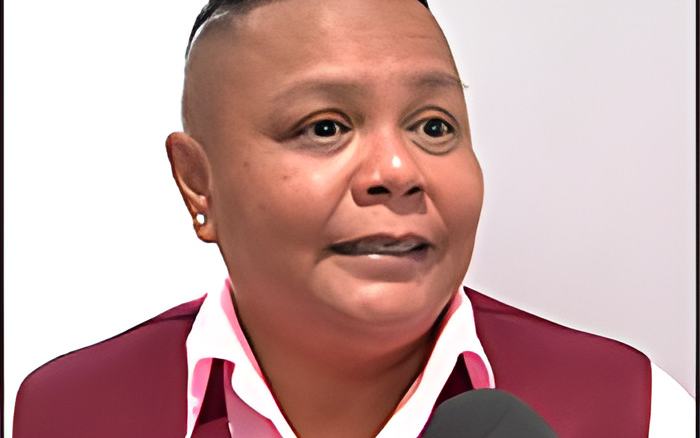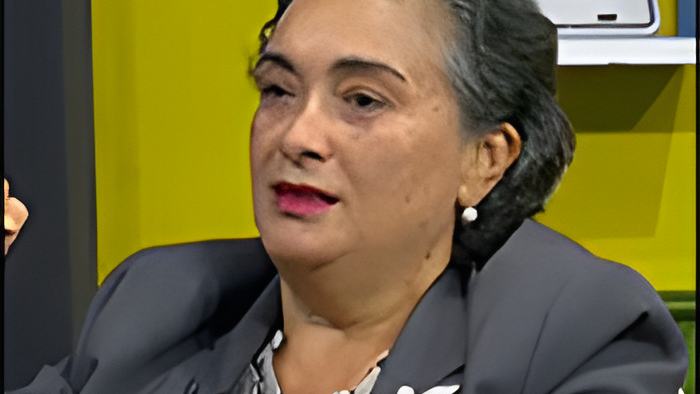
Justice Shoman also discussed her recent trip to Singapore. She was there to represent the Belize judiciary, and she got an opportunity to look more closely at the way the island state in Maritime Southeast Asia has modernized their court procedures.
Here's what she had about her initial impressions of the country.
Kevin Mendez - Co-Host
"You attended a conference in Singapore?"
Justice Lisa Shoman - Supreme Court Judge
"I did. I went along with Madame Justice, Chabot. Justice Chabot is one of the judges that are here with us from the Commonwealth. So, she does have a bit of experience with courts that are more in the future than we are in Canada. So we both attended, and this is also coming on the heels of a four-day course that the senior I.T. person and the registrar went to in the United States. And they also look at systems, specifically I.T. systems and court management systems, because what we need to do is to propel ourselves into the future."
Later on in the conversation, Justice Shoman spoke more about the integration of technology into Singapore's courts. From her descriptions of the way her Singapore counterparts have digitized their judicial processes, it was easily evident that Justice Shoman was favorably impressed:
Justice Lisa Shoman - Supreme Court Judge
"Singapore is so advanced, but Singapore started out, like Belize, as a swamp. It's an island by virtue of being a low-lying, swampy area, divided from the mainland by a river on the other side. And "Lion City" was basically an undesirable swamp. When the single poor people moved in, the Prime Minister, Lee Kuan Yew, then took them into this great jump into the future. So, Singapore is futuristic. The police patrol in groups of four, and they look like something out of sci-fi. You don't see their faces because it's the full bubble mask, the full battle gear. Every square inch of Singapore is covered by cameras. So you're never off camera. You're always on; smile, you're on Candid Camera. Their courts, their court building is futuristic in the extreme, and it's, I think, 12 stories and overshadows the parliament building next door. I will repeat this slowly. The parliament is small compared to the Supreme Court. Their Supreme Court has the most amazing technology you've ever seen. And if I sound to you like I'm fangirling, it's because I am."
She also discussed how the judges of Singapore managed to get their massive backlog of cases under control. According to her, they were able to do that through a strict "no adjournment" policy:
Justice Lisa Shoman - Supreme Court Judge
"What Singapore did was they offered these courses to their partners in the Commonwealth, and what they do is a bit of show and tell. They tell you, what was it like here? They had a backlog that was five years long, and they took a decision. Unless there is death, no adjournments for no reason. You have to die. They took the decision of making the courts as technologically efficient as they possibly could, to spend a great part of the budget on the administration of justice and justice systems. And they're more than caught up with their backlog, both on the civil and the criminal side. We were taken to the court buildings, including the state court, where a lot of the criminal matters occur. Their state court is the equivalent of our Supreme Court, which will soon be called the High Court. And they have that in two towers. And essentially, there's three there are three access points for every courtroom. Their accused persons come in from the basement, one elevator. That's the police, and the accused (who) use that, nobody else. Another set of elevators and access points and doors for the judges and a third for the lawyers and the general public. And if there are witnesses who are under threat, you don't even testify from the same courtroom. You testify from a room next to the courtroom that has 360 AV, so you can be seen. But most amazingly of all, because they're saying it's not enough, the experience has to be better. So guess what it could do? They could turn you into a hologram and put you in the courtroom. You could say, what's the point of that useless? Let me tell you: until you have seen it, you do not realize the whole new experience that it brings. Virtual reality, what is that for? Virtual reality is you can put a headset on each juror, each judge, and each witness, and you can take them to the crime scene by use of virtual reality without ever moving."