
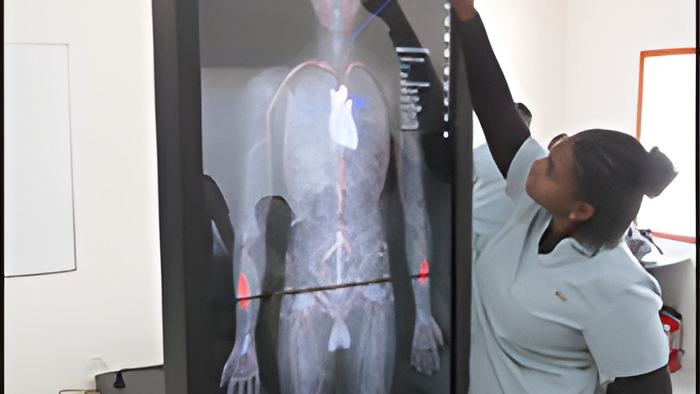
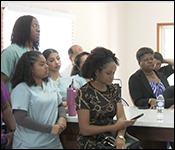
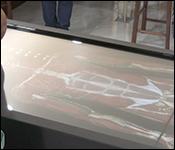
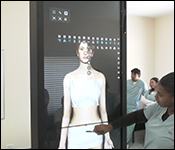
Since 2019, the UB School of Medicine has consistently leveled up its tech-driven curriculum. Their latest advancement is a digital anatomy table—a gift from Taiwan that functions both horizontally and vertically to bring medical studies to life. Jomarie Lanza has the story.
Five centuries ago, Leonardo da Vinci hunched over a wooden cadaver table to map the human form; today, the UB School of Medicine is revolutionizing that tradition with the swipe of a finger. This state-of-the-art digital anatomy table marks a massive leap from the pungent, traditional labs of decades past. By replacing scalpels with high-definition touchscreens, students can now peel back layers of the human body and examine its intricacies with surgical precision. The UB school of medicine now has its hands on this state of the art anatomy table, and today they gave us a demo on how they plan to use this state of the art teaching tool.
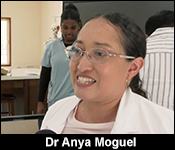
Dr Anya Moguel, Lecturer, UB School of Medicine
"We have known about it for a couple of months that it would be coming so I think our faculty has dedicated over 50-60 hours just reading manuals and studying about it so that when it got here it would make the 2 day training a bit easier. To have this level of technology here our students are as excited as we are we get to have, because of ethical reasons you know you cant use cadavers, we get to have multiple cadavers of different ethnicities, different diseases that we can study at our fingertips so I think anybody in medicine anyone enthusiastic about this topic would be very thrilled to see it and it is open we don't intend to keep it for UB school of medicine anybody who wants to come In, any professional to use it they can come in and we will guide them on how to use.
The software has multiple capabilities, and Moguel along with her students are still unlocking all the ways they can use the table to learn. "
Reporter:
"So how does this change learning for you and your students as well compared to traditional methods before?"
Dr Anya Moguel, Lecturer, UB School of Medicine
"So traditionally we would use text books so our students would have physical text books or electronic copies or written text books now with this we have a 3D model in front of you so you can actually take the human body you can dissect it you can do any cut you wish you can change different angels you can do sagittal or coronal views and we can pinpoint the muscle, the organ inside the vein inside and we can also assimilate surgeries we can do colonoscopies, fracture reductions and this will give our students a feel of what it is like to be out in the workforce before they get there so before they reach KHMH to do their clinicals they would be able to do all of these procedures here at the med school. It builds knowledge it builds trust and it also builds on the knowledge that we have already incorporated here teaching them."
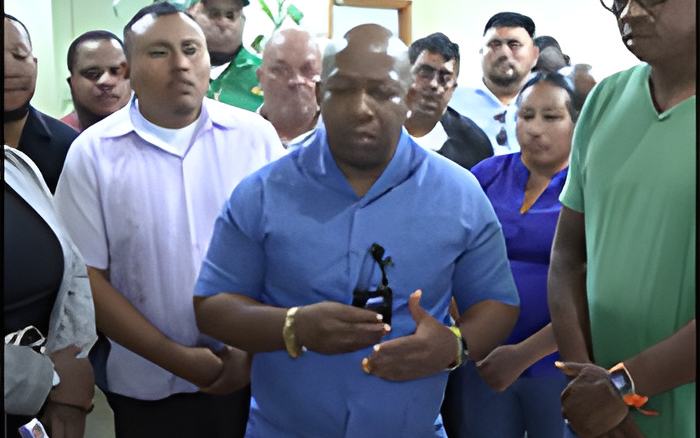
CEO in the Ministry of Health and Wellness Julio Sabido says that it is important for aspiring medical professionals to learn within their country so they know how to handle certain cases unique to Belize.
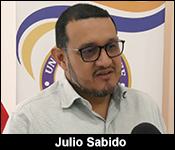
Julio Sabido, CEO, Ministry of Health & Wellness
"We have been involved with the establishment of the university mainly because we are very much aware that we need our doctors to know the context of the epidemiological profile of the people that they are going to be managing. If you study in Cuba if you study in Guatemala, Mexico the US the diseases are different because the context of the country is different. And so having a home grown school is very important because they are going to be going to the national hospitals and that is where they are going to be seeing Belizean patients with for lack of a better word, Belizean diseases. I mean there is no such thing but what I am getting at is it they are going to be seeing people that have those diseases here in Belize and they are going to be treated with the medicine that is available in Belize. Its going to allow the students to minimize errors, minimize the guesswork and let me put this in a more positive context it is going to make them more precise in the way that they learn it is going to make them more precise in how they diagnose, it is going to make them more precise in how they do surgeries because as you heard that can also simulate certain surgeries as well so it is for a lack of a better term next level for the students."
At present the medical program has 5 students in their first year program, and 7 in their second year. The dean of the School of Medicine says the table is also a symbol of the confidence that Taiwan has in them to carry out and produce successful Medical professionals.
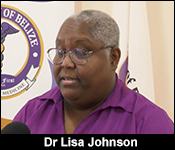
Dr Lisa Johnson, Dean, UB School of Medicine
"And so when the president and the ambassador had a discussion about this program in particular, that is what we requested and their government took it under consideration and came back and said yes. And so we chose a Taiwan based company and their best table. And that is how that particular partnership came. [00:02:31.57] And it is on several levels we cannot ignore it's recruitment factor to show that we are progressive and progressing to show that we are offering that person or that Belizean student who wants to be at the top of the game, we are there with them we can help them get there and that it is a sign of confidence in what we are doing expressed by a country that has been a great friend and mentor to this country."
The Antonym table is valued at $150,000 USD.