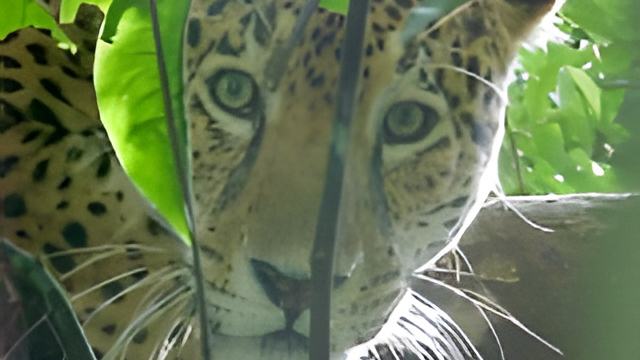
Every year Belizean farmers lose more than a quarter of a million dollars worth of cattle to attacks from jaguars and other wild animals. But a new study by the Forestry Department released this week reveals that the cost of human-jaguar conflict is much greater to the endangered jaguar population. The survey of 101 farmers show that when jaguars attack - farmers fight back. Here is the story of how these predators are falling prey.
Keith Swift Reporting, Email - [keithkswift@gmail.com]
Jaguars - they are the largest cats in the Americas and one of the most formidable predators roaming the region's rainforests. These stealthy predators are known to kill their prey in a single bound. But for all their killing precision - jaguars are now finding themselves under attack right here in Belize.
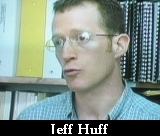
Jeff Buff, Conducted Survey
"We know that at the very least 74 cats were killed between 2002 to 2004 countrywide. That was 64 jaguars and 10 mountain lions. We have a number of unconfirmed reports as well and that could pump that total closer to 200. If that rate is truly what the rate of killing these cats is throughout the country, it probably cannot continue for much longer without seriously harming the population or even sending it into decline."
Two independent consultants have just completed a survey on human-jaguar conflicts in Belize. They set out to find how livestock owners react when wild cats attack. But the results of the 2 ½ month study show that these wild cats are coming under attack from humans - mostly farmers whose acres were once the territory of these wild cats. The result is a clash with deadly consequences for the endangered species.
Oscar Ulloa, Forestry Department
"It is an alarming statistic because if it continues on that rate, then we will decimate the specie and therefore this study was a first step to understanding how critical the issue is."
Jeff Buff,
"You have the combination of habitat loss where massive land clearing
is probably forcing both jaguars and their prey into other forested habitat or even out of the forested habitats onto people's farms. You have the problem with loss of habitat and you have a problem with hunting. When I say hunting I mean not just hunting of the jaguar but the hunting of the prey base of the jaguar so peccary, gibnut, armadillo, and things like that that the jaguar traditionally relies on for prey---if those things are being over hunted the jaguar has to turn to livestock."
Oscar Ulloa,
"Fragmentation of forests, destruction of sensitive areas, illegal hunting, the depletion of the wild stock out there that the jaguar uses to feed on increases the problem."
And Olive Leslie's sighting of a jaguar in the Hattieville area this year shows that the line between their territory and our communities is thin - if not all together blurred. The consultants say that leaves the onus on us to try and co-exist with the jaguars - since after all it is their world and we are only the encroachers.
Oscar Ulloa,
"Belize is one of the last places with a healthy population."
Jeff Buff,
"Its going to be difficult for people to live in co-existent with the jaguars but Belize has a golden opportunity to avert that situation because there is still quite a bit of habitat in Belize. It is one of the last places where there's a good population of jaguars. But if the rates of killings continue and if the rates of land clearing continue its probably going to get to that crisis situation."
But the consultants say the good news is that it is not too late for this endangered specie in Belize - the jaguars are still roaming and now the challenge is to keep them around but out of our communities.
The results of the survey have been turned over to a task force with representation from government and farmers formulate a response to the problem.
Related Story
. Jaguars Roaming in Hattieville Area