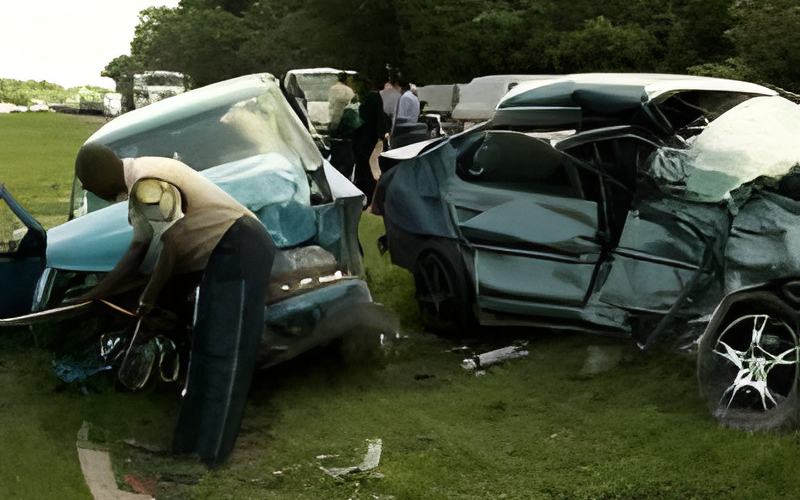
Last night we told you about the trouble deep south in the community of Monkey River where beach erosion is wiping out homes. Erosion in Monkey River is nothing new and it’s been happening for at least a decade. But it has never been this rapid, this extensive, or this devastating. Monkey River is a village under a very real threat and tonight we are going to take you inside the village for the stories of desperation and frustration. Yesterday Keith Swift and Alex Ellis drove there and here’s the story – from the inside of a crumbling village.
Keith Swift Reporting,
With waves crashing onshore, the captivating sight of a flock of birds patrolling the waterline and, even this dead fish we found on the beach could not detract from the unabashed natural beauty of Monkey River, which by all appearances is an idyllic waterside community – almost picture perfect.
But those inside Monkey River know that it is not. At least not right now because on the village’s southern coast, east winds are whipping up ferocious waves which - are reeking havoc on the community.
Kazerine Garbutt, Member of Monkey River Village Council
“When the east wind is blowing it beats on the beach and it just erodes.”
Nelda Garbutt, Resident, Monkey River
“The waves mean that we are in danger because the place will wash away.”
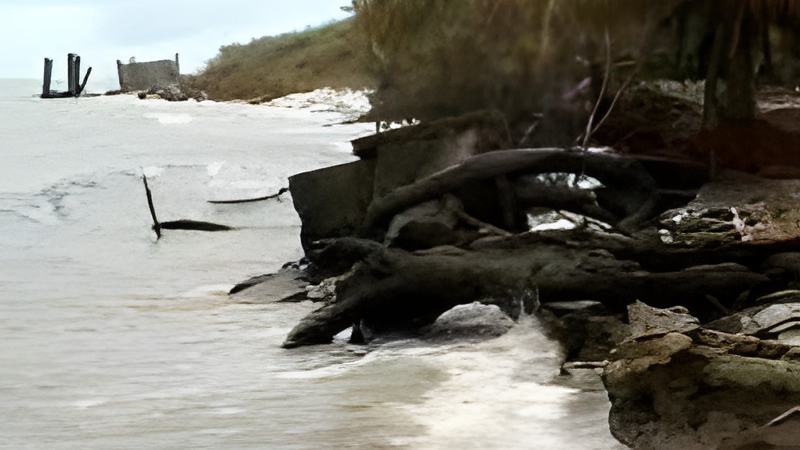
In fact seven homes are in direct danger of falling victim to the massive erosion – and now so is the cemetery. And here is why – the violent waves crashing onshore have been undermining the village’s foundation – so whenever the waves roll in -they roll out with a piece of Monkey River.
The waves are rapidly toppling trees, in some cases uprooting them and consuming others. This is in addition to destabilizing homes, and forcing residents to abandon others.
Kazerine Garbutt,
“The beautiful beach is going and homes are crumbling. Some homes along the beach are already gone.”
But more than just the landscape, the erosion has changed the way of life in
Monkey River for bemused children and worried adults.
When Monkey River became a village in 1981 the community had 400 residents. Today that number has dwindled to less than 200. Many left to find jobs but there were those forced out of their homes by the beach erosion. And then there are the 190 residents who decided to stay here in Monkey River like Virgina Linares who has already lost two homes and is in danger of a third home.
Virginia Linares, Lost Two Homes to Erosion
“I’ve been living alongside the sea and I’ve relocated twice. Now I live a little to the back here so I can say that it is like two thirds of our community that has been washed away, that has been gone and lost in the sea. Now it has gotten to this where the light poles are in the sea, the burial ground, the cemetery, is right next to the sea so I guess if something isn’t done in the very near future, even our dead will be washed out to
sea.”
Keith Swift,
Do you live in fear?
Virginia Linares,
“I do live in fear. It gets us depressed and I think it is why we all need to speak out.”
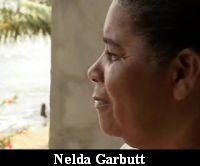
Nelda Garbutt is in a better position than Virginia Linares – but only slightly. She is one of the worried adults whose been watching the erosion eat away at her land. In two weeks she has already lost 30 feet of her yard – and it is inching closer.
Nelda Garbutt,
“We were by the water side when you had a whole lot in front of us, a whole row of house in front of us and beach and we don’t have that anymore.”
Keith Swift,
Your house is by the seaside, do you feel that you are in danger?
Nelda Garbutt,
“Exactly. Anybody who is on front is in danger and the ones who are behind us will be in danger because when it is finished from here, if they don’t do something, the next houses will go; it will hit the streets just like in the cemetery. In front of the cemetery there used to be a ball field and a street and now you don’t have that, just the sea washing towards the cemetery. So the next thing is they can say we will go but the ones behind will also go.”
Keith Swift,
How do you sleep at night?
Nelda Garbutt,
“I sleep good because you can’t worry yourself with that to kill you. I sleep good but when I see it in the day I say I have to do something, I will put some sandbags again. Last year we put 500 sandbags and we need to put some more again. There is nothing we can do.”
Well they can and have used sandbags but those couldn’t even save this tree. Walter Garbutt who was born in the village showed me what used to be the
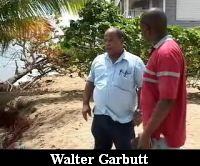
village’s football field, its church, and streets. All those are now just memories.
Walter Garbutt, Born in Monkey River
“The houses that were some three hundred feet east of where we are now standing are now gone. The land is gone. There was a ball field out here, the Catholic teacher’s house, and so the changes have been significant. There was land and there was a street east of where we are standing here and in front of that street there was another row of houses.”
Nelda Garbutt,
“I used to walk my dog down this street. Now you can’t walk him anymore. I used to walk and take him to the other side but I can’t walk him no place, there is no beach. We used to take him and tie him that side but we can’t walk him. There is no place, no beach so the dog suffers.”
Walter Garbutt,
“During the last two weeks, it has actually reached a critical level where people have become very much concerned because it is threatening the houses right on the front here now. Right now we are standing seven or eight feet from the nearest buildings. And so it is just like you are watching your home eroding to the point that you wonder whether there will be any beach at all in a very short time.”
But aside from desperation in this community that has been in existence since 1891 – we found determination - and also a bit of frustration.
Nelda Garbutt,
“If we noh get help from other place to do something outside there, then eventually there won’t be any Monkey River.”
Keith Swift,
You’ve lived here most of your life?
Nelda Garbutt,
“Yeah.”
Keith Swift,
Have you every thought of leaving because of the erosion?
Nelda Garbutt,
“Well Monkey River is your home and you think, you don’t want to leave but if you see it get farther than this then you’ll have to go.”
Virginia Linares,
“I guess everybody in authority has just sat back for all these years and watch us just losing our properties, losing our houses to the erosion and nobody has done anything. Now it has gotten to this. It is not that I cannot move. I can move and I can get a job to teach almost anywhere, I am a teacher, but I decide to stay here and help and fight the problem.”
But resolve will only get this village so far - and for there to be a beach for these school children to walk on in the future – or given the pace of erosion – for them to walk on next year – something needs to be done – and quickly.