
There are 13 marine protected areas in Belize. Seems like plenty, but they only cover 8% percent of Belize’s territorial waters. And of that 8%, about two and a half percent are strictly restricted for fishing activities. The fact is though, much of it insufficiently regulated but now the Ministry Of Agriculture has taken the bull by the horns and put in place various Pieces of legislation to strengthen management and enable enforcement in marine reserves. The hope is that the reserves can be properly managed for the purposes of extraction and conservation management. Today the Ministry of Agriculture and Fisheries held a press conference to outline the aims and objectives of the new bundle of initiatives.
Hon. Rene Montero, Minister of Agriculture
“These legislations aim to strengthen the management and effectiveness of the marine reserves and also the management regime governing the sustainable use of the commercial species currently exploited in Belize.”
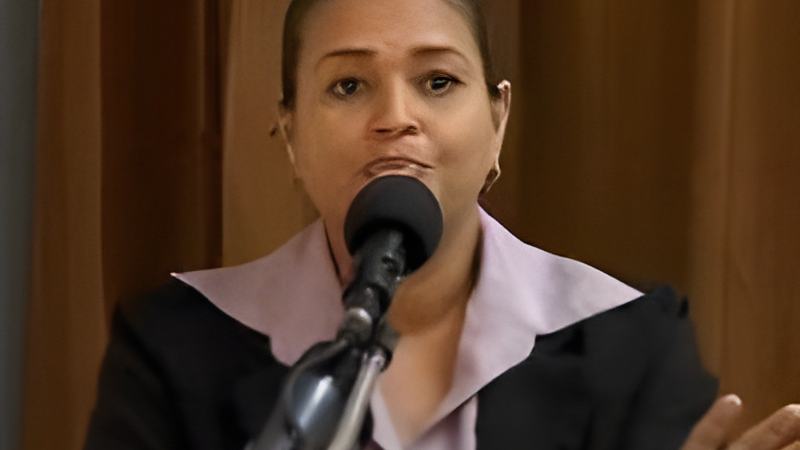
Beverly Wade, Fisheries Administrator
“It really allows you to now have a management regime for these areas that now addresses all the activities that will happen in these areas from fishing all the way down to coastal development. So I will give you an example, in a marine reserve now if you want to carry out some sort of coastal development, it is now required by law to have some requirements. You have to carry out either a limited level environmental study or an EIA is must by law. So it now says we have designated these areas, not because they are pretty but we designated them because we think that they now carry out a very important function in the
productive sector and also in our effort to preserve our great barrier reef and so what we re saying now is that in this particular area, we are going to have a more focused and rigid management regime and so if you want to do anything in a marine reserve, what a zone-ation scheme does is it gives you a blueprint of what you could do and how you could do it.”
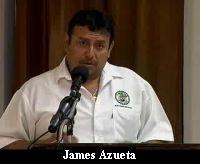
James Azueta, Fisheries Officer
“Marine reserves actually are multi-use where we have zonation zoning scheme where we have a general use area zone which is about 80% of the area. We have the conservation zone which boils down to 15% and then we have a conservation area which is about 5%. The deicisons have been made a long time ago to actually have the zones with pertinent regulations of what could be extracted, where you could extract those products. We needed the legislation to actually enforce the act. That has happened now, because why, basically it boils down that there is the political will to do it.”
George Myvette,
“For example in Caye Caulker, there are certain areas that we are trying to protect. Right up onto the reef there is a practice traps that is not necessarily consistent with good sustainable practices and this zone-ation scheme will allow us to now say and to now have the force of the law to basically say to the officials try and work with us. We are hopefully that you could basically place your traps where they need to be placed.”
Beverly Wade,
“Naturally when you are restricting your everyday livelihood and bread and butter issues, you will have some concerns and issues and I just want to say that one of the reasons why this has taken this long time is because it goes through a very very detailed and long process of consultation because we have to ensure that every fisherman, every stakeholder that is in that area, even the regulatory bodies are brought in to the conversation when we’re now looking at putting in these guidelines in place or regime in place.”
James Azueta,
“The fishermen, they know the areas already, which are the conservation zones and by practice they have been those areas. By and large they have been doing that. Now with this legislation, starting next month we are going to put the marker buoys so that they can see it, visually see it. They are working with us and they are all onboard.”
Beverly Wade,
“Only people who would want to do things irresponsibly would have an issue with this.”
And while only 2.4% percent of Belizean waters are under restriction from fishing– ideally the hope would be to expand that to 20%.
Fired Maya King Workers Vindicated in Court
Six banana workers who were fired from their jobs in 2001 have won a major victory in the Supreme Court. Justice Samuel Awich ruled that when their employer John Zabaneh fired them – it was in direct contravention of the Trade Union and Employers Organization’s Recognition and Registration Act. The workers who were employed by Zabaneh’s Maya King Farms alleged that their terminations in May of 2001 were as a result of their efforts to form a union.
The case went to trial in 2004 where Zabaneh argued that he had financial problems and that is why he fired them. The workers – some of whom were employed for as many as 13 years – all took the stand and testified that their terminations came shortly after leading a major meeting with all banana workers in an attempt to reach a consensus on forming a union.
Justice Awich awarded each of the six workers damages of $70,000 plus court costs. The workers were represented by attorney Antonette Moore. It is unknown if Zabaneh will appeal.