
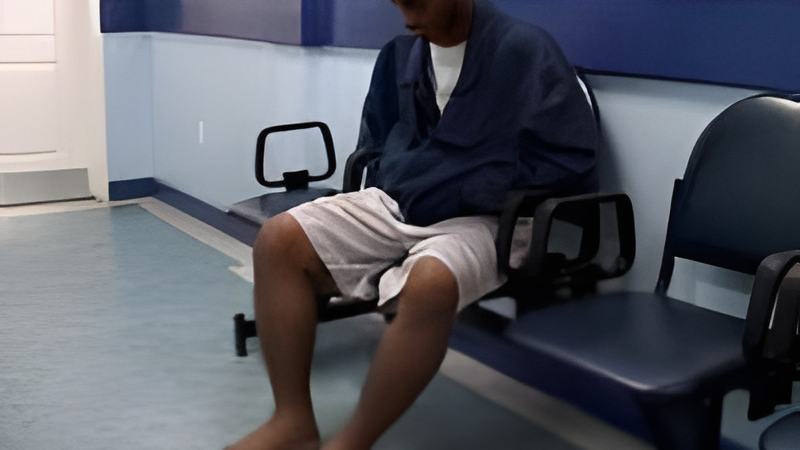
In May we introduced you to 22 year old Keith Moguel. Both his kidneys had collapsed and a hemo-dialysis machine was keeping him alive. Well since our story Keith Moguel’s already marginal existence was made even more so. Today we revisited Keith Moguel to find out about a new option available at the Healthcare Partners Hospital for kidney patients. It is called peritoneal dialysis and Keith was one of the first patients to receive the placement surgery. We were at his bedside and in the operating room. Keith Swift has the update.
Keith Swift Reporting,
The Keith Moguel we met in May was upbeat.
[May 13th, 2009]
Keith Moguel,
“I just try and have a sunny outlook on things but I would really want a kidney transplant.”
Today however Keith was broken down.
Keith Moguel,
“Things have taken a turn for the worst, just like I feared that was going to happen.”
What happened is that the Keith’s right foot is swollen because of a massive blood clot. But more urgent than that – for two weeks- he has been unable to receive dialysis.
Keith Moguel,
“I haven’t gotten dialysis for two weeks because of the catheter, I cannot use the catheter of that blood clot so no dialysis for two weeks.”
Keith Swift,
Is that why your feet are swollen?
Keith Moguel,
“Yes. Both of them are very swollen. The right one swollen because of the clot and the left one because I haven’t been able to get rid of the impurities in my blood and the fluid that are built up so it has just gotten really serious. This is what I was fearing. I didn’t want this to happen and one week I had the catheter put in and then just like that the blood clot
develop. I can’t even move around much. I have to sleep with my feet up all the time, all the time.”
Keith Swift,
What has it been like?
Keith Moguel,
“The real answer, it has been like hell. Really scare.”
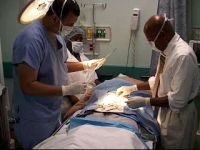
Today Keith Moguel underwent surgery for a peritoneal catheter placement.
Dr. Luis Arroyo, Nephrologist
“The procedure is the peritoneal catheter placement and it is used in patients with chronic renal failure. This is the way by which the patients can make a home treatment that is called peritoneal dialysis.”
Dr. Pedro Arriaga, Healthcare Partners Hospital
“Keith is a patient with chronic renal failure. The problem with Keith is that we had been using special catheter that could stay there for maybe two weeks to three times time. After this when you move a catheter there is scar tissue formation so every time we try to put a new catheter, the scar tissue makes the procedure very difficult. So the possibility to get a vein on Keith has been extremely difficult. We saw the fact that haemodialysis is a very expensive procedure and when there is peritoneal dialysis you need to have a vein. We use the abdomen as a filter.”
7News was inside the operating room from start to finish.
[Video of Actual Surgery)
Dr. Pedro Arriaga,
“Basically what we do is just a small incision in the skin, we go inside where we the layer separating the abdominal wall from the inside the
abdomen and then we place the catheter. We do a small incision and then we take out the catheter and then we ready in fifteen minutes time.”
But it was a torturous fifteen minutes.
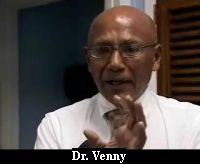
Dr. Venny, CEO – Healthcare Partners Hospital
“We’re giving the patients an option between haemodialysis and peritoneal dialysis. There is a subset population that is not going to be suitable for haemodialysis.
We’re saying you have an option, you can start with the peritoneal dialysis, this is going to be a lot more easier on the patient because it is going to be home based, they don’t have to be coming to Belize City two or three times a week and it is also going to be less costly. The biggest part of this whole program is going to be the patient and the family involved in it. They are the people who are going to be managing the program. All we’re doing is we’re facilitating the process. What we’re doing is we’re put in the catheter, educate them, and follow them.”
Keith Swift,
How convenient do you think this new procedure will be because you will no longer have to come to the hospital?
Keith Moguel,
“Well it will save a lot for me. I won’t have to travel as much and it is cheaper. It allows me a lot more freedom. I will have my own time when I do it and to me it is just easier.”
But as easy as it may sound, it should be a last resort since there is a high failure rate, varied complications, and Dr. Venny says there is no guarantee.
Dr. Venny,
“There is a failure rate somewhere of one in twenty five every two years. It will fail and they will have to do haemodialysis.”
But it is a chance Keith Moguel gladly took.
Keith Moguel,
“I get used to the needless and the cutting and all of that. Anything to make you feel better I welcome it.”
Keith Swift,
Are you optimistic?
Keith Moguel,
“Yeah I try to stay optimistic because if you start thinking that I am going to die or whatever, that mentality takes over and eventually your body just decides I am going to give up. I’ve seen it happen with a lot of people, they just literally give up and die.”
Keith Swift,
And you’re not ready to do that?
Keith Moguel,
“Noh yet. when I get too tired I will mek you know.”
Reporting for 7News, Keith Swift.
Since he will no longer need to visit the hospitals three days every week, Keith now plans to return home to Mango Creek. He is still hoping to have a kidney transplant and both his mother and brother are offering him a kidney. They however need funds. The family can be contacted 621-2995. The healthcare partners hospital performed the surgery for free as part of an arrangement with Baxter in Guatemala.