Last month, we told you how Belize's legumes and bean-producing farmers are being afflicted by a new pest that has arrived in the country. It's called "Thrips" and this insect attacks the flowers, buds, and leaves of beans and other legumes.
The technical staff at BAHA and the Ministry of Agriculture and Food Security have since conducted country-wide surveys to find out just how far this pest has spread. And they're reporting tonight that "Thrips" is here to stay, and that it will become a perennial problem.
In a Zoom press conference, the Ministry said this afternoon that this pest has already destroyed approximately 4 million dollars' worth of soybeans, which would have been exported abroad. Here's an excerpt from their situation report:
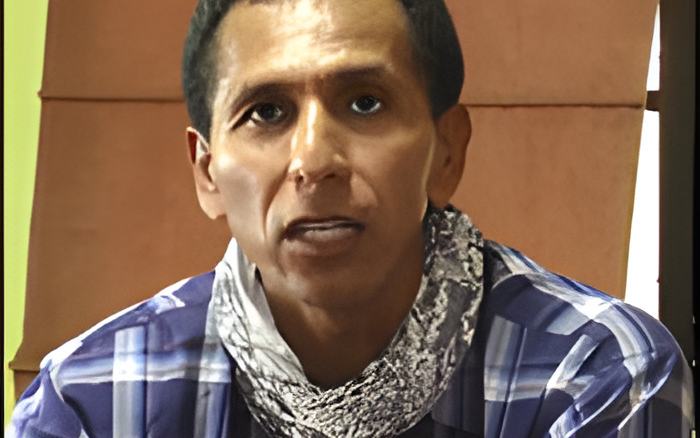
Francisco Gutierrez - Acting Director, BAHA "We believe we managed a hypothesis that the pest has been in the country for perhaps no more than 6 months given the nature of the epidemic, it really started off with very little population and it exploded all over which tends to be very common with new introductions. We also managed a theory that the pest was probably spread to the subregion by the tropical systems across the country late in the year starting with Nana then Etha. We can also not rule out the possibility of contraband given that this phenomenon still is known to happen."

Jose Novelo - Director, National Grains Coordinator, MOA "What we discovered was that the damage of this insect was primarily on black eyed peas. Now black-eyed peas are normally exported to CARICOM and other countries in the world. We as a country do not utilize too much black-eyed peas. So, in terms of black-eyed peas, we basically cultivate about 6,000 acres and the figures I'm going to share with you are preliminary about 6,000 acres in production however the damage was between 45 to 50%. The estimated value of that 6,000 crops was about 8.4 million dollars, so you can do the math and determine the level of losses that were incurred in the black eyed peas primarily in Corozal, Orange Walk and Cayo. Not all the crop was lost but we also have to determine what is the quality of the beans that was produced because the quality will determine what amount can be exported. In terms of the red kidney beans as Mr. Gutierrez had initially mentioned, we did not have as much damage had been anticipated. We know that approximately 13,000 acres of RK beans were planted that the estimated production will be around 10 million pounds. We also know that Belize consumes around 3,500 pounds of beans on a monthly basis. So, given a little but of cushion, we say that for the domestic market, we need at least 5 million pounds. Therefore, on the basis on what was forecasted to be produced, we can safely say that there is about 5 million pounds of RK beans that can be exported. We do have RK beans for the domestic market and we have RK beans to export."
The Ministry says that their focus now is to equip farmers with the knowledge and tools necessary to fight against the pest. That's because Belize's red beans crop barely escaped infestation, but a new crop will be planted in a few months. Here's what the BAHA representative had to say on that topic:
Francisco Gutierrez "We are concerned, and all measures have to be developed because the upcoming major bean crop at the end of the year and the beginning of the following year is very likely going to be affected. The pest is now fully established and it's going to rear up again when that cycle starts up. So, yes, we have to have sound strategies by then to be able to fight this pest. It's out of the question, so from a regulator perspective it's not being considered, so when that happens which is the case with most neutral options, what we have on hand is now to live with the pest and manage it in the cropping systems. We are going to have to depend on a series of activities or a combination of integrity pest management activities using bio control agents such as predators. We are going to have to establish threshold levels which means determining what pest population you can come in with a measure while the use of heavy pesticides is not recommended because it just turns into a vicious cycle of ever increasing resistant pests. On the very lease we'll probably be advising on the use of pesticides that are softer that have a lot less impact on the environment such as plant-based extracts. All of these strategies are going to be pursued but overall, what is going to be very critical is an educational and training campaign, so that we can get our farmers involved in this process."
A taskforce has been assembled to come up with the strategies for the information campaign that must be held to inform farmers about this pest.