You'll probably remember the environmental crisis of the New River in Orange Walk. Back in mid-2019, communities along that northern waterway had to struggle with the choking and persistent stench that came from dead fish floating up to its surface. Years of pollution of the river caused a major fish kill, and it became a national priority in which the Department of Environment had to step in to implement mitigation measures. That's because the sick river was starting to threaten public health.
In the 2 years since, the Government and the communities have worked to try and reduce the amount of pollution that finds its way into the river. The Belize Sugar Industries Limited, which had to defend against persistent accusations that they were the biggest culprits to the crisis, has reduced its environmental footprint on the river.
And, the company is now making a major step to reduce its final impact on the recovering waterway. That comes by way of an expensive water cooling system, which will allow them to stop releasing warm water into the River.
After months of construction, that new piece of equipment was publicly unveiled at their Tower Hill Facility in Orange Walk. They invited the press and 7News attended.
Daniel Ortiz has that story:
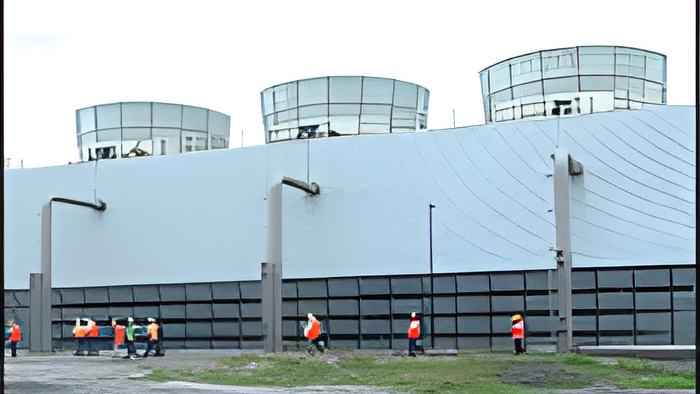
These giant structures on BSI/ASR's Tower Hill compound make up their new water cooling tower.
To get them operational, the company invested almost 9 million dollars.
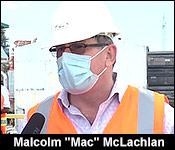
Malcolm "Mac" McLachlan - VP, International Relations, ASR/BSI
"This isn't cheap, it's around 9 million dollars Belize, but this represents part of our commitment to the environment and to local area here in the north of Belize. You can't be something here in a sense of an industrial operation without being very cognizant of your responsibility, so that's why we have this environmental compliance plan. That environment compliance plan suggested where temperatures of water that we needed to get to. You can't do it overnight and it's taken us a while to get there, but in planning for this particular plant we went through lots of different ideas and types of designs. This in itself took about 2 years from planning through to fruition."
To appreciate the importance of this new piece of equipment to the environmental protection of the New River, you first have to understand certain parts of the mill's process for sugar production. They extract water from the river, which is then used by their equipment.

Luis Rodriguez - Industrial Operations Manager, ASR/BSI
"Why we use the water is to create a vacuum. Basically, it's a specific condition operation to ensure the sugar quality is consistent and it's meeting our requirements. As you will see the sugar is very sensitive to heat, so why we drop the pressure or we create the vacuum is making sure that we are cooking the sugar at a lower temperature."
Seidy Lienez - EHS Regional Manager, ASR/BSI
"In order for us to cook the sugar, so we have this vacuum pans and how do they operate, they have to operate under vacuum and they have a condenser and so that condenser is what sucks the water, create the vacuum for this equipment to function, but an exchange happens there and what is the exchange - I create vacuum and what I give you, heat."
After that sugar "cooking" process is completed, the extracted water is hotter than the recommended temperature for its release back into the environment.
And, that's where these shiny new water cooling towers come in.

The experts tell us that it's kind of like a more sophisticated version of a car radiator, which keeps the vehicle's engine from excessive overheating.
Seidy Lienez
"It's like a radiator. Have you seen your car. There is an exchange: the airflow and so you have the air and water. The exchange happens between those two streams and so one gains heat, the other one loss it and so the one that losses it is the water coming out and so the hot air is what flows up. There is the ingress of water coming in, we have this big pipe and so its elevated to trickle down the honey comb arrangement and so what happens in that honey comb, you spread out and in that spreading out process is where the exchange or you maximize the heat exchange. It's basically a big heat exchanger; one gains heat and the other one loses it. In this case it's the water that loses it."
Water that has been cooled by these towers will then be released back into the river at the legally required temperature of 35 degrees celsius. This equipment will be fully operational just in time for the upcoming crop season. It solves a problem that BSI had, where the facility was releasing effluent which was hotter than what was allowed under their Environmental Compliance Plan.
So, why is this project coming online so late? Didn't the New River, which is slowly healing from a very complex, and multi-layered pollution problem, need this sort of environmentally-conscious approach for years now?
Malcolm "Mac" McLachlan
"The usual standard for a plant like this related to the water temperature, if you look at world bank standards and IDB, is 3 degrees above the ambient temperature, so the problem we've always have here and why it's taken a while to get the right equipment, the right study to be done here is that the ambient temperature in Orange Walk is often above that, so what we are effectively being ask to do with the legislations that stands and we respect that, is pretty much to chill this water before we put it back into the river. Remember sometimes the water coming out of the river is always above that temperature, so the issue we've have is what's the best way of doing that and these things take time to plan. We look at a number of different systems, but actually achieving that very rigid target took a while. Obviously, we like to do things quicker than that, but here we are today, within the time limits of the ECP and we are very proud of that plant and I think it's something we hope will play its part in helping with the issues with the new river. Of course, this in itself won't solve those that needs a holistic approach and there are many different reasons for the problems the river had, but certainly we don't want to be contributing to them."
And the Minister with responsibility for the Environment hopes that all the other light manufacturing companies along the New River will clean up their operations in a similar manner as the sugar mill.
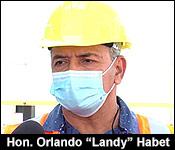
Hon. Orlando "Landy" Habet - Minister of Sus. Dev., Climate Change & Disaster Risk Management
"I think it's going to be something that the entire area will benefit from and as you mentioned we now have to see what we can do to work along with the other small light industries so that they can do their part. But the department of environment is already working along with them trying to have an area where they can bring some of their water from the small mills like the tortilla mills and everything so that it can be fix, purified and it goes back into the system. I think it's a benefit for all."