
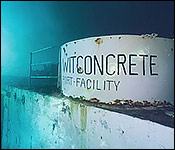
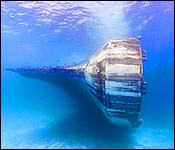
Back in September, we took you out on the water near Turneffe Atoll to show you the sinking of a concrete ship that seemingly refused to go down.
But…of course it did! The Wit Concrete was launched in 1943 - in World War II when steel was scarce and it came to Belize in the mid 80's, floated in by Tate and Lyle, the sugar company who used it to store molasses.
And, so, after 80 years of being afloat and impregnable of course the Wit didn't sink on first attempt.
The engineers had to come again, with explosives, and helix pins, and all the machines they could muster to force the old girl down.
And on Friday afternoon, she went down, but not after putting up a lightly fight. This afternoon we spoke to the crew who oversaw and executed the sinking of The Wit.
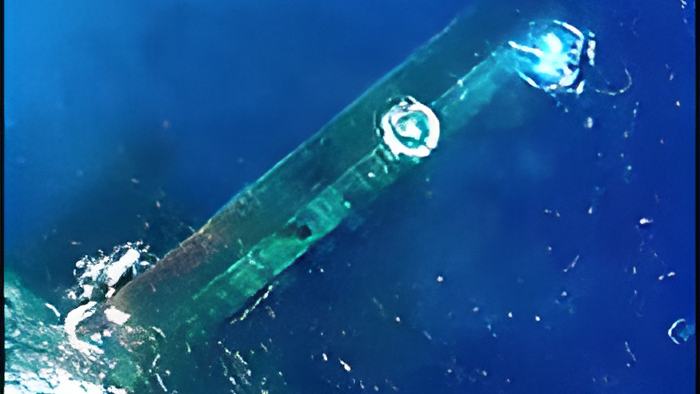
In the cerulean blue of the Turneffe Atoll Marine Reserve - this is how the Wit finally went down on Friday afternoon, rolling into the depths like a lumbering whale going down to feed.
Except she'll never be back up, these plumes of expelled air pockets were its last protest. And the Wit went to sleep on the sea bed.

Damien Gough, Project Management, Out Island Construction
"For me it's bitter sweet. I worked for BSI and it was my job to keep her afloat, keep her functioning, everything working. So for me its kind of bitter sweet to know that I spent 15 year of my life taking care of and trying to preserve it, but it was also a bit fitting and a bit rewarding to be part of the process of putting her down."
Damien Chamberlain, CEO, Out Island Construction
"Definitely the most significant achievement based on a scale, size, weight, bulk and what it was, a floating concrete structure equivalent to a 38 storey building laying on its side that we had to transport for 40 miles and put in a position that it did not want to go on a space that wasn't large enough for it."
But, now from Wit to wreck, the enormous ship has been reborn as a tourist ready dive attraction:
Valdemar Andrade, Executive Director - TASA

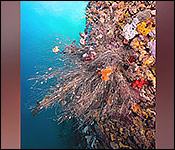
"The entire belly of the ship that is up is filled with corals and sponges already. So it came with its own coral reef already and we were already seeing fish life just in that little short time."
Damien Gough, Project Management, Out Island Construction
"The reef is slowly dying through a variety of causes and there is little to no attempt being made to restore it. This does that. Artificial reef and being a concrete ship at that it's a natural foundation for coral marine life to grow and it goes down with just 380 feet on both sides of coral already in place growing and attracting marine life already. It has served our country for 40 years for the sugar industry and will continue to serve the tourism and conservation sectors for years to come again."
Garen Simonyan, Blackbird Resorts

"It's like being at Christmas and instead of a tree, you just have one huge present all the way up to the roof. Thats what it felt like for me personally when you see the ship underwater, you go over her and then we got the opportunity to dive her. We wanted to make sure she was safe and to go down and swim around her and then go down to the ocean bottom to sit down on that sand and look up at 60 feet of coral on her keel 400 feet wide, that's been growing for 30 years that we were able to save, because we put her on her side. Words don't explain how breath-taking it is."
Breath-taking indeed, sometimes almost otherworldly. The great hull of this stately wreck - incongruous, but at the same time already home:
Valdemar Andrade, Executive Director - TASA
"But now I am proud to say Jules that we have a great dive and snorkel experience in Turneffe. We are now finalizing the preparation of this so that we then can allow the tourism industry to come in and look at our dive site at Blackbird Caye and in Soldier Caye conservation area in the Turneffe Attol Maine Reserve."
Garen Simonyan, Blackbird Resorts
"It is perfect for the model of sustainable growth and tourism in Belize and personally as a diver, its bar none, the best I've ever been on and I just saw it on day one and there is already marine life coming in."
So now after one failed effort and another very complicated one - was it all worth it?
Damien Gough, Project Management, Out Island Construction
"We know the we were a part of something pretty unique. I'm pretty certain it wont be repeat again, at least not in my lifetime and so that part of it yes you walk away with a certain sense of gratification."
Jules Vasquez
"Was it worth it, because I am sure the cost overrun is significant?"
Garen Simonyan, Blackbird Resorts
"So, you know Blackbird resort, TASA, Blue Finance were all involved in the costing and the location and the second phase of the project. In my opinion, it was a bargain for what is there right now. Its worth far more than that. it is something I think Belize needed for the diving industry. Belize has great diving, beautiful reefs and now it has something iconic."
Damien Chamberlain, CEO, Out Island Construction
"You know the billions of the years it took to create the universe have come down to where the Wit is where she is supposed to be, how she is supposed to be and when she is supposed to be. She wasn't ready last time, we got her this time."
And now that the ship lies at the bottom of the Oasis Dive Site - is it open for visits?:
Garen Simonyan, Blackbird Resorts
"It's for all of the dive operations in Belize. You can reach out to your favourite dive destination, you can reach out to us. TASA will be handling the governance of scheduling all the dives, so it doesn't become impacted. I think there is going to be a limit to how many divers per annum, so it doesn't negatively impact the reef and those will vary. So give your favourite resort a call and they will be able to schedule to have you come out. You can also snorkel the wreck. Along with snorkelling it is wonderful for open water divers, advance divers, notrox certified."
And the new dive site has also been planned out as a haven for local marine life. It's expected that over the years, marine flora and fauna will use the Wit's walls, rooms, and cabins, to make up a 400 foot aquarium as the wreck gradually turns into an artificial reef.