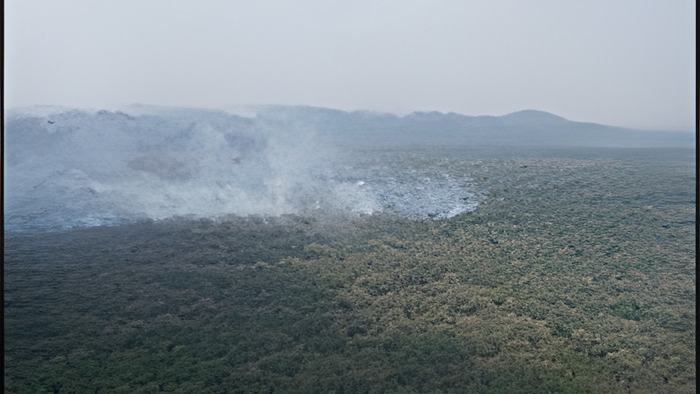
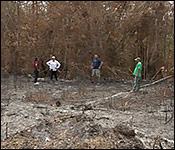
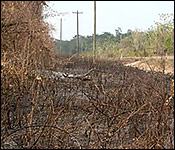
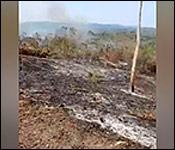
For four months, residents in the south and west were forced to fight forest fires, breathe in smoke and ash, and watch as their properties went up in smoke. It was a destructive fire season like no other that resulted in 10.2% of Toledo's farms and forests being destroyed. That's a major jump from last year's 3%.
This assessment took some time to complete, as explained by the executive director of Ya'axche Conservation Trust. They utilized Satellite and ground truthing drone imagery and discovered over 100,000 acres damaged or destroyed. Areas affected include the Boden Creek Ecological Preserve, the Maya Mountain North Forest Reserve, Golden Stream Corridor Preserve, and the Columbia River Forest Reserve.
Today we spoke with Christina Garcia via Zoom and she told us what this devastation means for the country. Courtney Menzies has this story.
Over 10% of the Toledo District's farms and forests were destroyed by flames during the 2024 fire season. Day in and day out, farmers, residents, and business owners soldiers deep into the bushes to meet the fires on the warpath. Still, vegetation and homes went up in smoke.
And after drone assessments, Ya'axche Conservation Trust concluded that the devastation was 7% higher than last year. The executive director told us more via Zoom:
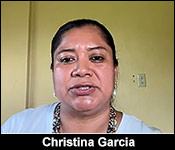
Christina Garcia, Executive Director, Ya'axche Conservation Trust
"We visited almost all the farms, at least for the big fires that occurred in the Toledo District and also the protected areas. So when we kind of stitch all of those, we saw approximately about 108,695 acres that got destroyed and that's 10.2% of the Toledo District and so the devastation that the fire caused was a really huge one. Like I mentioned in previous interviews, it's the first time that we've seen so much destruction, especially as it relates to farmlands and forest loss."
And she says the impact of this loss will be felt next year:
Christina Garcia, Executive Director, Ya'axche Conservation Trust
"We're not really seeing the impact that the destruction is having on crops for this season because farmers planted and they reaped some of that but I think definitely we're going to see a ripple effect next year, especially as it relates to some of the products, like for example, cacao, a lot of the cacao farms were burnt down, which will have an impact on the cacao industry, it will have an impact on the sales that the farmers make next year. So is the concern with other fruit trees like the avocados, you know we see a lot of avocados in the market now, but avocados were one of the crops that got destroyed in those farmlands so you will see a lack of those products definitely next year."
"A lot of people in the Toledo District, they do hunting, you will see people catching less of those game meat, i think that is one of the ripple effects as well and I think that the road to recovery is very steep as well and some level of preparedness needs to happen, some level of reforestation needs to happen especially when it comes to those crops and of course important tree timber species that were lost during those fires."
And with the effects of climate change worsening, Garcia explained that the preparation for the next fire season needs to start from now. She said that the villagers are asking for proper training to tackle the fires.
Christina Garcia, Executive Director, Ya'axche Conservation Trust
"One of the things that they mentioned they need is that capacity building, how is it that they can receive training in combatting these fires, how they can be better prepared as a community to combat the fires because certainly one of the biggest worries they have is that this could happen again and it could be at a larger extent so how can they be better prepared to ensure that they have their fire pass, to ensure that they have adequate water and resources to out these fires."
"One of the things that we noticed during that devastation is the lack of capacity that the community members have, the lack of capacity that the government has and I think that they're various organizations in the Toledo District that has that fire management component and fire management capacity so one of the things that we want to engage the government in is really how can we better coordinate and build that capacity in house so that we can be more effective one the ground should a situation like this arise."
She also added that some villages were even lacking water to fight the fires, and explained that a National Fire Management Plan and a Recovery Plan needs to be established ahead of time.