
While the Antillean manatee is officially classified as an endangered species, a critical question remains: what is the actual population size currently inhabiting Belizean waters?
A new aerial study published in a leading scientific journal shows that the numbers are not what we might have hoped for, and Jamal Galvez discussed the findings with Jomarie Lanza today:
The study is a first of its kind conducted in Belize placing our national conservation efforts as it relates to Manatees on firm scientific ground.
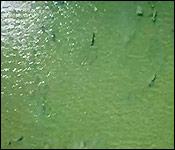
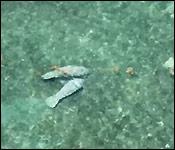
Led by The Manatee Man Jamal Galvez, the publication titled "First Abundance Estimate For Greater Caribbean Manatees In Belize" documents a population study by way of an aerial surveys for the period 2014-2022. It has enabled Galvez and his team to determine how many manatees really live in Belize within select areas of the coast. He explained their findings:
Jamal Galvez, Program Coordinator, Clearwater Marine Aquarium Research Institute Belize

"It is something we should celebrate. It is not all glamour because we historically assume that Belize has a population of about 1,000 manatees but that was not based on any scientific analysis just based on scientist observation. Now we have done this robust assessment that estimates the population to be around 555 individuals. That is good to know because you cant actually protect a species unless you actually know how much is actually there and where they are so this is a great start for us to move forward into trying to utilize science to guide our conservation initiatives here in Belize as it relates to Manatees."
"Certainly I wanted more but the estimate is based on an area survey so we cannot survey all of Belize's waterways and so an area that we historically fly which are known to be manatee habitats, areas with seagrass, mangrove, close proximity to freshwater those are the areas that were surveyed. So 555 is based on what, based on the areas that were surveyed if we extrapolate this and look at all the available habitats the population estimate would be around 2000 but we do want to go with that because that is not safe to say and saying that also actually moves the species from the engendered species list which is not where these species are considering the threats that they face, there is a lot of work left to be done."
Currently over 90% of the manatee population in Belize is outside the designated manatee protected space. 70% of them are outside of ALL marine protected space, meaning that 70% of our manatee population lacks protection.
Jamal Galvez, Program Coordinator, Clearwater Marine Aquarium Research Institute Belize
"Based on the data we saw the highest density areas were around Belize City which presents a threat for the species because Belize City has the highest threat but it has the highest population, followed by Placencia Lagoon and as you saw recently the problem in Placencia lagoon we have been seeing, that is also a hot spot for manatees, Gales Point Manatee, and North Stann Creek those are the 4 areas that were identified to have a high concentration of manatees though manatees can be found along the entire coastline, promising areas were areas like Turnoff Atoll, Port of Honduras showed numbers that had not been showed in years before but currently Belize City area, north Stann Creek and Placencia Lagoon are 3 areas that have the highest density that lacks protection, Gales point has protection so they do have some level of protection there but something has to be done if we truly want to provide protection for this species in Belize."
And of course the biggest threats to these beautiful creatures are us, the humans. Galvez explained how they were able to determine that the dredging occurring in the Placencia Lagoon has impacted the species based on what they observed in terms of the health of the Manatees that they counted.
Jamal Galvez, Program Coordinator, Clearwater Marine Aquarium Research Institute Belize
"Placencia Lagoon is probably one of the most disturbed habitats in this entire country there is someone dredging in that Lagoon everyday and that goes everyday for the year and that has probably been occurring for at least in the last 20 years in my professional opinion the government should consider and the people and the community they should consider a moratorium on dredging in that area and give that ecosystem an opportunity to recover from what it has gone through and it is not just the manatee survey we have also done manatee health assessments and I can tell you we have done health assessments in Belize, offshore, Belize City, Gales point Placencia and when you compare the health of manatees in Placencia to all those other sites they're the worst. The poorest health because manatees are indicator species their ecosystem betakes their health and that is what we are seeing there manatees that have trace elements in their blood that you don't find in Gales point so it shows you that the disturbance of their habitat has significantly affected that species. That lagoon accommodates the second largest population for the country so something has to be done and in my professional opinion I think that I would encourage the consideration of a moratorium on all dredging activity in that area to give that lagoon some time to recover before it gets to the point of unrecoverable."
You can find a link to the full report on our website.