
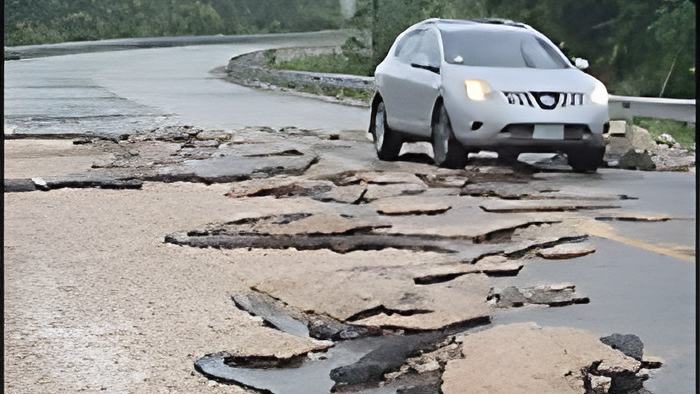
Last week Thursday, we showed you how the first heavy June rains shredded the Coastal Road and flooded Hope creek. While that road was designed with to be climate resilient, the disaster risk has increased due to deforestation in the area.
According to the Chairperson of the Maya Forest Corridor Trust, destroying natural water retention areas leads to increased flooding. Dr Elma Kay spoke with us via Zoom.
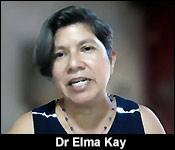
Dr Elma Kay, Chairperson, Maya Forest Corridor Trust
"Mother Nature does have natural solutions, take for example the Coastal Road, that area contains a lot of ecosystems that probably on an everyday basis, we do not take any consideration of. Just coming by the Belize Zoo from Belize City, you see these savannas, these wetlands, these seasonally inundated broadleaf forests so they look like forests but they're shorter, every season they're inundated, these are water retention zones, they are mother nature's way of controlling those flows of water. And so the more disturbance we have intensified by these global climate change patterns then it doesn't really make us resilient and that's what we're experiencing so for a country like Belize where we are not the ones to blame necessarily for the global climate change patterns, the only option we have is to be able to build our resilience and our adaptive capacity and we can do that through not natural engineering solutions which are basically our savannas, our wetlands, our seasonally inundated forests that are the water retention zones that control those flows."
"We're seeing area that were typically not targeted because I was watching some of the news regarding the stuff on the Hummingbird that's been happening and there's a lot of people that have a history of the area and have said nobody will develop those areas because they are known to be flood plains, areas that hold water during these times so it's not surprising that if we are bringing down these ecosystems we are lowering our resilience and adaptive capacity."
In the case of Mountain View - a relatively new Mennonite Community on the Hummingbird Highway-residents faced flooding so severe they had to be rescued and evacuated. Dr Kay explained that farmers are moving onto land masses unsuitable for agriculture, and chances are their main goal is export, not food security.
Dr Elma Kay, Chairperson, Maya Forest Corridor Trust
"I would say that the expansion for these large agricultural areas, there is this lack of large expanses of land and so they're starting to move in these non traditional zones that require a lot of drainage and so you can do agriculture in areas that can be drained so you can engineer your way through that but then where does the natural water when it comes go? And I think what we have to ask ourselves as a nation because the argument repeated over and over that we have to eat, that these agricultural project make us food secure and yes they have indeed but currently we have been food secure for a while."
"The expansion isn't for food security anymore, the expansion is really for export and I think as a nation we have to ask ourselves, is that where we can best make our money and does that type of development pay for the damages it does to people so certain people will benefit from those developments but where does the extra flood water go?"
"If you're going to do that type of intensive pesticide heavy chemical heavy agriculture then I think we also have to look at who's paying the cost for the effects downstream of that."
Dr Kay also noted that EIA regulations need to be stricter, since many perpetrators aren't deterred by the fine.