
How would you feel if there was a robot in your operating room, helping your doctor perform your surgery? It seems far fetched for us in Belize, but last month in Trinidad and Tobago, four patients had successful surgeries with the help of a surgical robotic arm.
A team of six surgeons were the first to utilize robotic-assisted surgeries in the Caribbean, and they're hoping that other countries in the region will follow their lead. The Freehand surgical robot that they used holds the camera that the doctors use to see inside the abdomen while the surgeon performs the operation. This not only saves time but minimizes the chance for human error during the surgeries.
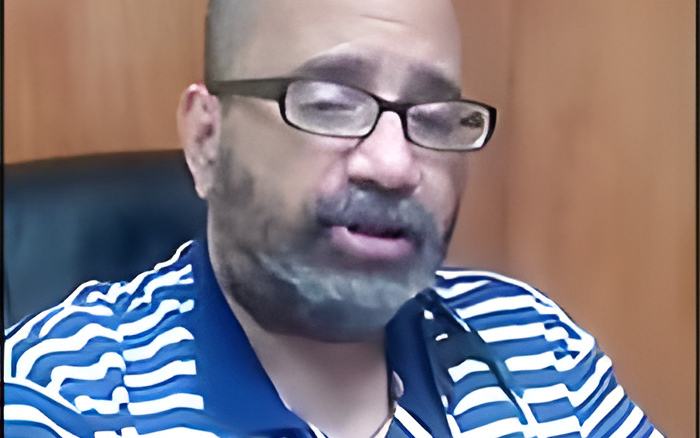
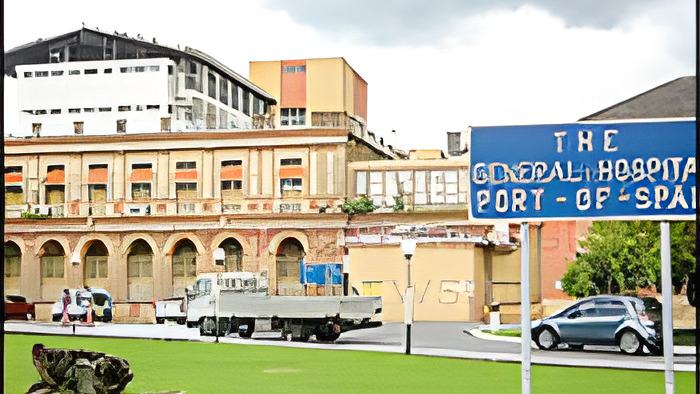
And on the "Trinidad Six" team who used the apparatus in the Port of Spain General Hospital, a Belizean doctor was leading the charge. Dr Shamir Cawich left Belize about 40 years ago, and studied at the University of the West Indies. He continued his education in the UK before returning to Trinidad. Now he's a Professor of Liver and Pancreas Surgery and swears by the robotic helping hand. Today he told us about the exciting breakthrough via Zoom. Courtney Menzies has this story.
Imagine being on the operating table and your surgeon isn't wearing gloves or a mask and none of the equipment you're used to is available.
Now fast forward to today, and a lot has changed, and it keeps advancing.
While the surgeons once needed to make large incisions that left visible scarring on patients to fit their equipment, laparoscopic surgery has made it possible to use smaller instruments, lessening the trauma the patients endure.
And the advancement in modern technology has now allowed robots in the operating room. That's what a team dubbed the "Trinidad Six" is bringing to the Caribbean - robot-assisted surgeries. And in this team is one Belizean, Dr Samir Cawich, who participated in the first surgery of this kind in the region, using Freehand Panorama CoBot, a robotic surgical assistant.
The need to utilize this type of surgery in the Port Of Spain General Hospital arose because of COVID - to limit the medical professionals in the operating room. But once it was used in surgery, these professionals quickly realized other benefits to the robotic assistance. Via Zoom, Dr Cawich explained more.

Dr Samir Cawich, Professor of Liver and Pancreas Surgery
"More importantly, we realized that we had to change the way that we operate. Because this is the typical picture in the hospital that I work. Here we have Dr Williams, she's a general surgeon and you can see both of her hands moving to operate the laparoscopic instruments and Jason in the back is holding the camera so she can see, and before you know it, I am in the operating room and other people are in the operating room and we're operating like a big family, helping out, giving advice, and getting things done together. The problem though is that this isn't very COVID compliant because these are many people in an operating room and you can argue that this will facilitate the transmission of the virus."
"When we found out about the robot, we realised that this may actually be something that could help us because what this robotic arm does is that the robotic arm actually gives the surgeon full control. And what do I mean by that, let's look back at this picture. Look at Dr Williams, her left and right hand are holding instruments and she's operating to do whatever she needs to do here. And the person in the back, Dr Rattan, is holding the camera. So he is actually showing her where she should operate on. Now it's easy if he wants to look at something else, he can turn the camera away and she's left blind, not knowing what to do. And that is a recipe for mistakes to be made and for example if he's tired and starts swinging the camera then vision is not in control for surgeons. And that is one of the good things about the robot, the robot allows us to wear a headpiece that communicates via infrared technology to the robot which is pictured here, and that now follows my every command so if I want to look left, the robot will show me left, if I want to look up, the robot will show me up and it hold the camera very steady, better than a human can."
But before they could bring the robotic assistance into the operating room, some of the surgeons needed to undergo remote training from professionals in the United Kingdom. On the 15th of September there was a dry run, where they attached the robotic arm to an empty bed.
Then five days later, they went into an actual surgery with it.
Dr Samir Cawich, Professor of Liver and Pancreas Surgery
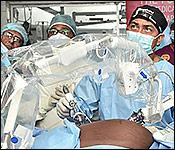
"With all that preparation we actually met at the operating theater on the 20th of September and we performed four robotic operations. You can see the free hand robot here draped over the patient and the surgeon here is using both hands to use the operating instruments and using this head piece, I am communicating directly to this robot so if I wanted to look left, the robot would turn and look left as well."
And these four surgeries ranged from as simple as removing the gallbladder to as complex as opening bile ducts and removing stones in the liver.
And the surgeons realized that using the Freehand surgical robot is a major timesaver by assisting during staff shortages - which became a massive issue during the pandemic since surgeons would be called out of the operating room to deal with COVID patients. This would lead to delay in other surgeries but the robotic arm frees up the surgeon who would normally hold the camera.
And Dr Cawich explained another timesaver they noted.
Dr Samir Cawich, Professor of Liver and Pancreas Surgery
"The second way this reduces time is inside the operating room and as I said when I am operating and I have two instruments and somebody else is holding he camera, if they're showing me something that is a little to the left, I will have to look up and say listen show me to the right, put it in the center, go in, go out, and I'm giving instructions and there's inevitably going to be some delay between my instruction to the assistant and their action and me refocusing on the operating field. And it may sound insignificant but when you have to do this 20 or 30 times during an operation, the times add up."
No doubt a huge breakthrough in the way surgeries are conducted in the Caribbean. And it's catching on since on Friday, the Jamaican team will be doing their first robotic operations using a similar template used in Trinidad and Tobago. And Dr Cawich, having grown up in Belize City until he was 17, has high hopes for his hometown.
Dr Samir Cawich, Professor of Liver and Pancreas Surgery
"What we want to happen, it really should at least have exposure to all Caribbean countries, including Belize and this is one of the things I would love to see for Belizeans to have exposure to. At the moment, this technology is available and the company that owns it is actually allowing Caribbean countries to use it free of cost. At least in the initial instance. So there's nothing stopping Belize from actually joining this accomplishment and having ordinary Belizeans benefit from this type of technology."
Dr Cawich told Trinidadian media that this robotic surgical assistant will also aid in the development of medical tourism in Trinidad and Tobago as well as the rest of the Caribbean, and there are overseas patients who will come to the region for this type of surgery.