
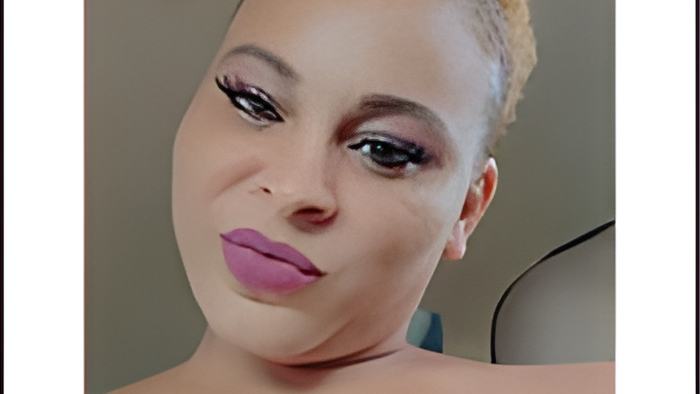
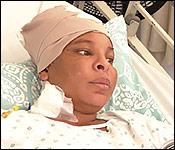
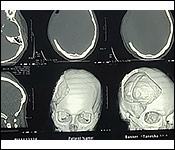
Last night we told you about Tanesha Banner's near miracle recovery. The young mother had been shot in the head on October 16th when the vehicle she was in came under attack. She was a blameless victim in a crossfire between two other men. And while she'd spent over a week in a coma, tonight, she is on her way to a full recovery thanks to a remarkable procedure by the neurosurgeon at the KHMH. He removed a part of her skull, deposited it in her abdominal area to allow the swelling to go down, and then put it back.
We wanted to find out more about that, so Courtney Menzies visited the KHMH today. Here's her story:
33-year-old Tanesha Banner almost lost her life on October 16th when she was shot to the head. Though the bullet didn't enter her brain, the gunshot caused lacerations on the right side of her frontal lobe, leaving her in a critical state when she arrived at the KHMH.
The brain injury put her in a coma and forced the medical team to intubate her. She was also fully paralyzed on her right side as a result of the gunshot.
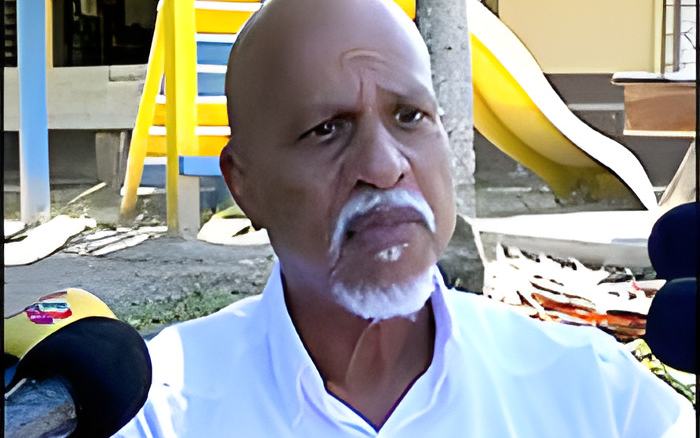
The neurosurgeon, Dr Javier Dupuy, and his team noticed a blood clot in the brain, and it was during the surgery to remove it that they saw her brain was also swelling - which led them to remove a portion of her skull. Dr Dupuy explained this process to us today:
Dr Javier Dupuy, Neurosurgeon
"The patient had very important edema, very important swelling of the brain that will be impossible that that patient will survive if not removed one part of the skull. The name for this surgery is decompressing craniectomy. And the goal for this surgery is to eliminate one part of the skull to give the possibility for the brain to expand for the swelling because if not, the brain will start to expand but the skull, the bone is not expansible so this produce compression of the brain and this, if the patient don't have any solutions for this, the brain dies and the patient dies secondary too."
"When we removed the skull, we don't know in what time, in what moment, it will be possible to put the bone flat to the normal position and is necessary to keep the bone alive during this time. So it is necessary in this case, to open the abdomen, sometimes open in the leg, to do one pocket inside, in this case int he abdomen, to put the bone and in this situation, the bone can continue to live and get the blood supply necessary to continue to live."
And the treatment was a success - Banner woke up from her coma on Monday, and a second CT Scan showed a reduction in the swelling, and no blood inside the brain. She is able to talk, breathe, and ingest liquids on her own.
And yesterday, the medical team was able to replace the section of her skull - and now Banner's prognosis is looking like a full recovery.
Dr Javier Dupuy, Neurosurgeon
"We ordered today different changes in the treatment, if the patient continue progressing positively, maybe she can be discharged in some days, in a short time. At this moment patient is very happy, the family, and me too."
Reporter
"So you're expecting her to make a full recovery?"
Dr Javier Dupuy, Neurosurgeon
"Yes, in this case, the more damage in the brain occurred in the frontal lobe, the more important part part in the brain is the left side - but everything is important - but more important is left side, and in left side, frontal and temporal lobe. In this case, fortunately, the damage was in right side, less important than the left. But it was in front lobe so maybe she have some effects after the trauma but right now it's impossible to say exactly what will happen in one month, two months, according to the injury."
"But physically, neurologically, intellectually, she can recover totally, full."
A young mother's life saved by this medical team, and now her family can look forward to having her back home with them.
And while this was a traumatic experience for them, for Dr Dupuy and his team, this was just another day in the operating theater:
Dr Javier Dupuy, Neurosurgeon
"It is very hard of course because, at this moment… but at that moment we forget everything and we concentrate on the brain knowing the situation and of course, it's not only the neurosurgeon, it's a team, because it is the anesthetic, the neurosurgeon, the assistant, and everything have different functions during this time and we are working as a team and this can facilitate the work or the surgery in this case."
"A lot of times I say to the different families, that is your family, the patient, it is not my family, but I feel as family too, because it is the goal for us to do the surgery, the principal goal when we decide to do this career, to do medicine."
"Sometimes the family don't feel totally happy with the result, but we try to do the best in the different patients and in this case, I spoke with the family, I asked them are you happy, they said yes, we are very happy, I said me too, because it is the result we want to do in our patient, it's not always possible but we can try, and really, yes I felt very happy when I saw the result."
Banner's family is still hoping that the accomplice to the gunman - and the man behind the wheel in the vehicle shooting at Tanesha - is arrested and charged. The alleged shooter Veris Ventura, was killed in self defense by the Coast Guardsman who was in the vehicle with Banner.