
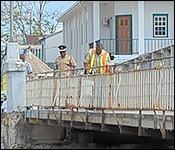
And in other news, every headline yesterday was about the killing of Francis Ramos on the swing bridge in the middle of the morning. He was shot by a police officer following a stand off prompted by his aggressive behavior while brandishing a knife in a crowded pedestrian area. When Ramos charged at the officer with that knife aloft, he shots and killed him.
But Ramos wasn't just some man intent on killing a cop - he was suffering from acute mental illness, and for one reason or the other, couldn't access the medical resources he needed.
And Ramos isn't the first mentally ill patient whose violent behavior led to injuries or death - it's a recurring theme in Belize since mental health isn't treated as a priority. And while there are some resources available, a lot of times, for patients in acute psychosis and their families, getting them medicated is a huge often insurmountable challenge.
And until there is a real solution, Ramos' situation may be repeated.
But what is the solution? For now, the Mental Health Association is pushing for a Forensic Unit for mentally ill persons during violent episodes. Courtney Menzies spoke with the Secretary of the Mental Health Association and has this story.
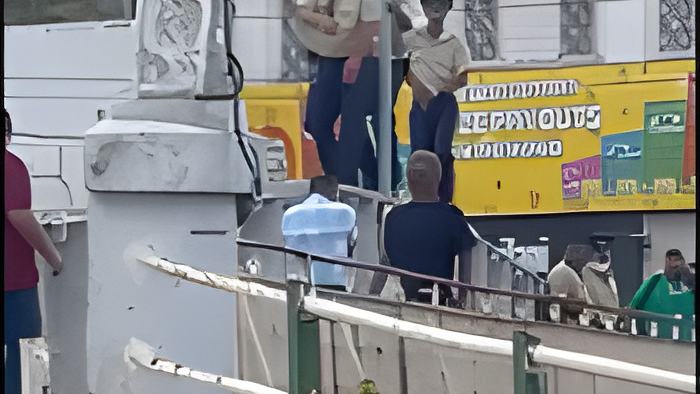
This video was taken during the standoff from the south side of the swing bridge as police are mounting the barrier - we count at least 10 in the area - and pedestrians are thronging to the scene. At this point multiple shots have already been fired.
And then, another round of shots - this time fatal:
But on the Northside, the view was very different. From there you could see Ramos with police in front of and behind him, the warning shots fired by a plainclothed officer, and, surrounded, he charges forward, knife in hand, on the attack, as the police officer retreats:
It's a terrible, frightening scene we've all viewed too many times. Who was right? Who was wrong?
It all happened so quickly, were there any better options?
The Mental Health Association explained that there's no point in playing the blame game - the problem is the lack of attention and resources, leaving mentally ill patients and families with few places to turn for help.

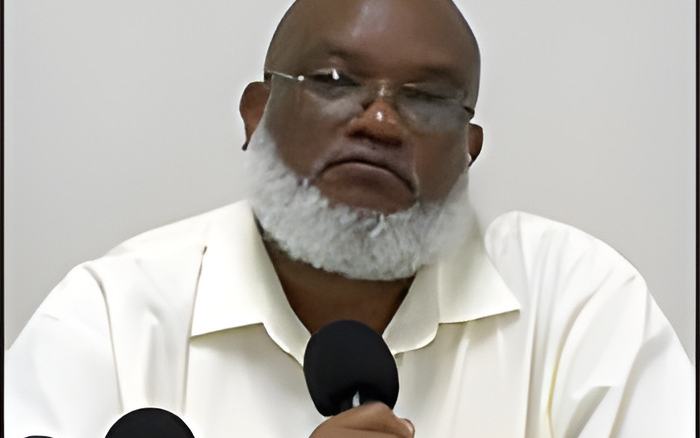
Kathy Esquivel, Secretary, Mental Health Association
"I think it's important not to play the blame game, often people said well why didn't the family this or that. Families are under tremendous strain very often. Some of the people that you see homeless or on the street don't even really have families in Belize that can support them and very often for families, there's not many options. Then sometimes people want to blame the police but that's unfair because sometimes police act badly but often they're put in a situation in which they don't have the training, they don't have the resources and then they are to still do the job that all of u re doing. So yeah, we want to get away from blame and look at options. We have, which the Mental Health Association got built, an acute unit. Unfortunately we only have one. It's in Belmopan, Belize City should have, because it's the biggest population and all the district hospitals should at least have assigned beds. What's an acute unit, an acute unit is a place where people who are having an acute psychiatric problem can go for two, at maximum three weeks treatment. Unfortunately, very often people don't think mental illness is as important as other things, and so for instance during COVID, the acute unit was taken over as a COVID unit, now we know we need a COVID unit, but why did people think that the acute unit was expendable?"
Indeed, the unit plays an important role, but it's not enough. And Esquivel noted that while there are psychiatrists and counselors available across the country, along with the necessary medication, the patients aren't always compliant - and this can lead to the violent episodes. That's why the Association is, once again, emphasizing the need for a Psychiatric Forensic Unit.
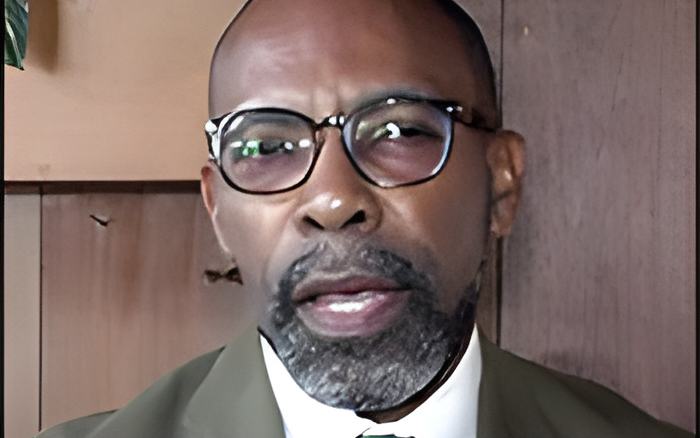
Kathy Esquivel, Secretary, Mental Health Association
"Now then you come to those cases where you have someone who is potentially a danger to themselves or others and that requires something far more secure. So what we have proposed and what we will continue advocating is a small, what you call, Forensic Unit. Now obviously, Forensic Unit has to have security, it has to have a lot in its place. What would that be? Well, when someone is exhibiting violent indications, ideally we would want to take them off of the street before there is an incident. So that is what a Forensic Unit is. But it's important to have a strong legislative framework because you can't just be locking people up because you think they might cause a problem. In Belize, I don't see we would need more than four to six beds, because it would be short term. And then from there, an assessment is made and a legal decision whether the person can be treated and released and just assessed periodically, whatever happens."
Courtney Menzies
"That Forensic Unit, that would also come with… it would have to be accompanied by training for police officers."
Kathy Esquivel, Secretary, Mental Health Association
"Absolutely, and there is something called CIT which we can get help from outside for training. Police officers do get some training from the Training School. The Ministry of Health does offer a course but we need more than that because it's not just to train police officers, it's to have options of what to do, and we need to have stronger protocols for coordination between the police and the psychiatric unit because a nurse cannot go out and confront someone who is a problem on the street, obviously that would not be safe, but a police officer, even trained, doesn't really have the background so we need to have better protocols for the police to be able to call on mental health professionals to accompany them and advise them."
And while the Association waits for the Ministry of Health to hopefully make the next the move towards that unit, the life and death of Francis Ramos may only be remembered as only a cautionary tale - but he was more than just this body slumped on the bridge, or the man who walked the street known as Snake Eyes.
Anita Nembhard was his primary school friend and last year she and some others treated him for his birthday.
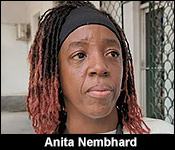
Anita Nembhard, Friend of deceased
"He said, no noh give me no cake I want Belikin, and we bought him two stouts and he drank it, we gave him a slice of cake, I said this is a birthday, we need a cake so we bought him one slice of cake and we made sure he eats it, we got him a slippers, we gave him a pants and we gave him a belt, because he's always without a belt. And he was happy and we were happy for him. That was a very memorable day, so….I will remember that side of Francis and it's said to hear what happened."
And Ramos isn't the only mentally ill man who fell through the cracks of society that doesn't prioritize mental health. Back in June 2019, Nestor Vasquez Jr was placed in a detention cell after an acute episode. His cellmate, another mentally ill man who had already stabbed a nurse, then beat him to death.
Then in October of that same year, 17-year-old Isaac Marin was fatally stabbed by his mentally ill cousin, again, during a violent episode.
In August 2020, another man with mental illness was arrested after he threw scalding hot water on a police officer.
Then in April of this year, a mentally ill woman was caught on camera beating another woman while fully nude.
And two months ago, a student's face was slashed by a man also suffering from mental illness.
And Esquivel says it's about 10% of mentally ill patients that suffer from psychotic illness - the kind that leads to these violent outbursts. And without the forensic unit or proper training for police officers, we may be doomed to witnessing repeats of these violent cases that can even lead to innocent deaths.
And right on the heels of Ramos' death, another apparently mentally ill man is recovering from head injuries and a fractured rib at the Northern Regional Hospital. Diego Mencias allegedly smashed the window of a vehicle with a block, which led to the vehicle's owner to clobber him with a bat.
Mencias has regained consciousness and is listed in a stable condition. His injuries are listed as grievous harm.